
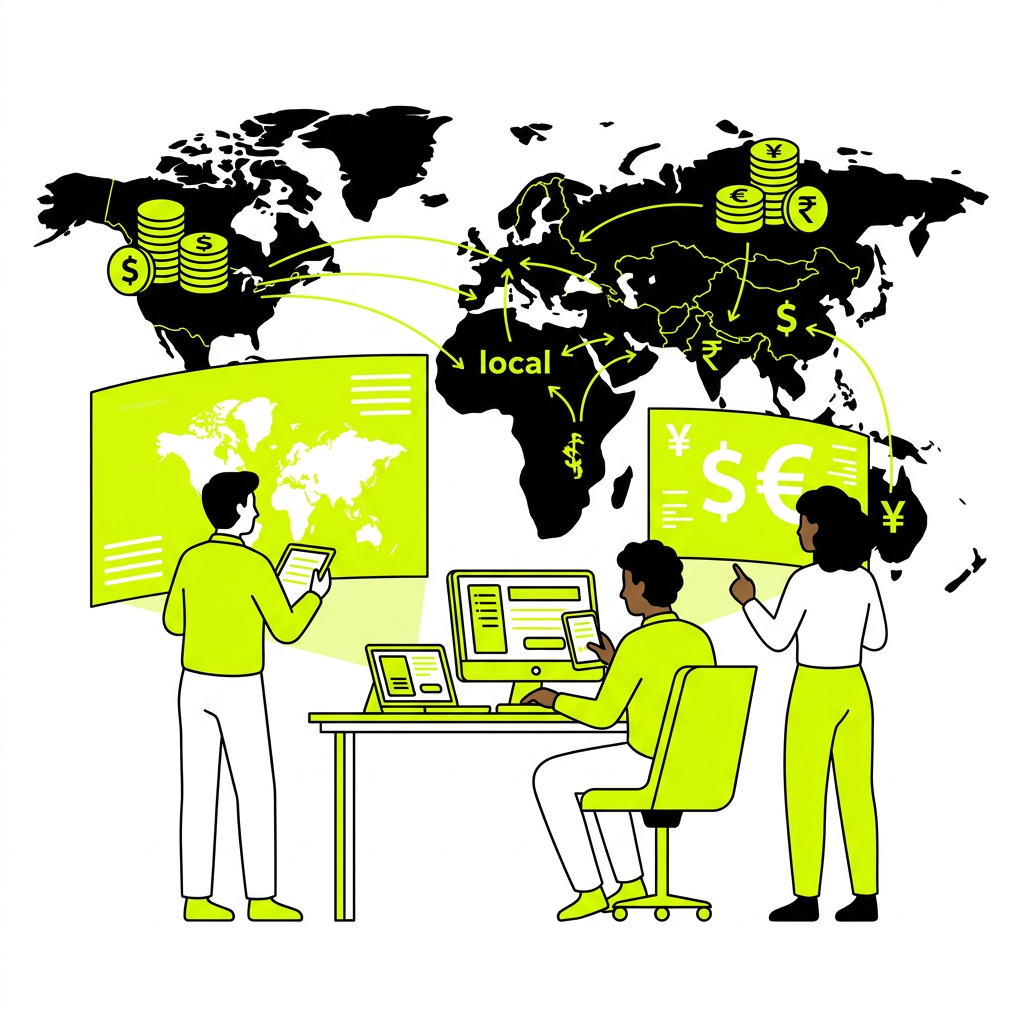
For any digital business with global ambitions-from ad networks and creator economy platforms to online marketplaces-the ability to send mass payouts to 150+ countries in local currencies has shifted from a competitive advantage to a baseline expectation. The global talent pool is no longer confined by borders, and paying vendors, affiliates, and creators in their preferred currency is non-negotiable. However, an intense focus on the currency and the payment rail itself obscures a far greater operational challenge: the crippling 'administrative tax' that strangles growth long before a company reaches its global potential.
The common industry narrative centers on FX rates and transfer fees. While important, this view is dangerously myopic. It treats global payouts as a simple accounts payable (AP) task, a series of transactions to be optimized for cost.
The reality for high-growth companies is that mass payouts are an operational workflow, a complex system of data management, compliance, and stakeholder communication. Getting the currency right is just the price of admission; winning requires mastering the entire financial operating system that underpins it.
The New Normal: Why Global Payouts in Local Currency Are Table Stakes
The rapid expansion of the digital economy means businesses are increasingly reliant on a distributed, international network of contractors, freelancers, influencers, and suppliers. These payees are not large corporations with dedicated finance teams; they are small businesses and individuals who expect frictionless, timely payments in their local currency. Forcing a creator in Thailand to receive US Dollars involves intermediary bank fees and poor exchange rates, creating a negative experience that can damage platform loyalty.
As a result, platforms capable of disbursing funds directly to local bank accounts across Asia-Pacific, Europe, and the Americas have a distinct advantage in attracting and retaining top talent. This has led to an arms race among payment providers to expand their country and currency coverage. However, the conversation often stops there, assuming that access to local rails is the end of the story.
The truth is that the payment itself is merely the final step in a long and often fragmented operational chain.

The Hidden Friction Beyond the Transaction
Scaling a global payout operation reveals that the most significant bottlenecks have little to do with the actual movement of money. They are rooted in manual processes, data silos, and the complex web of international regulations. These operational burdens create a hidden 'administrative tax'-a constant drain on finance and operations teams that prevents the business from scaling efficiently.
This is where the focus must shift from merely making payments to automating the entire payout lifecycle.
The 'Administrative Tax' of Manual AP Workflows
Imagine an ad network that works with thousands of publishers globally. Each month, the finance team must ingest performance data from multiple ad platforms, calculate earnings, handle invoices, and manually key payment details into a banking portal. Every step is a potential point of failure. A single mistyped bank account number or an error in a spreadsheet can lead to a failed payment, a frustrated publisher, and hours of investigative work for the finance team.
This manual toil is the enemy of scale. As the business grows from 200 to 2,000 to 20,000 payees, the finance team cannot hire its way out of the problem. The workload increases exponentially, leading to burnout, errors, and delayed payments. This is why a focus on 7 Strategies for Optimizing Multi-Currency Marketplace Payouts with Automation is paramount. The solution isn't a better bank; it's a smarter workflow that eliminates human intervention.
Navigating the Maze of Global Tax & Compliance
Paying someone in another country is not just a financial transaction; it's a regulatory event. Every payment is subject to know-your-customer (KYC) and know-your-business (KYB) screening, as well as anti-money laundering (AML) checks against sanction lists like OFAC. Furthermore, for US-based companies, collecting the correct tax documentation-W-9 for domestic payees, W-8BEN/W-8BEN-E a for foreign payees-is a legal requirement to avoid backup withholding.
Managing this manually across hundreds or thousands of global vendors is an impossible task. It involves chasing vendors for forms, validating their information, and storing it securely. Leading global mass payment platforms solve this by building tax compliance directly into the vendor onboarding process. A self-service vendor portal can guide each payee through a digital workflow, automatically collecting the right forms and validating data in real-time, dramatically reducing the compliance burden on the finance team.
The Data Silo Problem: ERPs, Ad Networks, and Payouts
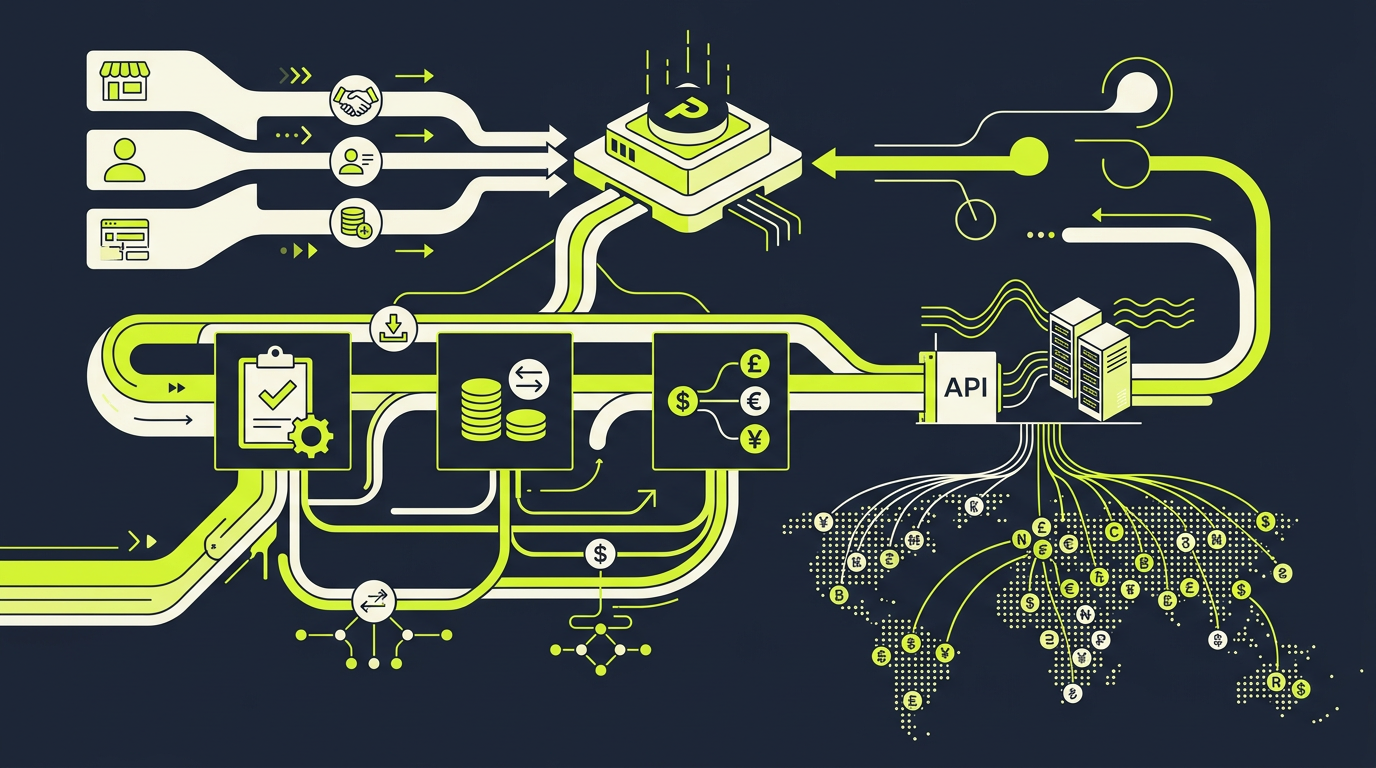
For most companies, payment-related data lives in multiple, disconnected systems. The master vendor record is in the ERP (like NetSuite, QuickBooks, or SAP), performance data is in an affiliate or ad network platform, and payment instructions are in a banking portal. This fragmentation forces finance teams into the role of human API, manually exporting and importing CSV files to reconcile information and trigger payments.
This lack of integration is not just inefficient; it's a major source of financial risk. It leads to duplicate payments, inaccurate financial reporting, and a complete lack of visibility into cash flow. A true global payout solution must function as an integrated layer that connects these disparate systems. Through deep, bi-directional ERP integration, a payout automation platform can sync vendor data, payment statuses, and reconciliation details automatically, creating a single source of truth for all AP activity and enabling a seamless integrated ERP workflow forswear-reaching regions.
Building a 'Touchless Finance' Operating System for Global Scale
The future of global payouts lies not in finding a cheaper way to send money, but in building a 'touchless' financial operating system. This is an ecosystem where data flows seamlessly from ingestion to reconciliation, where compliance is automated, and where finance teams are freed from manual workflows to focus on strategic initiatives. This Operations-First FinTech layer provides the infrastructure for businesses to scale globally without the associated administrative costs.
Unifying Payouts: From Fiat to Crypto
A modern financial operating system must be currency-agnostic. While local fiat currencies remain the primary medium for most payouts, the use of regulated digital assets is growing. As global standards frameworks like ISO 20022 mature, they pave the way for more sophisticated payment data and the integration of new asset classes. Central banks are even exploring stablecoins as a core part of the financial ecosystem, a sign of their move from the fringe to the mainstream.
For businesses in the creator economy or ad tech, offering payouts in regulated digital assets can be a powerful differentiator. It provides a near-instant, low-cost settlement layer, especially in regions with volatile currencies or less-developed banking infrastructure. A unified platform that can handle both traditional bank transfers and digital currency payouts allows a company to offer maximum flexibility to its global payees without adding operational complexity for its finance team.
Beyond the Payout: Vendor Management and Liquidity
A 'touchless' system also transforms the entire vendor relationship. The process begins with a streamlined, self-service Vendor Portal where suppliers and creators can onboard themselves, choose their preferred payout method and currency, and upload tax documents. This not only reduces the administrative burden on the payer but also empowers the payee with control and transparency. Once onboarded, vendors can track payment statuses and manage their own information, minimizing support queries.
Furthermore, advanced platforms can offer innovative solutions like liquidity options for vendors and creators against their earned balances. For a freelancer waiting on a 30-day payment term, or an affiliate agency needing short-term capital, this access to early payment can be a critical lifeline. It transforms the payout function from a simple transaction into a value-added service that builds loyalty and deepens the platform's relationship with its key stakeholders.
The Strategic Shift: From Cost Center to Growth Engine
When a business automates its global payout operations, it does more than just save time and reduce errors. It fundamentally transforms the role of the finance department. By eliminating the 'administrative tax' of manual work, AP teams can evolve from transaction processors into strategic partners to the business. Time previously spent chasing invoices and correcting payment errors can be reallocated to cash flow analysis, forecasting, and identifying opportunities for financial optimization.
This strategic shift is supported by a predictable cost structure. Unlike traditional payment providers that charge a percentage of the transaction value, a flat-fee-per-transaction model ensures that costs do not balloon as the business scales and payment volumes increase. This allows for clear budgeting and ROI analysis, framing the investment in automation not as a cost center, but as a direct enabler of profitable global growth.
Organizations must understand the specific market landscape in every region, and a one-size-fits-all approach is often insufficient. Instead, a successful strategy requires deep in-country knowledge and adaptable systems to handle unique payout schemes and regulations.
Ultimately, mastering global batch payouts is about building a resilient, scalable financial infrastructure. It’s about creating a system that supports expansion into any of the 150+ countries without requiring a proportional increase in finance headcount. It’s the key to transforming The Future of Marketplace Payouts in Europe: Beyond FX Fees from a complex challenge into a seamless operational reality, empowering businesses to fully capitalize on the global digital economy.