

The Asia-Pacific (APAC) payments market is experiencing explosive growth, a trajectory that is set to redefine global commerce. 08 trillion by 2031. This expansion is fueled by rapid digitization and the proliferation of digital platforms connecting businesses to creators, affiliates, and freelancers across the region.
For CFOs and Operations Managers, this represents a monumental opportunity but also exposes a critical operational weakness: traditional accounts payable systems are not equipped for this new global reality.
Scaling your business in dynamic APAC markets requires more than just finding talent; it demands a financial infrastructure that can handle a high volume of multi-currency, multi-jurisdictional payments without buckling under administrative weight. When your finance team is manually reconciling payments in NetSuite, keying in data for cross-border wires, and chasing down tax forms, they are not architecting growth-they are performing data entry. This administrative tax is the silent killer of scale.
The solution lies in creating a 'touchless finance' workflow, where your Enterprise Resource Planning (ERP) system acts as the command center for a fully automated global payout engine. This guide provides a blueprint for integrating your ERP with a specialized payout platform, transforming your APAC disbursement process from a manual bottleneck into a strategic advantage that enables scale, ensures compliance, and optimizes financial operations.
The Scaling Challenge: Why Traditional AP Fails in Asia-Pacific
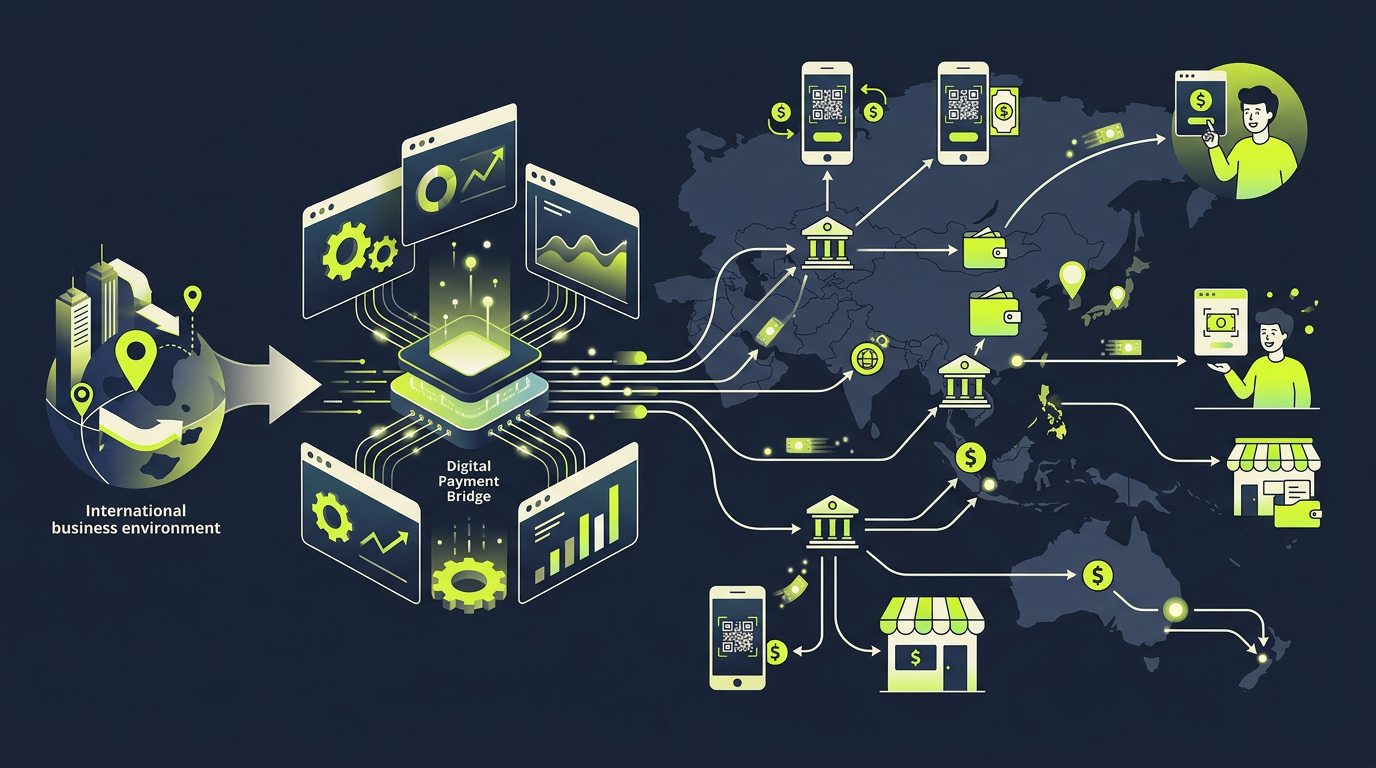
The payment landscape in Asia-Pacific is not a monolith. It is a complex, fragmented tapestry of local payment rails, real-time networks, and super-app ecosystems. Unlike the more standardized payment environments in North America or Europe, a one-size-fits-all approach to payouts in APAC is doomed to fail. Legacy AP processes, often built around domestic ACH and wire transfers, fracture completely when confronted with this complexity.
This fragmentation forces finance teams into a reactive, manual posture. They are burdened with managing multiple banking relationships, calculating currency conversions, and attempting to reconcile disparate data streams. This challenge is magnified for digital-first businesses like ad networks, creator economy platforms, and marketplaces that must pay thousands of individual stakeholders. As one expert notes, to capitalize on the region, businesses must be able to access multiple networks, provide payments in correct currencies, and comply with local regulations.
Many of these challenges stem from a foundational mismatch in technology. The systems designed for bi-weekly payroll to a local workforce are fundamentally unfit for the demands of paying a global, on-demand talent pool.
The Hidden Costs of FX and Intermediary Banks
For many businesses, the default method for international payments remains the SWIFT network. While reliable, it introduces significant unpredictability. Hidden correspondent bank fees and percentage-based currency conversion charges erode the final payout amount, creating frustration for payees and reconciliation nightmares for finance teams. A creator in Thailand expecting a $500 payout might only receive $465 after multiple intermediary banks take their cut.
This model directly harms vendor relationships and complicates financial planning. Conversely, a flat-fee-per-transaction model offers predictability and transparency, ensuring your partners receive the full value they've earned. By abstracting away the underlying complexity of cross-border foreign exchange, businesses can focus on their core operations while ensuring their global partners are paid efficiently and fairly.
Navigating a Labyrinth of Local Regulations
Beyond the financial mechanics, the regulatory landscape in APAC is a significant hurdle. Each jurisdiction has its own rules governing payments, data privacy, and tax compliance. As one analysis on the region warns, operating while being non-compliant can lead to excessive costs, financial penalties, and severe reputational damage.
For US-based companies paying global vendors, this includes the critical task of collecting and validating tax forms like the W-8 series to ensure proper IRS reporting and avoid backup withholding. Manually collecting, validating, and managing these forms for hundreds or thousands of vendors across different time zones is not a scalable activity. Automation is not just an efficiency-it is a powerful compliance tool.
The Integration Blueprint: Connecting Your ERP to a Global Payout Engine
The key to unlocking scale in APAC is to create a closed-loop system centered around your ERP. Your NetSuite, QuickBooks, Xero, or SAP instance should be the single source of truth, not a data silo that requires manual updates. By integrating it with a financial operating system, you automate the entire disbursement lifecycle, from vendor onboarding to final payment reconciliation.
This integrated approach is a core component of modern global payment processing. Automation ensures that cross-border transactions in multiple currencies are correctly recorded according to local accounting standards. By automating compliance checks, currency conversions, and fee calculations within a unified system, businesses drastically reduce the risk of human error and operational drag.
Step 1: Universal Connector for Data Ingestion
The process begins by eliminating manual data entry. Modern platforms, with their numerous ERP integrations, utilize Universal Connectors to pull approved payment and vendor data directly from your ERP. When an invoice is approved in NetSuite, for example, the instruction is automatically and securely transmitted without anyone on the finance team needing to download a CSV file or manually key in bank details.
This aligns perfectly with best practices for modern finance operations, which stress the need to adopt electronic payments and automate disbursement processes. The initial data transfer is the first step in creating a fully 'touchless' workflow, freeing up your team from low-value tasks and allowing them to focus on strategic financial management.
Step 2: Automated Validation and Compliance Onboarding
Once vendor information is ingested, the automation continues with compliance. An automated platform includes a supplier portal where vendors onboard themselves. During this process, the system automatically conducts necessary KYC (Know Your Customer) and AML (Anti-Money Laundering) checks against global watchlists. This proactive screening is crucial in a world where fraud is a persistent threat.
Simultaneously, the system manages global tax compliance. The platform guides international vendors through a digital process to complete the correct W-8 form, complete with a digital signature. For domestic vendors, it handles W-9 collection. This ensures that by the time a payment is due, the vendor is fully vetted and tax-compliant, preventing payment delays and regulatory risk.
Executing Touchless Payouts Across 150+ Countries
With the integration live and vendors onboarded, the payment process becomes remarkably simple. The finance team's role shifts from execution to oversight. They approve a payment run within the familiar environment of their ERP, and the payout engine takes over, managing the complex disbursement process across its global network.
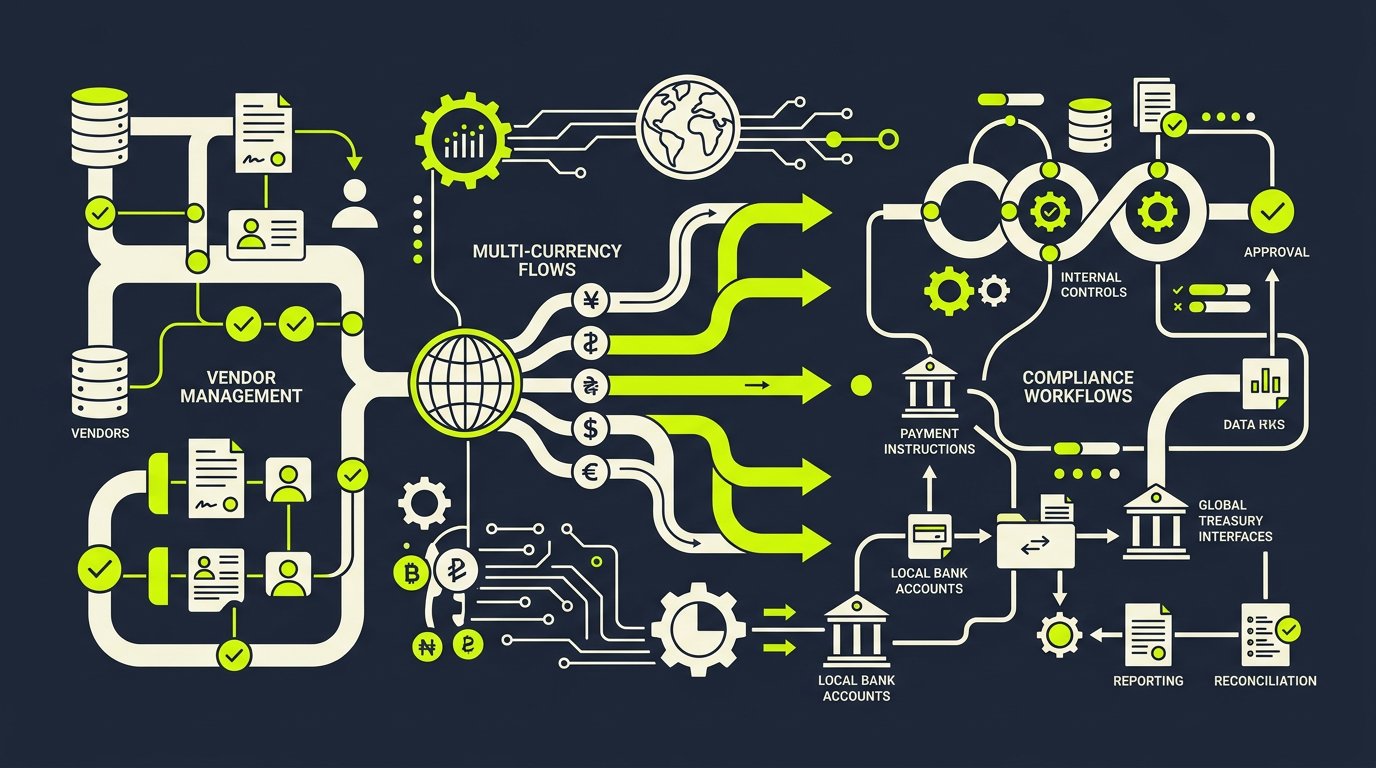
This process orchestrates payments across 150+ countries and 135+ currencies, offering a variety of payout methods to suit the recipient's preference. This includes local bank transfers in currencies like the Thai Baht or Indonesian Rupiah, issuance of virtual and prepaid cards, and advanced digital options. The platform automatically routes the payment through the most efficient rail, optimizing for speed, cost, and reliability.
Local Currency Disbursements as the Standard
A core principle of effective global payouts is paying people in their local currency. This eliminates FX risk for the recipient and demonstrates a level of operational sophistication that builds stronger partner relationships. For a creator in Vietnam, receiving a predictable payment in Vietnamese Dong is far superior to receiving a USD wire transfer that is then subject to local bank conversion fees.
An automated payout platform manages the underlying treasury and foreign exchange functions. It can net payments across currencies and leverage its scale to secure better FX rates than a single company could achieve on its own. This delivers a better experience for the payee without creating an additional operational burden for the payer.
Leveraging Stablecoins for Frictionless Settlement
In addition to traditional fiat rails, a modern payout infrastructure embraces crypto as a utility for settlement. Stablecoins like USDT (Tether) and USDC (USD Coin) function as a highly efficient, near-instant, and low-cost settlement layer. This is not about crypto investing; it is about using blockchain technology as a superior payment rail.
For jurisdictions with challenging local banking infrastructure or volatile currencies, a stablecoin payout can be a powerful option, offering speed and stability. This represents a major step in the evolution of global finance. Offering this choice gives businesses another tool to ensure payments are delivered quickly and efficiently, no matter where the recipient is located.
Closing the Loop: Real-Time Reconciliation and Reporting
The final, and perhaps most crucial, step in the automated workflow is closing the loop with the ERP. A payment is not truly complete until it has been reconciled. A standalone payment provider that does not write data back to the general ledger simply moves the manual bottleneck from the front-end to the back-end of the process.
A truly integrated system pushes real-time payment status updates-sent, in transit, completed, or failed-back into the ERP. This provides the finance director with a continuously updated view of cash flow and eliminates the soul-crushing task of manually matching bank statements against payment records. This is mission-critical for scaling companies to ensure they can grow without being held back by manual reconciliation.
This automated, two-way data sync ensures financial records are always accurate, dramatically simplifying month-end closing, audits, and financial reporting. It transforms the payables function from a cost center into a source of clean, reliable data that can be used for strategic decision-making.
Ultimately, scaling in the vibrant but complex APAC region is an operational challenge. Success depends on building a financial infrastructure that is as agile and global as your business. By integrating your ERP with a robust payout automation platform, you move beyond simply making payments and begin architecting a touchless finance function built for global growth.