

- Standardize and Automate Payee Onboarding and KYC
- Leverage Universal Connectors for Seamless Data Ingestion
- Embrace Multi-Currency Payouts with Strategic FX Management
- Streamline Operations with AP Automation and Vendor Management
- Explore Crypto Payouts for Enhanced Frictionless Settlement
- Issue Global Accounts & Virtual Cards for Enhanced Flexibility
- Prioritize Robust Security and Regulatory Compliance
- Conclusion
In today’s interconnected digital economy, marketplaces are expanding globally at an unprecedented rate, connecting buyers and sellers across continents and currencies. This exponential growth, however, introduces significant operational complexities, particularly when it comes to managing multi-currency marketplace seller payouts. The challenge lies not just in sending funds, but in doing so efficiently, compliantly, and at a scale that supports rapid business expansion.
For CFOs, Finance Directors, Operations Managers, and Founders of high-growth digital companies, navigating the intricacies of international payments can divert critical resources from strategic initiatives. The administrative burden of manual entry, reconciliation, high cross-border fees, and complex international tax compliance (W-8/W-9) creates an administrative tax that directly impedes scaling efforts. This article will outline seven strategic approaches to optimize multi-currency marketplace seller payouts through advanced automation, drawing on the capabilities of robust payout infrastructure.
- Standardize and Automate Payee Onboarding and KYC
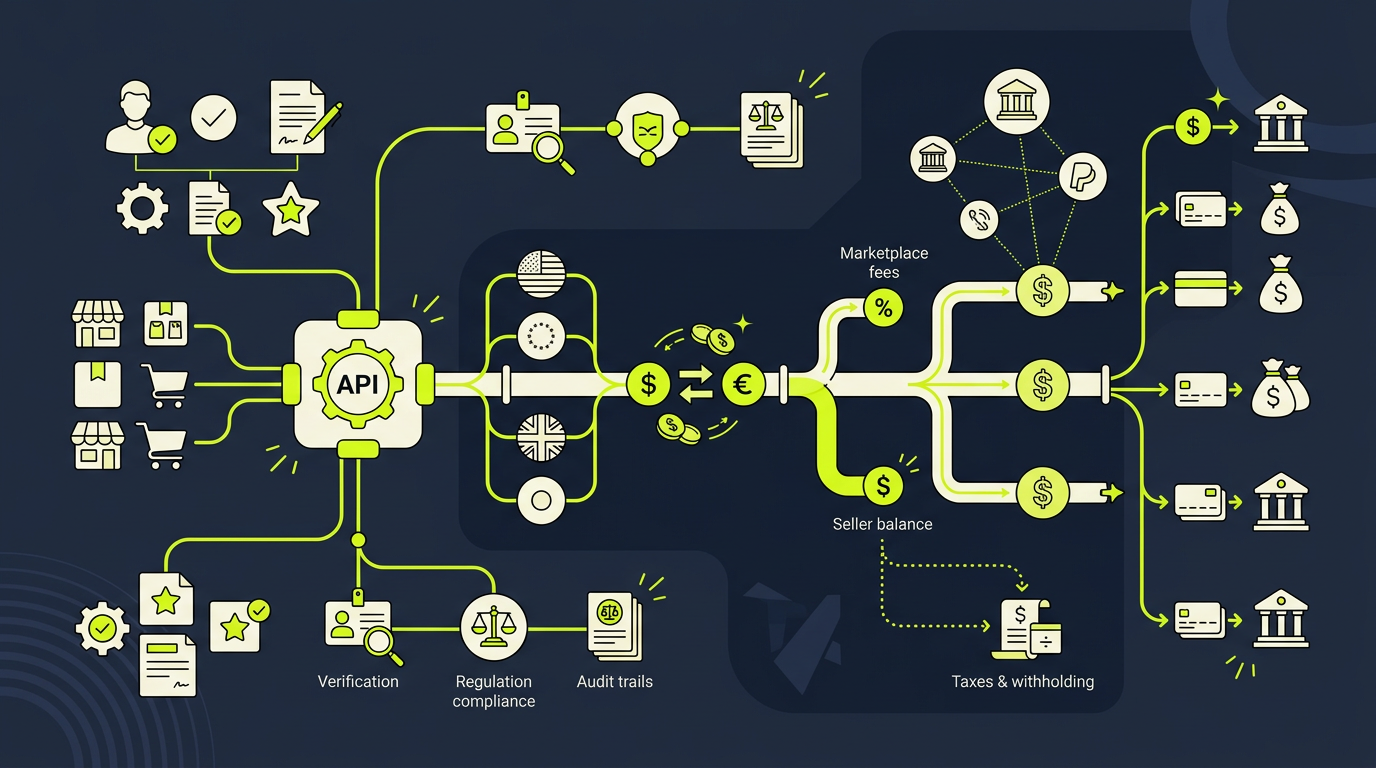
One of the initial hurdles in managing global payouts is the efficient and compliant onboarding of diverse sellers. Each new vendor, affiliate, or influencer requires specific documentation, tax forms (like W-8 or W-9), and KYC (Know Your Customer) checks. Manual collection and verification of these documents are time-consuming, prone to error, and create significant compliance risks.
An effective payout automation platform streamlines this process through a self-service vendor portal. This portal allows sellers to input their details, select preferred payout methods, and upload necessary tax and compliance documents. The system then automates the validation and storage of these records, ensuring that all vendors are compliant with local and international regulations from the outset.
Ensuring Global Tax Compliance
Beyond basic onboarding, global tax compliance is a continuous challenge. Different jurisdictions have varying tax reporting requirements, making it difficult for marketplaces to manage diverse seller populations. A sophisticated payout system integrates automated tax compliance tools that handle the intricacies of W-8BEN, W-9, and other international tax forms. This automation ensures correct classification of payees and accurate tax withholding, mitigating potential penalties and audits.
- Leverage Universal Connectors for Seamless Data Ingestion
Fragmented data across various affiliate networks, ad platforms, and internal systems is a common pain point for high-growth digital companies. This fragmentation leads to manual data entry for payouts, which is slow, costly, and error-prone. The solution lies in universal connectors that unify data from all sources into a single platform.
Payouts.com, for instance, offers robust API-first capabilities and diverse integrations. These integrations automate the ingestion of payout data, ensuring that payment instructions are accurate and reflect real-time performance metrics. This cohesive approach eliminates manual reconciliation and provides a single Source of truth for all financial operations. Without such integration, scaling global payments becomes administratively unsustainable.
The digital payments market share controlled by orchestration vendors will expand further as developers favor API-first capabilities that cut time-to-market for new payment methods. This trend underscores the importance of a platform that can seamlessly integrate with existing financial ecosystems, offering comprehensive data management and workflow automation. [Source]
Benefits of Integrated Payment Workflows
Integrating payout data directly from your ERP and other platforms drastically reduces the time spent on preparing payment runs. It also minimizes discrepancies that often arise from manual data transfers. This level of automation means finance teams can shift their focus from repetitive data management to strategic financial analysis, driving better decision-making and optimizing cash flow. The ability to scale local currency payouts in APAC with an integrated ERP workflow is a prime example of such an advantage.
- Embrace Multi-Currency Payouts with Strategic FX Management
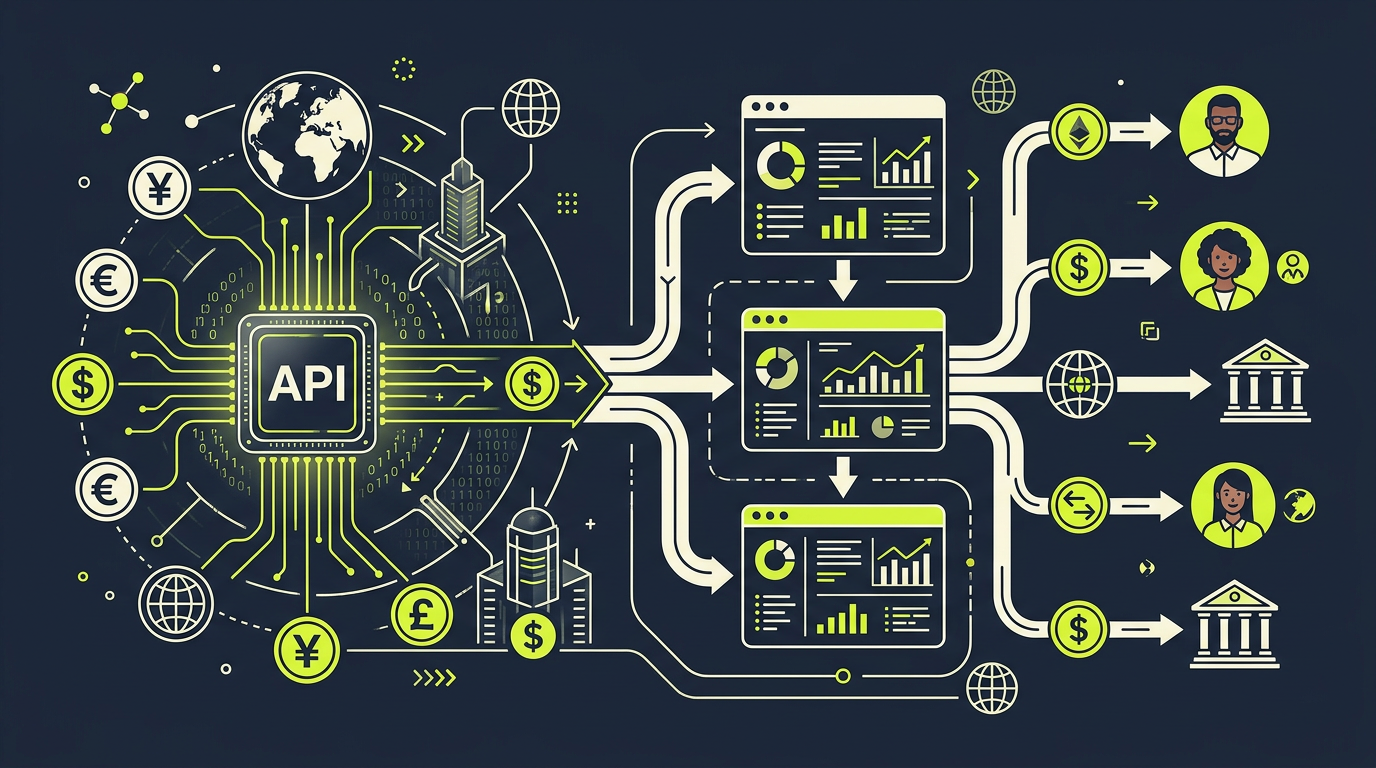
Paying sellers in their local currency is not just a convenience; it's a strategic imperative for global marketplaces. It enhances seller satisfaction, builds trust, and can significantly improve conversion rates across international markets. However, managing diverse currencies introduces complexities related to foreign exchange (FX) rates and associated fees.
An advanced payout platform should offer multi-currency disbursement capabilities across diverse global markets. Crucially, it must provide transparent FX handling, minimizing confusion around exchange rates and improving financial predictability for both the marketplace and its sellers. This transparency is vital for maintaining healthy vendor relationships and attracting international talent.
Transparent FX handling is essential for minimizing confusion around exchange rates and improving financial predictability. Diverse payment rails like SEPA, Faster Payments, EFT, NPP, and ACH marketplace payouts further reduce costs and speed up domestic transfers in various regions. This approach aligns with best practices for multi-currency e-commerce, as highlighted by industry leaders.
Flat-Fee vs. Percentage-Based Models
One key differentiator in payout solutions is the pricing model. Many traditional payment providers charge a percentage of the transaction value, which can become prohibitively expensive for high-volume marketplaces. Adopting a model that ensures predictable costs allows businesses to scale their payout operations without incurring exponentially increasing fees as transaction volumes grow.
This model is particularly beneficial for businesses with high-value or high-volume payouts, offering significant cost efficiencies.
- Streamline Operations with AP Automation and Vendor Management
Accounts Payable (AP) automation extends beyond just sending payments; it encompasses the entire lifecycle of vendor management, from onboarding to reconciliation. For marketplaces, this means managing thousands of individual vendors, each with unique payment preferences and performance metrics. Automating AP workflows frees finance and operations teams from the administrative burden of manual processing.
A comprehensive vendor management suite allows for centralized management of all vendor data, payment terms, and historical transactions. This suite, combined with AP automation, ensures that payments are processed accurately and on time, reducing late payment penalties and improving vendor relationships. The synergy between these components builds a robust operational foundation.
Beyond Traditional Employee Payout Stacks
Many existing payout systems were designed for internal employee payroll, not the complex demands of global contractors, affiliates, and creators. These legacy systems struggle with multi-currency payouts, international tax compliance, and the sheer volume of diverse stakeholders common in the creator economy and ad networks. It’s critical to recognize that your payout stack was built for employees, not global contractors, necessitating a specialized platform.
- Explore Crypto Payouts for Enhanced Frictionless Settlement
While traditional fiat channels remain essential, stablecoins offer a compelling solution for global business-to-business (B2B) payouts, particularly as a settlement layer. Operating on public blockchains, stablecoins like USDT reduce transaction costs, accelerate settlement times, and bypass many of the legacy banking system's inefficiencies. This creates a truly frictionless payment experience, especially for cross-border transactions.
Some modern platforms support both fiat and crypto payouts, leveraging stablecoins for near-instant, always-on settlement. This capability is invaluable for marketplaces operating in regions with less developed banking infrastructure or for those requiring faster liquidity for their sellers. The agility offered by crypto as a settlement utility positions marketplaces to respond dynamically to global payment needs, providing a distinct competitive advantage.
Real-Time Liquidity for the Creator Economy
For influencers, freelancers, and other participants in the creator economy, access to instant liquidity can be a . Traditional payout methods often involve delays of several days, impacting their ability to manage cash flow and invest in their work.
Utilizing crypto for instant payouts addresses this pain point directly. By offering Advanced Payment capabilities, marketplaces can provide immediate access to earned funds, fostering loyalty and attracting top-tier talent. This is particularly relevant for AI influencer agencies and creator economy platforms where speed of payment equals operational advantage. Learn more about the future of global payouts: beyond SWIFT to stablecoin settlement.
- Issue Global Accounts & Virtual Cards for Enhanced Flexibility
Beyond conventional bank transfers, providing diverse payment options is crucial for satisfying a global seller base. Global accounts and virtual cards offer additional flexibility, allowing vendors to receive and manage funds in ways that best suit their needs and local conditions.
Virtual cards, in particular, can be issued instantly and offer enhanced security features, making them ideal for managing operational expenses or providing controlled spending limits. For international sellers, access to global accounts simplifies receiving local currency payments, avoiding multiple currency conversions and associated fees. This array of options further solidifies the marketplace’s reputation as a preferred partner for global talent. Airwallex, for instance, has also moved to provide comprehensive revenue management platforms for cross-border enterprises. [Source]
- Prioritize Robust Security and Regulatory Compliance
Operating a global payout system requires an unwavering commitment to security and compliance. Handling sensitive financial data and processing cross-border payments exposes marketplaces to various risks, including fraud, money laundering, and data breaches. A robust payout infrastructure incorporates advanced security protocols and adheres to international regulatory frameworks.
This includes compliance with regulations such as GDPR, PSD3, and ISO 20022 migrations, which are critical for protecting both the marketplace and its payees. Implementing fraud-scoring engines is also crucial; these are expanding rapidly, with an annual growth rate of 26% as regulatory scrutiny tightens and merchants outsource machine-learning analytics. [Source] Regular audits, data encryption, and secure authentication methods are non-negotiable components of any reliable payout solution. Trust, as highlighted by FinTech Futures, is indeed a new currency in the age of AI. [Source]
Building a Compliant and Trustworthy Ecosystem
By prioritizing security and compliance, marketplaces not only protect themselves from financial and reputational damage but also build a trusted ecosystem for their sellers. This trust is paramount for global operations, encouraging more sellers to join and participate actively within the marketplace. A comprehensive payout infrastructure goes beyond mere transaction processing; it provides an end-to-end operational framework that ensures integrity and reliability at every step.
Conclusion
Scaling a global marketplace in today's dynamic environment demands more than just growth in user numbers; it requires an operational foundation that can support complex financial flows with precision and efficiency. The
By adopting these seven strategies for optimizing multi-currency marketplace seller payouts-from automated onboarding and robust ERP integrations to crypto settlement and proactive compliance-businesses can eliminate the administrative tax of manual operations. This allows CFOs, Finance Directors, Operations Managers, and Founders to focus on innovation and expansion, knowing their financial operations are not just managed, but optimized for global success. A unified platform is needed to drive this transformation, turning complex global payments into a competitive advantage.