
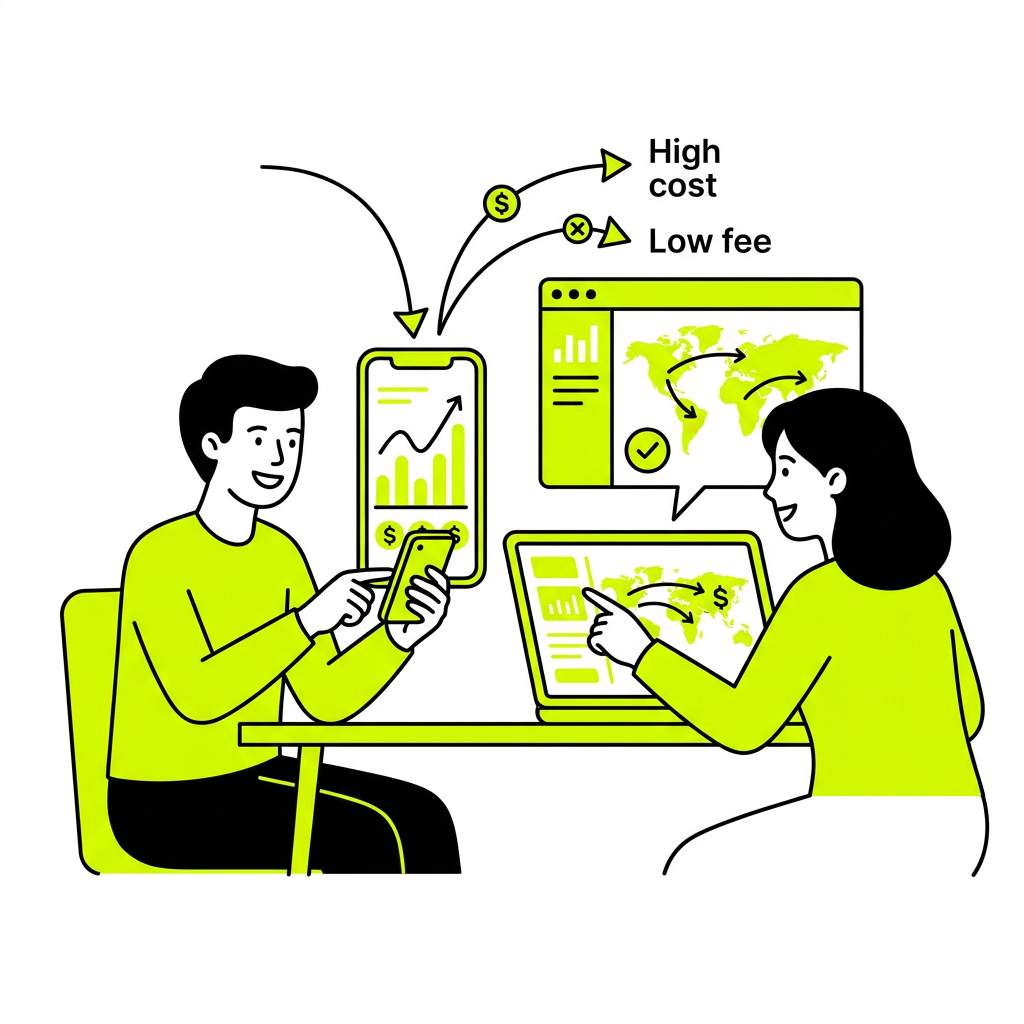
The global marketplace model is built on seamless, cross-border transactions. As businesses increasingly connect with sellers, creators, and vendors across the world, the underlying financial infrastructure is straining to keep pace. 49 billion by 2031, a testament to the explosive growth of global commerce.
However, for CFOs and Operations Managers at high-growth digital companies, this expansion comes with a significant operational burden: managing the friction and cost of international payouts, particularly foreign exchange (FX) fees.
For marketplaces paying out to a diverse base of sellers in Europe and beyond, traditional payment methods are no longer viable. Legacy systems, with their opaque fee structures and multi-day settlement times, create an “administrative tax” that erodes margins and damages payee relationships. High cross-border fees, often a percentage of the transaction value, directly impact a seller's earnings and can create a competitive disadvantage for the marketplace.
The challenge is clear: to scale globally, marketplaces need a financial operating system that abstracts away this complexity.
The Old Model: How Traditional Banking Erodes Margins
The correspondent banking system, which underpins most international wire transfers, was not designed for the high-volume, low-value payments typical of a modern marketplace. Each intermediary bank in the chain can add its own fee and introduce delays, making the final cost and settlement time unpredictable. This inefficiency directly impacts the sellers who are the lifeblood of the platform, creating frustration and potentially leading them to seek platforms with more favorable payment terms.
The primary pain point for finance leaders is the lack of transparency in FX conversion rates. Banks often apply significant spreads-the difference between the wholesale interbank rate and the rate offered to the client-which can be a major hidden cost. For a marketplace processing thousands of payments, these spreads accumulate, representing a substantial drain on revenue that could otherwise be invested in growth.
The inefficiency of these legacy systems ultimately damages payee trust and introduces compliance risks.
Navigating European Regulatory Fragmentation
Europe's payment landscape, while innovative, is also complex. Regulatory initiatives like the European Central Bank's efforts to improve interoperability are driving progress, but fragmentation remains a challenge. For a marketplace operating across the continent, this means dealing with a patchwork of local payment rails, reporting requirements, and compliance frameworks like the EU's Payment Services Directive 2 (PSD2).
The Europe market for cross-border payments was valued at over USD 53 billion in 2025, and navigating its intricacies is critical for success.
Optimizing payments requires a deep understanding of these regional nuances. Businesses must align their payment methods with transaction size, frequency, and urgency, balancing speed and cost. Without a unified platform, managing this becomes a manual, resource-intensive process that distracts finance teams from strategic initiatives. The administrative overhead of managing compliance and reconciling transactions across multiple systems can quickly become unmanageable as a business scales.
The Operations-First Approach: A New Financial Operating System
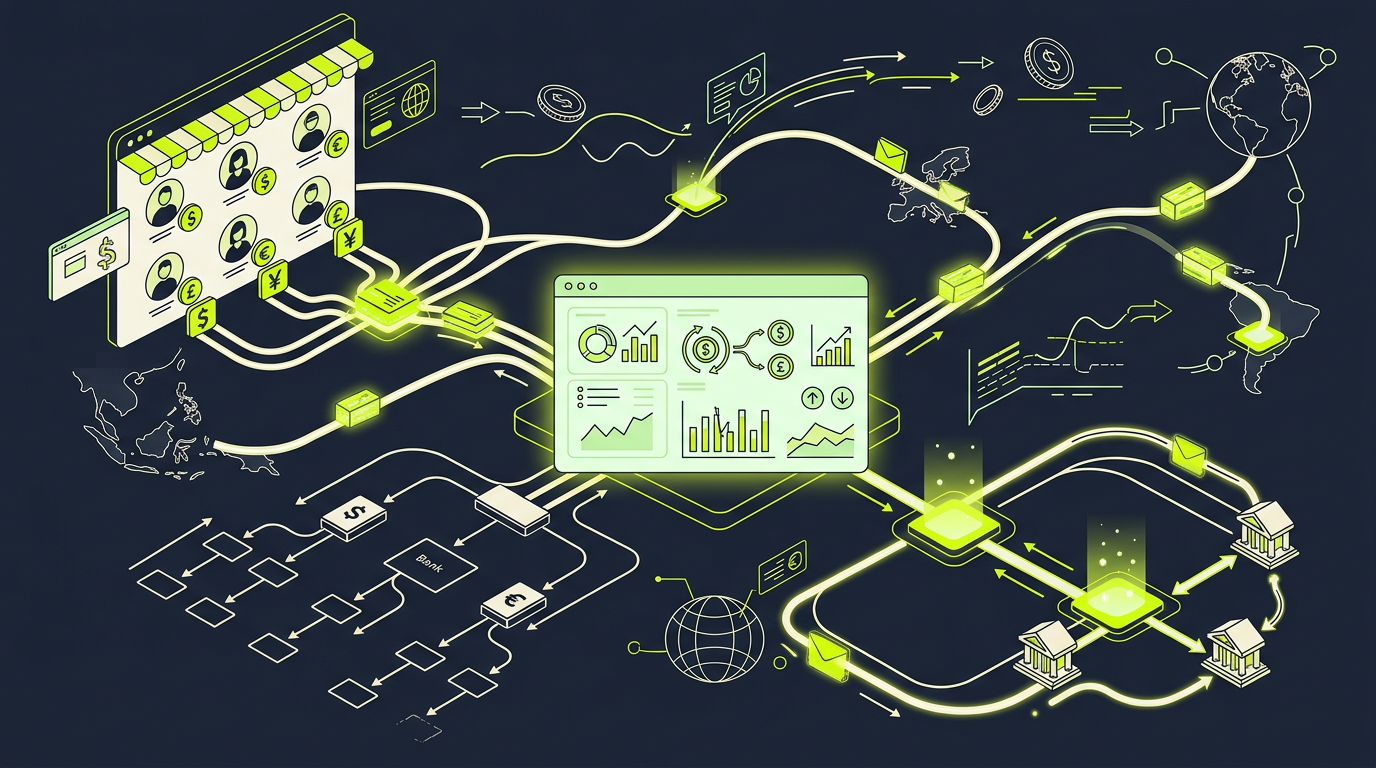
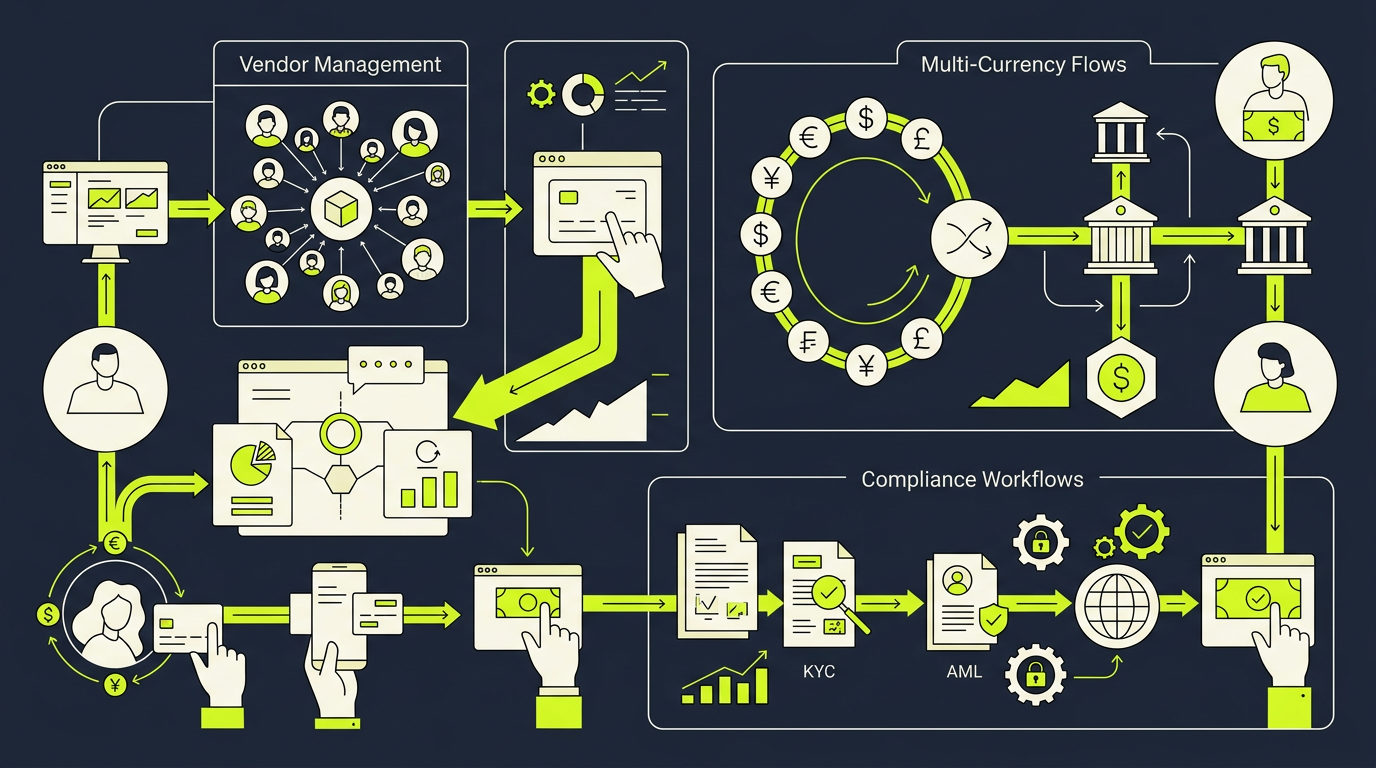
To truly eliminate the burden of cross-border fees, companies need to adopt an “Operations-First” mindset. This means viewing payment infrastructure not as a back-office cost center, but as a strategic asset for driving growth and operational efficiency. A modern payout automation platform centralizes the entire payment lifecycle, from vendor onboarding and tax compliance to multi-currency disbursement and reconciliation.
Platforms like Payouts.com are designed as a financial operating system for businesses with complex, global payout needs. By providing a single dashboard to manage vendors, automate tax form collection (like W-8s and W-9s), and execute payments across 150+ countries, these solutions remove the manual workflows that kill scalability. This is a fundamental shift from the fragmented approach of using multiple point solutions for accounting, payments, and compliance, which often creates more work than it saves. This is particularly relevant for businesses whose existing systems were designed for internal employees, not a global network of contractors, as detailed in '''Your Payout Stack Was Built for Employees, Not Global Contractors'''.
The Power of Flat-Fee Pricing and ERP Integration
One of the most significant departures from the traditional model is the move to flat-fee per-transaction pricing. Unlike percentage-based fees that penalize growth, a flat-fee model provides cost certainty and allows marketplaces to scale their payout volume without scaling their costs. This transparent approach is a key differentiator, as it aligns the incentives of the platform and its payment provider.
Furthermore, deep integration with Enterprise Resource Planning (ERP) systems is critical. With over 600+ integrations for platforms like NetSuite, QuickBooks, Xero, and SAP, fintech platforms ensure that payment data flows seamlessly across the financial tech stack. This eliminates the need for manual data entry and reconciliation, freeing up finance teams to focus on strategic analysis and financial optimization.
The ability to automate payables and receivables management directly from an ERP is a core tenet of building a touchless finance function.
The Role of Stablecoins as a Frictionless Settlement Layer
While traditional finance grapples with the inefficiencies of correspondent banking, a new settlement rail is emerging that offers near-instant, low-cost transactions: stablecoins. For marketplaces, particularly those in the creator economy, ad tech, and online gaming spaces, using stablecoins like USDT or USDC as a settlement layer is a powerful tool for global payouts. It bypasses the friction of the legacy system, offering a fast and efficient way to pay vendors anywhere in the world.
This is not about crypto speculation; it's about utility. Businesses can fund their accounts with stablecoins and pay out in local currency, or pay vendors directly in stablecoins, giving them the option to convert to fiat when it's most convenient for them. This flexibility is a significant value-add for sellers. Recent market developments show a clear trend towards leveraging stablecoins for B2B payments, enabling businesses to slash fees and bridge gaps in the traditional financial system. For those considering this path, understanding the landscape is crucial, which is where resources like a '''Stablecoin B2B Payments: A Comparison''' can be invaluable.
Enhancing Vendor Liquidity with Advanced Payment Options
In the competitive world of online marketplaces, attracting and retaining top-tier sellers is paramount. Offering flexible and fast payment options is a powerful way to build loyalty. Advanced Payment solutions, which provide vendors with instant liquidity on their earnings, are a . Instead of waiting for standard net-30 or net-60 payment terms, sellers can access their funds immediately, improving their own cash flow and financial stability.
This capability, combined with tools like branded Vendor Portals and the ability to issue virtual or physical cards, transforms the entire vendor experience. It moves the relationship from a purely transactional one to a more integrated partnership. By providing these value-added financial services, marketplaces can differentiate themselves and create a stickier ecosystem for their sellers. As discussed in '''5 Ways A2A Payouts Are Redefining Global Vendor Management''', the future belongs to platforms that can offer this level of integrated financial utility.
Building a Future-Proof Payout Infrastructure
As the cross-border eCommerce market continues its rapid growth, projected to be valued at USD 1.74 Trillion in 2026 and reach USD 4.85 Trillion by 2033, the pressure on payment infrastructure will only intensify. Companies that rely on manual processes and outdated banking systems will be at a severe disadvantage. The key to sustainable scaling is automation and the adoption of modern financial tools. '''Cloud-based cross-border payment solutions''' simplify this process by centralizing and automating the entire payout lifecycle.
The goal is to build a “touchless finance” department, where payments are processed, compliance is managed, and data is reconciled automatically. This requires a proactive approach that balances efficiency, cost control, and strong supplier relationships. Effectively managing global payments involves implementing best practices such as multi-currency accounts and automated risk management. By embracing a unified platform that combines payout automation, vendor management, and advanced payment options, businesses can eliminate the administrative tax and focus on their core mission: growth.
Strategic Financial Operations for 2027 and Beyond
Looking ahead, the transformation of cross-border payments will accelerate. Open-banking mandates and embedded finance will continue to dismantle old frictions. For CFOs and finance leaders, the strategic imperative is to choose partners who can provide a global, multi-rail infrastructure that supports both traditional fiat and crypto payouts. This means moving beyond being a simple payment processor to becoming a comprehensive financial operating system for the business.
Ultimately, reducing cross-border payment fees isn't just about saving money-it's about building a more efficient, scalable, and competitive business. By '''automating global payouts''', companies can improve seller satisfaction, reduce operational overhead, and mitigate compliance risks. The future of marketplace payouts in Europe and beyond will be defined by platforms that can offer a seamless, transparent, and operationally efficient financial experience for their global network of sellers.