

For any high-growth digital company-be it a marketplace, ad network, or creator economy platform-scaling is a function of operational excellence. While user acquisition and platform engagement often take the spotlight, the backend financial infrastructure is what truly dictates the pace of growth. When you are paying hundreds or thousands of sellers, influencers, and affiliates across the globe, manual processes for disbursements and compliance quickly become an unsustainable administrative tax, consuming valuable resources and creating friction for your payees.
This is where the transition to a 'Touchless Finance' model becomes critical. The engine for this model is a robust mass payout API, transforming your payment process from a reactive cost center into a proactive, scalable operating system. 61 Billion by 2035, it's clear that businesses are increasingly relying on API-driven automation to build resilient and efficient operations.
This blueprint is designed for Operations Managers to of global payouts and build a financial infrastructure that enables, rather than hinders, scale.
Beyond Generic Tools: Why Your Marketplace Needs a Purpose-Built Payout API
In the early stages, it's common for marketplaces to rely on generic, consumer-grade payment tools or manual bank transfers to pay their sellers. While functional for a small number of payees, this approach breaks down quickly under the weight of volume and geographic expansion. The issues manifest as high transaction fees, endless hours spent on manual reconciliation, a heightened risk of payment errors, and a near-total inability to manage global tax and regulatory compliance efficiently.
As one analysis notes, paying sellers shouldn't be the bottleneck in your marketplace, but it often is when relying on manual workflows. A purpose-built mass payout API is designed specifically for this challenge. It replaces the friction of manual processes with automation, visibility, and control. This shift is fundamental for any platform dealing with a high volume of disbursements to sellers, drivers, or creators across different countries. The right API provides the foundation for growth, ensuring payments are fast, automated, and fully compliant.
Core Pillars of a Scalable Payout Infrastructure
Building a financial operating system capable of supporting a global marketplace requires more than just a payment gateway. It demands a holistic infrastructure built on several key pillars. Each pillar addresses a distinct operational challenge, and together, they form a cohesive system that automates processes, mitigates risk, and enhances the payee experience. For Operations Managers, understanding these pillars is key to selecting a partner that can support long-term, global ambitions.
Pillar 1: Global Reach with Local Execution
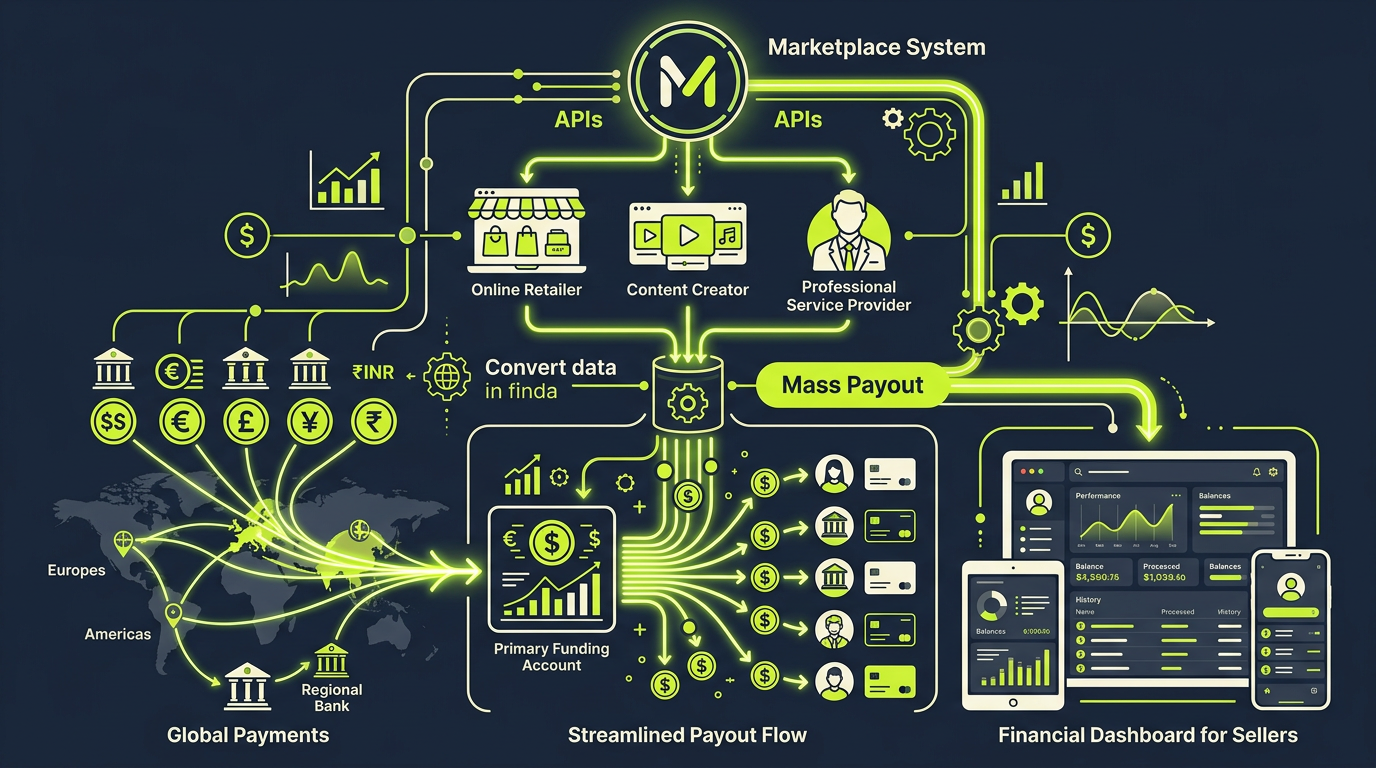
The promise of a global marketplace is the ability to connect buyers and sellers regardless of location. However, this creates an immediate operational hurdle: paying those sellers in their local currency, through their preferred payment method. Managing disbursements across 150+ countries and 135+ currencies involves navigating a complex web of correspondent banks, payment rails, and currency conversion fees.
An effective payout API abstracts this complexity away. It provides a single point of integration to a global payment network, allowing you to disburse funds via ACH, wire transfers, and local payment networks worldwide. A crucial differentiator is the pricing model. Many providers charge a percentage-based cross-border fee, which penalizes larger transactions and erodes seller earnings. A flat-fee per transaction model, in contrast, offers predictable, transparent pricing that scales cost-effectively as your payment volumes and values grow. You can find more detail in our guide covering 7 Strategies for Optimizing Multi-Currency Marketplace Payouts with Automation.
Pillar 2: Automated Tax and Regulatory Compliance
There is no faster way to derail a global expansion than by failing to meet tax and regulatory requirements. For marketplaces paying sellers in the US and abroad, this includes the meticulous collection and validation of W-9 and W-8 series tax forms. Furthermore, global operations mandate robust Know Your Customer (KYC) and Know Your Business (KYB) checks, along with adherence to Anti-Money Laundering (AML) regulations set by bodies like FinCEN and FATF.
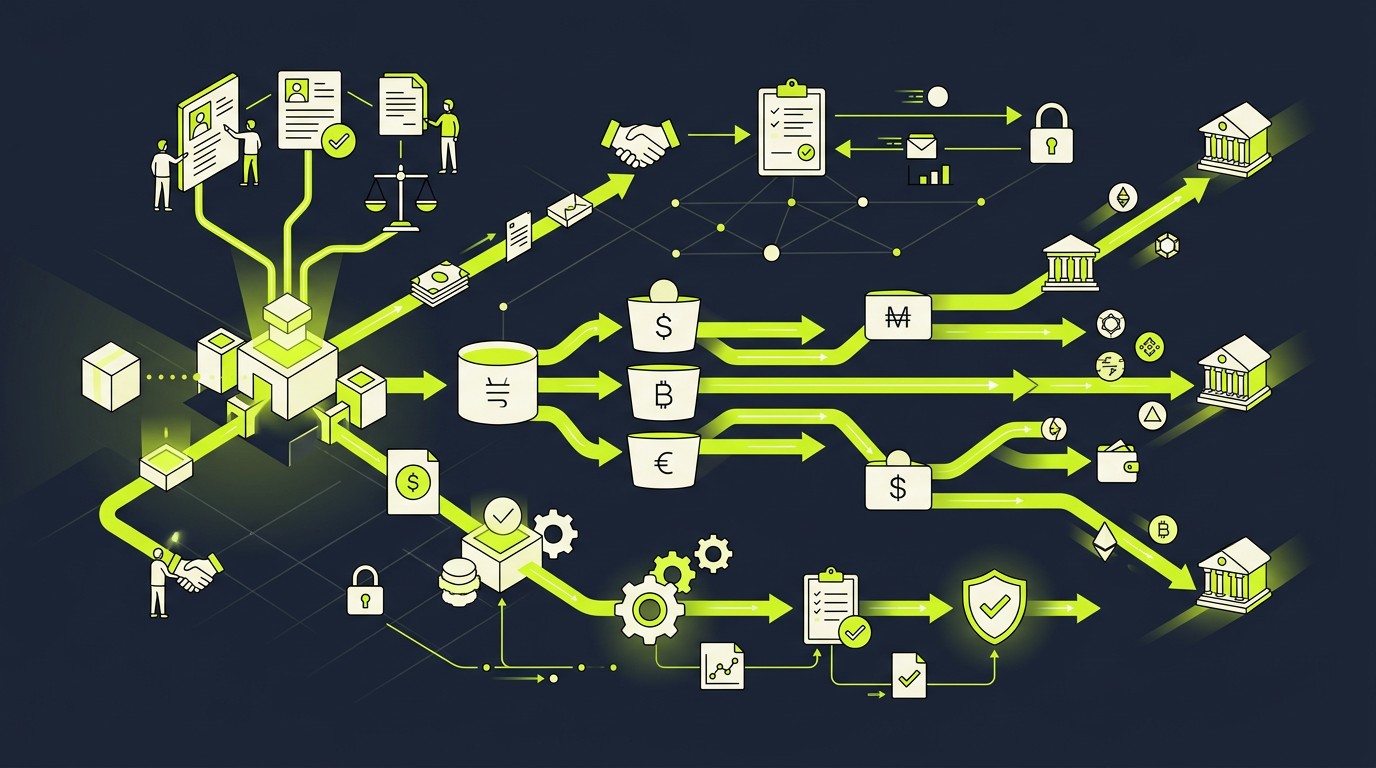
Manually managing this process is not only inefficient but also fraught with risk. A modern payout platform automates this entirely. Through a white-labeled Vendor Portal, sellers can onboard themselves, submit necessary tax documentation, and complete KYC/KYB checks through a guided, digitized workflow. The system automatically validates tax ID numbers and flags any compliance issues, creating a single source of truth for your finance team. This approach is fundamental to minimizing risk and fraud, allowing you to entrust complex compliance processes to a specialized system.
This automated collection and validation process is a cornerstone of operational scalability. To learn more about this critical function, explore our in-depth article, How to Automate Global Tax Compliance for Seamless Vendor Payouts. Platforms that integrate these compliance workflows directly into the payout process provide a significant advantage, ensuring that every payment is fully compliant before it's even initiated.
Pillar 3: Seamless ERP and System Integration
For finance and operations teams, one of the biggest challenges is fragmented data. When your payout platform doesn't communicate with your Enterprise Resource Planning (ERP) system, you are left with a time-consuming and error-prone manual reconciliation process. This data gap obscures financial visibility and makes it impossible to have a real-time understanding of your cash flow and liabilities.
A truly valuable payout API offers deep, bidirectional integration with your core financial software. With direct connectors for systems like NetSuite, QuickBooks, Xero, and SAP, a unified platform ensures that payment data flows seamlessly. When a payment is made, it's automatically reconciled in the ERP, closing the loop and providing a single, trustworthy audit trail. This level of automation is detailed in our guide, How to Scale Global Payouts with NetSuite Connectors.
Pillar 4: Flexible and Future-Ready Payout Options
The expectations of modern sellers and creators are evolving rapidly. They value speed, choice, and liquidity. Forcing them into a rigid, one-size-fits-all payment model with 3-5 day settlement times is a competitive disadvantage. Top talent will gravitate towards platforms that pay them faster and give them more control. Purpose-built infrastructure for marketplaces should offer instant payment rails where available.
An 'Operations-First' fintech platform addresses this by providing a spectrum of payout options. This includes traditional bank transfers as well as modern solutions like Virtual and Prepaid Card issuance for controlled spending. It also embraces crypto payouts, not as a speculative venture, but as a utility.
Using stablecoins like USDT as a settlement layer offers a near-instant, low-cost, and frictionless way to pay vendors globally, bypassing the friction of traditional correspondent banking. Furthermore, offering features like 'Advanced Payment' provides instant liquidity to a platform's top vendors, acting as a powerful retention tool.
The Strategic Role of the Payout API in Business Operations
Viewing a mass payout API as a mere utility is a missed opportunity. When properly implemented, it becomes a strategic asset for the entire organization. For Operations Managers, it eliminates the 'administrative tax' of manual work, freeing up time to focus on optimizing workflows, improving the seller experience, and supporting new business initiatives. The right API becomes the foundation for growth, replacing friction with automation and control.
The security and reliability of this API are paramount. As recent security news has shown, API keys can be a target for malicious actors, making it critical to partner with a provider that prioritizes security and fraud prevention. A secure API infrastructure protects not only your funds but also your reputation and the trust you have built with your global community of sellers.
Choosing the Right API Partner: A Framework for Evaluation
The market for payment solutions is crowded, with various providers specializing in different areas. Some platforms are aimed at large companies looking for invoice-based supplier payments, focusing heavily on AP controls and tax workflows. Others concentrate on providing instant payout infrastructure for gig platforms. When evaluating a partner, it's crucial to look beyond a simple feature list.
Consider the developer experience-is the API well-documented, flexible, and supported by a knowledgeable team? Analyze the pricing model-will a percentage-based fee structure become prohibitively expensive as you scale? Assess the company's focus-is the platform an 'Operations-First FinTech' designed for the complexities of mass, global payouts, or is it an AP-centric tool retrofitted for marketplace use cases?
The answers to these questions will determine whether your chosen partner can truly support your journey to building a global 'Touchless Finance' engine.
Conclusion: Building Your Touchless Finance Engine
For a scaling marketplace, a mass payout API is not just another piece of software-it is the financial operating system that underpins your global operations. It automates critical but non-differentiating tasks like disbursements, tax compliance, and reconciliation, allowing your team to reclaim its focus for strategic growth. It transforms the finance function from a manual cost center into a finely tuned engine for scale.
By embracing an 'Operations-First' approach and implementing a unified payout automation platform, Operations Managers can eliminate bottlenecks, reduce risk, and provide a superior experience for their most valuable asset: their global community of sellers and creators. The result is a resilient, efficient, and scalable business ready to capture the full potential of the global digital economy.