
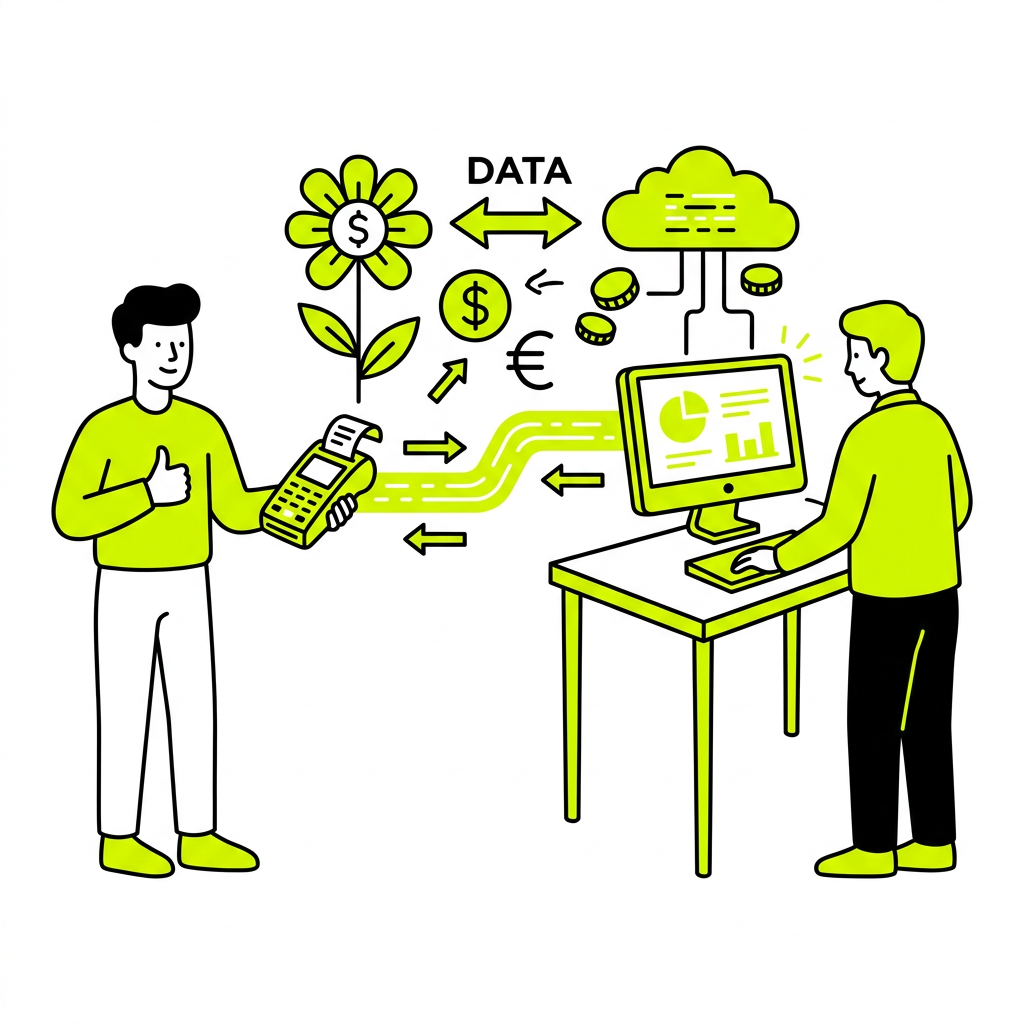
For finance leaders at high-growth global companies, NetSuite is the center of gravity for financial data. Yet, the final mile of accounts payable (AP) - the actual payment execution and reconciliation - often remains a fragmented and manual process, especially when dealing with international vendors, creators, and affiliates. The native capabilities, while powerful, weren't purpose-built for the operational complexity of managing hundreds or thousands of cross-border payouts to a diverse, global stakeholder base.
This disconnect creates a significant 'administrative tax' on the finance team, diverting valuable resources from strategy to manual data entry and payment orchestration.
46 billion by 2031, a clear indicator that organizations are aggressively moving to eliminate these inefficiencies. The primary drivers are not just cost reduction but the need for real-time cash visibility and compliance with varied multi-country tax mandates. As companies replace outdated legacy systems, they are increasingly looking beyond basic automation to truly unify their financial operations.
The goal is no longer just to process invoices faster but to create a 'touchless' finance function where data flows seamlessly from ERP to final payment without manual intervention.
Beyond Native Tools: The Rise of Specialized Payment Connectors
com's network to streamline payments for US-based businesses. This acknowledges a critical market need: deep integration that moves beyond simple data syncs. For many businesses, however, especially those with a global footprint, the challenge extends beyond domestic ACH and check payments.
They require a solution that handles cross-border payments in local currencies, manages global tax compliance like W-8/W-9 forms, and supports a mix of payment types, including crypto stablecoins.
This complexity is where third-party payment automation connectors come into play. These platforms act as a specialized layer between NetSuite and the global financial system. They are not just 'connectors' in the technical sense but operational hubs that manage the entire payout lifecycle.
From automated vendor onboarding and tax form validation to multi-currency disbursement and real-time reconciliation back to the NetSuite general ledger, these solutions are built for the operational realities of the creator economy, ad networks, and digital marketplaces.
The Problem with Traditional 'Bolt-On' AP Integrations
Many first-generation AP automation tools operate as 'bolt-on' solutions that sync with NetSuite but exist as separate platforms. This creates inherent risks and inefficiencies. For instance, with every NetSuite update, IT teams must manually validate that their AP automation connector still functions correctly.
A missed or delayed update can lead to sync failures, resulting in financial misstatements, duplicate payments, or broken workflows. This maintenance burden undermines the very 'automation' the tool was meant to provide.
Furthermore, these loosely coupled integrations often struggle with data integrity. Before an organization can even think about automation, it must first prepare and clean its AP data. Poor data quality, such as duplicate supplier records or inconsistent GL coding, can render automation ineffective.
A truly integrated system enforces data hygiene from the point of entry, ensuring that what exists in NetSuite is the single source of truth, reflected accurately in the payment system without discrepancies.
The Operations-First Approach: Unifying Global Payouts
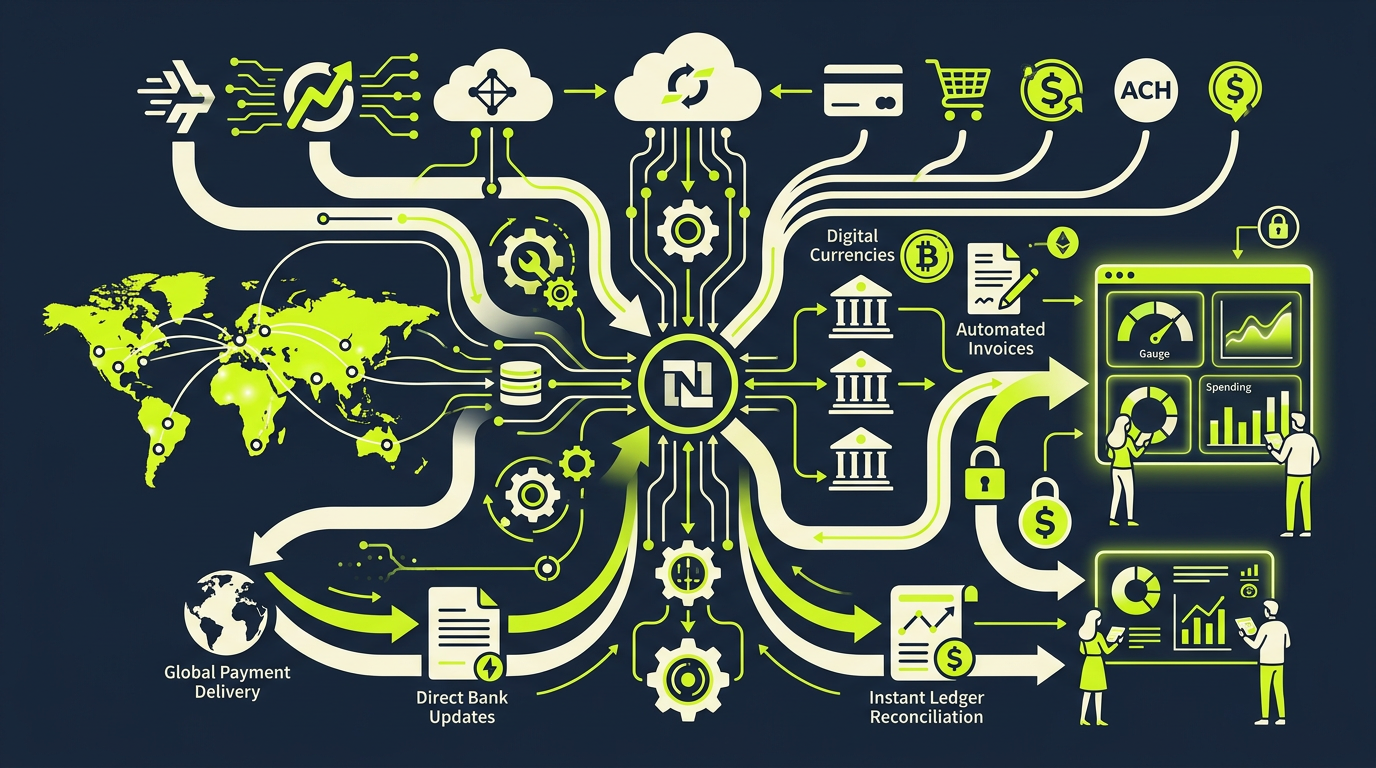
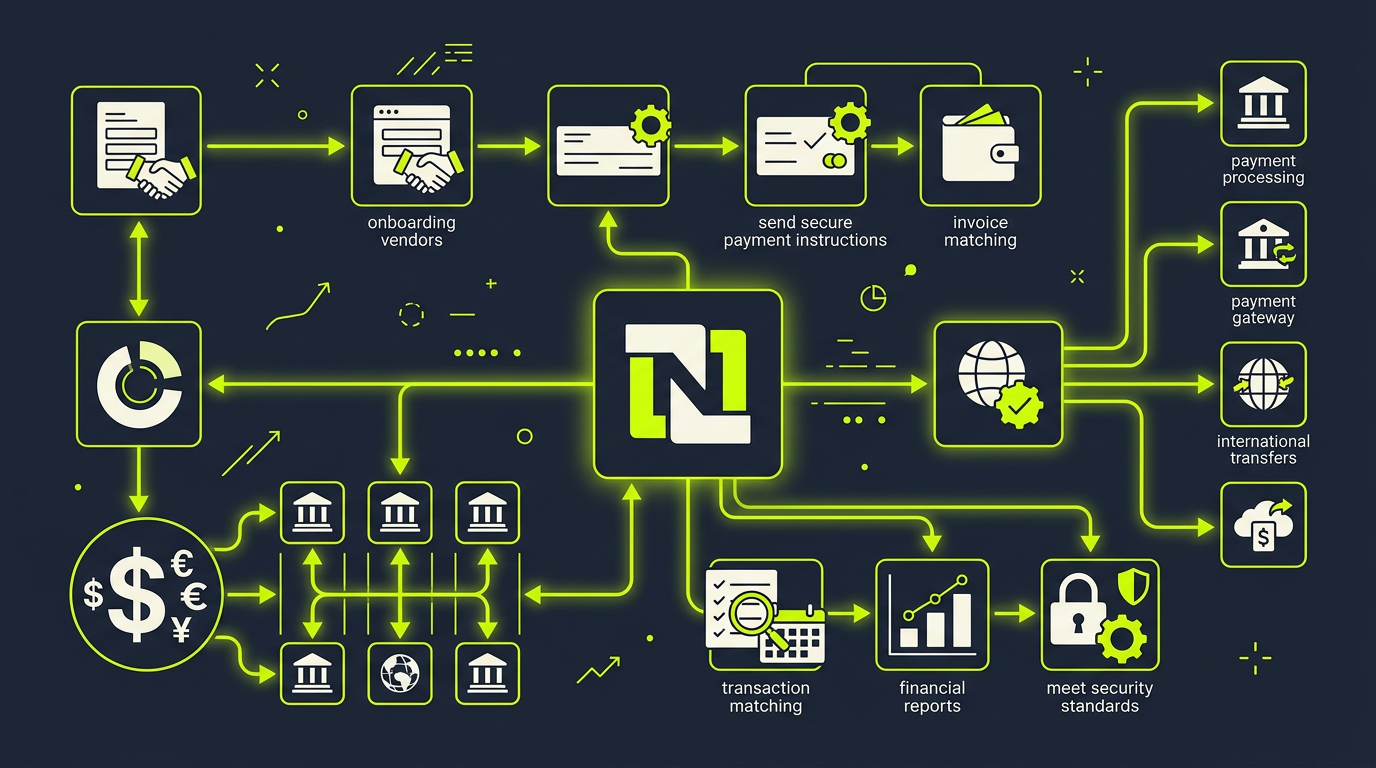
A modern NetSuite payment connector should function as a financial operating system designed for companies scaling globally. Instead of just pushing bill data to a payment portal, an 'Operations-First' platform extends NetSuite's capabilities. It starts with a scalable vendor onboarding process that programmatically collects banking details, contact information, and tax forms (W-9, W-8 series) for any country, ensuring compliance from day one.
This unified approach allows a finance team to manage a payment run for 1,000 vendors across 50 countries with the same effort as paying 10 domestic suppliers. , local ACH, SEPA, SWIFT), and fee management. By leveraging a flat-fee-per-transaction model, businesses can escape the percentage-based fees common in cross-border payments, which erode margins as payment volumes grow.
This predictable pricing is crucial for financial planning and scaling operations without scaling costs.
Case Study: From Manual AP to Strategic Finance
While specific results vary, the strategic impact of deep automation is significant. Consider the real-world example of a manufacturing business that saved $780,000 annually by automating its payment scheduling to capture early-payment discounts consistently. This wasn't just about paying bills on time; it was about transforming a cost center into a source of value.
Similarly, organizations like Carrot-Top Industries utilized NetSuite's capabilities to move away from hand-keying invoices and printing paper checks, freeing up the finance team to focus on growth-oriented activities.
The pattern is clear: removing manual, repetitive tasks allows finance professionals to apply their skills to more strategic work. A retail client that implemented AI-powered invoice automation on NetSuite successfully reduced its procure-to-pay cycle from several days to just 24 hours. More importantly, this efficiency gain allowed them to redeploy AP headcount to higher-value analytics roles, a prime example of how Your Top Talent is Wasted on Manual Finance Tasks when bogged down by archaic processes.
Key Capabilities of a Modern NetSuite Payment Connector
As you evaluate solutions, it's critical to look past surface-level features. The goal is to find a platform that offers a comprehensive, unified workflow from data ingestion to reconciliation. This requires a robust set of capabilities that address the entire global payment lifecycle, ensuring security, compliance, and operational efficiency at every step.
Seamless ERP Integration and Data Sync
The core of any effective solution is its integration with NetSuite. A top-tier connector offers deep integration, ensuring that approved bills and vendor data flow seamlessly without manual file uploads or API tinkering. When a vendor is created or a bill is approved in NetSuite, it should instantly appear in the payment platform, ready for execution.
Reconciliation data, including transaction fees and final settlement amounts, must flow back into NetSuite automatically, closing the loop and providing a real-time, accurate view of cash flow.
This two-way sync is essential for maintaining a single source of truth and preventing the data fragmentation that plagues so many finance departments. It eliminates the need to cross-reference spreadsheets or manually match payments to invoices, which is a primary source of errors and wasted time. The focus should be on creating a system where assessing your current AP process reveals a simple, automated flow rather than a series of manual handoffs.
Global Compliance and Payout Coverage
For global businesses, compliance is non-negotiable. A superior payment connector must have global tax and KYC/KYB compliance built into its DNA. This means automating the collection and validation of W-9 and the entire W-8 series for international vendors, ensuring you have the correct documentation on file before a payment is ever made. This proactive approach is fundamental to a scalable financial operation and is a core component of a Vendor Onboarding That Scales.
Coverage is the other side of this coin. The platform must be able to disburse funds to over 150 countries and in more than 135 local currencies. This global reach, combined with support for modern payment rails like crypto stablecoins (USDT, USDC), provides the flexibility needed to pay anyone, anywhere. It moves beyond the limitations of traditional banking systems, offering a frictionless settlement layer that is faster and more cost-effective for cross-border transactions, especially in regions with developing banking infrastructure, a challenge explored in How to Scale Local Currency Payouts in APAC with an Integrated ERP Workflow.
The Future: AI, Crypto, and Embedded Finance
The future of AP automation within the NetSuite ecosystem will be defined by three key trends: artificial intelligence, the utility of crypto as a settlement layer, and more deeply embedded financial services. AI is already moving beyond simple OCR for invoice scanning into predictive analytics for cash flow management and automated anomaly detection to prevent fraud. As seen with technologies like IXOPAY's IXONav, AI is becoming essential for navigating and unifying complex payment data streams.
Crypto, specifically stablecoins, is emerging as a powerful utility for global B2B payments. Stripped of speculative hype, stablecoins offer a near-instantaneous, low-cost settlement rail that bypasses the friction and fees of the correspondent banking system. For a marketplace paying thousands of creators in various countries, using USDC or USDT for settlement can dramatically reduce both cost and settlement time.
This is not about 'crypto investing' but about using the technology as a pure financial tool for operational efficiency.
Finally, the concept of a payment connector will evolve into a fully embedded financial operating system. This includes services like offering vendors 'Advanced Payment' options for instant liquidity on their approved invoices or issuing virtual cards for vendor payments directly from the platform. It's about bringing treasury functions directly into the AP workflow, all managed and reconciled within the familiar NetSuite environment. These integrated solutions must also prioritize security, ensuring compliance with standards like PCI DSS by using tools like credit card tokenization to protect sensitive data, a practice highlighted within the NetSuite Connector documentation.
Ultimately, connecting a global payment automation platform to NetSuite isn't just about replacing manual tasks or updating legacy technology - although those are key benefits cited by companies adopting new ERP systems. It is a strategic move to build a resilient, scalable financial infrastructure. It transforms the finance function from a reactive cost center into a proactive, data-driven engine for global growth, providing a secure portal to view invoices and pay bills efficiently, as outlined in NetSuite payment best practices.