

The architecture of global B2B payments is undergoing a fundamental shift. For decades, the correspondent banking system, with its reliance on intermediary banks and SWIFT messaging, has been the default rail for moving money across borders. This system, while reliable, introduces settlement delays, high transaction fees, and a lack of transparency-an 'administrative tax' that burdens finance teams and hinders the operational scalability of global-first companies.
Today, a viable alternative is accelerating in adoption: stablecoin settlement.
S. dollar, are emerging as a primary settlement instrument for high-friction transactions. Analysis from 2026 shows that while their primary function is still in financial market infrastructure, usage for cross-border B2B settlement is real and growing rapidly.
This isn't about speculative crypto assets; it's about leveraging a new, more efficient payment rail to solve age-old operational challenges. For CFOs and Operations Managers at ad networks, creator economy platforms, and digital marketplaces, the question is no longer if they should consider stablecoins, but how to best integrate them into their accounts payable workflow.
Traditional Rails vs. Stablecoin Settlement: An Operational Breakdown
Understanding the operational differences between traditional cross-border payments and stablecoin settlement is crucial for appreciating the potential efficiency gains. A typical international wire transfer can take 3-5 business days to settle, passing through multiple intermediary banks, each extracting a fee and adding potential points of failure or delay. This process is often opaque, leaving both the sender and receiver uncertain of the final amount and timing.
In contrast, a stablecoin transaction settles directly on a blockchain in minutes, or even seconds, for a fraction of the cost. The transaction is final and immutable, providing complete transparency to all parties. This shift from a multi-day, high-fee process to a near-instant, low-cost one has profound implications for working capital management, vendor relationships, and operational overhead.
For businesses paying hundreds or thousands of global vendors, freelancers, or creators, the cumulative impact is transformative.
The True Cost of Correspondent Banking
The visible costs of wire and foreign exchange (FX) fees are just the beginning. The 'hidden' costs of the traditional system lie in the manual labor required to manage it. Finance teams spend countless hours tracking failed payments, investigating intermediary bank fees, reconciling fragmented data across different payment gateways, and handling vendor inquiries about payment status.
This operational drag is a direct impediment to growth, pulling skilled finance professionals away from strategic work and into low-value administrative tasks.
Furthermore, the lack of data-rich payments in legacy systems complicates reconciliation. While the transition to new standards like ISO 20022 aims to improve this, stablecoin transactions inherently carry metadata that can be used for automated reconciliation. " This capability is native to digital currency rails, not an add-on.
The Efficiency of a Unified Settlement Layer
Stablecoins function as a universal settlement layer, abstracting away the complexities of individual country banking systems. A payment from the US to a vendor in Southeast Asia doesn't need to be routed through multiple correspondent banks. It can be sent as USDC or USDT and arrive in minutes, allowing the recipient to off-ramp into their local currency. The rapid growth in this area is staggering; one report noted that B2B stablecoin payments grew over 730% year-over-year in 2025.
This model drastically reduces the number of moving parts. Instead of managing relationships with multiple payment providers for different regions, a business can use a single rail to reach its global stakeholder base. The conversation is shifting from routing payments to managing liquidity, which is a far more strategic and value-additive function for a finance department. This is core to what we explore in our article, The Future of Global Payouts: Beyond SWIFT to Stablecoin Settlement.
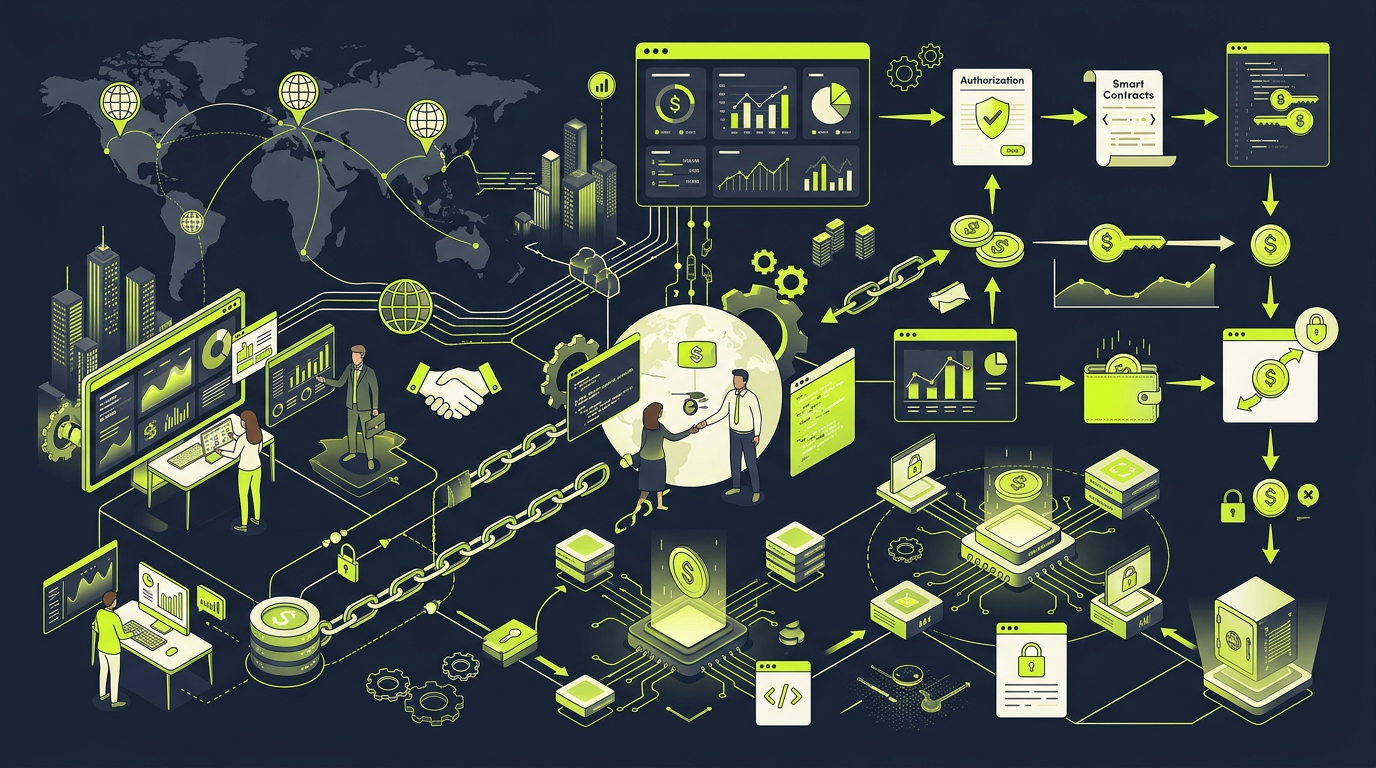
Implementation Models: The DIY Approach vs. a Payouts Platform
Recognizing the benefits of stablecoin settlement is the first step. The second, more critical step is choosing the right implementation model. Broadly, businesses have two options: a do-it-yourself (DIY) approach, managing their own digital currency treasury and operations, or partnering with an end-to-end payout automation platform. The choice has significant implications for cost, compliance, security, and scalability.
Approach 1: The 'Do-It-Yourself' (DIY) Stablecoin Operation
A DIY approach involves building an in-house treasury function to manage stablecoin payments. This requires procuring digital currency, managing private keys in secure wallets (like multi-signature wallets for control), establishing relationships with off-ramp providers in various countries, and building custom tools for reconciliation. As detailed by industry observers, businesses running high volumes of stablecoin payments this way often end up with complex, manual systems layered on top of automated on-chain flows.
This path presents several challenges. It requires specialized expertise in digital asset security and treasury management. The finance team becomes responsible for sourcing liquidity, managing counterparty risk with exchanges and off-ramp partners, and handling the constant monitoring required.
Furthermore, the compliance burden is significant. The business must develop its own internal controls for Anti-Money Laundering (AML) and Combating the Financing of Terrorism (CFT), in line with guidance from bodies like FinCEN and the FATF.
Approach 2: The Unified Payout Automation Platform
The alternative is to leverage a unified payout automation platform, an 'Operations-First FinTech' solution that provides stablecoin settlement as a feature within a broader vendor management ecosystem. Platforms like RedotPay Connect incorporate stablecoin rails (including USDT) as just another payment method alongside traditional bank transfers and card payouts, accessible through a single interface and API.
This model abstracts away the complexity. The platform handles digital currency liquidity, counterparty risk, and Last Mile settlement. It integrates global tax compliance (automating W-8/W-9 collection), vendor onboarding, and sanctions screening directly into the workflow. For the finance team, the process becomes as simple as any other accounts payable run. On the payables side, you can treat them like a foreign currency disbursement, recording an invoice in dollars and settling in the equivalent stablecoin amount. The platform's enterprise-grade controls add the security you expect from corporate finance tools.
Crucially, this approach connects directly to the source of truth for payables: the ERP. With over 600+ integrations with systems like NetSuite, QuickBooks, and SAP, a payout platform can ingest payment instructions directly, trigger the appropriate payout method (fiat or crypto), and then automatically reconcile the transaction back in the ERP. This creates a closed-loop, 'touchless finance' workflow that eliminates manual entry and reconciliation, addressing the core drivers of operational inefficiency. The explosive trend is clear, as highlighted in our analysis, 733% Growth: Stablecoins Reshaping Global B2B Payouts.
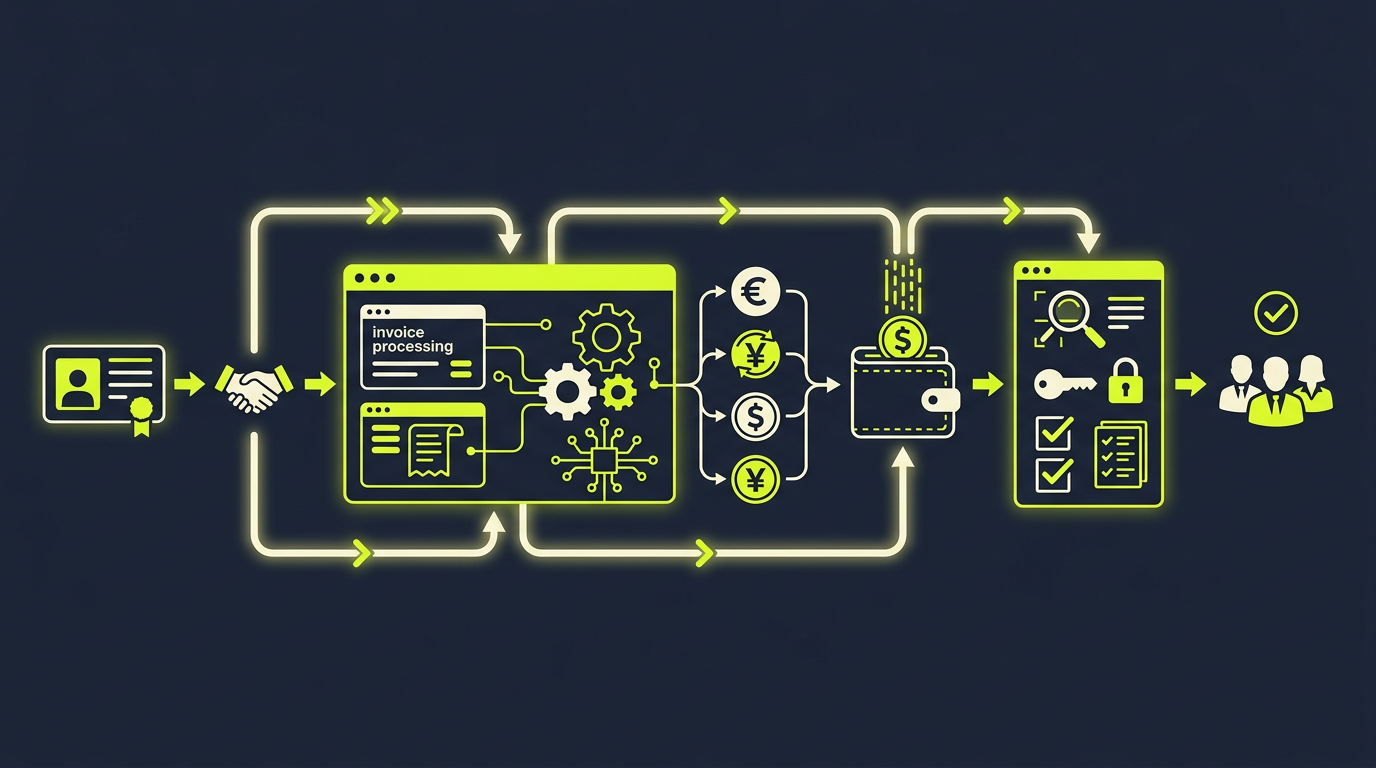
Comparing Key Capabilities: Control, Compliance, and Cost
When comparing the DIY and platform approaches, it's essential to evaluate them across the critical functions of a finance operations stack: control, compliance, and cost.
Financial Control and Reconciliation
In a DIY model, financial control relies on custom-built processes. Reconciliation often happens in spreadsheets, attempting to match on-chain transaction hashes with off-chain invoice data. This is error-prone and doesn't scale.
A unified platform provides a centralized dashboard for all payment activity, regardless of the rail used. It automates the reconciliation process by linking every payment back to its source invoice within the ERP, providing a single source of truth for audit and reporting.
Compliance and Risk Management
Compliance is perhaps the most significant differentiator. Stablecoins can embed compliance functions directly into the transfer mechanism, a concept scholars refer to as 'compliance by design.' A DIY setup places the onus of building and maintaining this framework entirely on the business. This includes KYC/KYB on all payees, ongoing sanctions screening, and adherence to evolving regulations.
A payout automation platform externalizes this burden. It provides a purpose-built vendor management suite with automated identity verification and tax form collection. For example, enterprise-grade platforms automate the entire W-8/W-9 lifecycle, from initial collection to validation and renewal alerts. This integrated approach dramatically reduces compliance risk and the associated operational overhead, turning a complex manual process into an automated workflow.
Total Cost of Ownership (TCO)
While on-chain transaction fees are low, the TCO of a DIY stablecoin operation can be substantial. It includes the salaries of specialized treasury and security staff, the cost of custom software development, and the operational cost of manual reconciliation and compliance checks. There are also unpredictable costs related to managing volatile gas fees and slippage during currency conversion.
A platform model shifts this to a predictable, transaction-based cost. Enterprise solutions often operate on a transparent, flat-fee per-transaction model, not a percentage of the volume. This makes costs predictable and scalable. When you factor in the elimination of manual labor and the reduction in FX and intermediary bank fees, the ROI becomes clear. Finance teams are liberated from administrative work, allowing them to focus on strategic initiatives that drive business growth. It's the difference between settling payments in minutes and reconciling them for days, a concept we call Your Payouts Settle in Days. Theirs Settle in Seconds.
Making the Right Choice for a Scalable Financial Operation
For a small number of ad-hoc payments, a DIY approach might seem manageable. However, for any business building a global, scalable operation-paying hundreds or thousands of vendors, creators, or affiliates across 150+ countries-the operational fragility of a DIY system becomes a critical liability. The goal is not simply to use stablecoins; the goal is to build a 'touchless finance' operation that is efficient, compliant, and scalable.
This is achieved by treating stablecoin settlement not as a standalone crypto project, but as an integrated component of a holistic payout automation and vendor management platform. By unifying fiat and crypto rails, automating compliance, and synchronizing data with the ERP, a platform approach transforms the finance function from a cost center burdened by manual work into a strategic enabler of global growth. Platforms that offer this unified service are becoming crucial for enterprises to manage their cross-border settlements effectively.