

- The Ascendance of Stablecoins in Cross-Border B2B Payments
- Eliminating the Administrative Tax: Operational Efficiencies and Cost Savings
- Integrating Stablecoins into Existing Financial Ecosystems
- The Future: Stablecoins as a Cornerstone of Global Treasury
- Conclusion: Navigating the New Era of Global Payouts
The landscape of global business-to-business (B2B) payments is undergoing a significant transformation, with stablecoins emerging as a pivotal force. For high-growth digital companies, particularly those navigating complex international contractor and vendor networks, the administrative overhead and financial friction associated with traditional cross-border transactions have long been a challenge. This 'administrative tax' directly impacts operational efficiency and slows global scaling.
The need for faster, more cost-effective, and compliant payout mechanisms is more pressing than ever.
In this evolving environment, stablecoins offer a compelling alternative for mass international payouts. Their ability to minimize delays and reduce costs, previously constrained by legacy banking systems, directly addresses the pain points of CFOs, Finance Directors, Operations Managers, and Founders. Businesses focused on the creator economy, ad networks, affiliate agencies, and marketplaces are increasingly exploring how stablecoins can streamline their global financial operations, providing instant liquidity and reducing manual workflows.
The Ascendance of Stablecoins in Cross-Border B2B Payments
Stablecoins, digital currencies pegged to stable assets like the U.S. dollar, are rapidly moving from the periphery to the mainstream of B2B transactions. Their fundamental design mitigates the volatility associated with other digital assets, making them suitable for commercial payments. This stability, combined with the underlying speed and efficiency of blockchain technology, makes them an attractive option for companies seeking to optimize their global payout infrastructure.
Market data underscores this shift. Actual stablecoin payment volume (excluding trading and automated transfers) reached $390 billion in 2025, more than double 2024 levels, according to McKinsey and Artemis Analytics. Crucially, B2B payments accounted for approximately $226 billion of this volume, demonstrating a remarkable 733% year-over-year growth. This surge indicates a clear and accelerating adoption trend among businesses for operational financial flows, not just speculative trading.
Beyond Traditional Rails: The Case for Faster Settlement
Traditional cross-border payment methods often involve multiple intermediaries, leading to extended settlement times and unpredictable fees. For businesses managing a large volume of international contractors, this can translate into significant operational drag and frustrated payees. Stablecoins, leveraging distributed ledger technology, enable near-instantaneous transfers across borders, fundamentally reshaping expectations for payment velocity. This near-real-time settlement capability is a for businesses that recognize that your payouts settle in days. Theirs settle in seconds.
The operational impact of faster settlement extends beyond mere speed. It fosters better vendor relationships, improves cash flow management for recipients, and reduces the need for complex pre-funding arrangements on the payer's side. For platforms reliant on timely payments to their global networks of affiliates, influencers, or freelancers, this efficiency directly translates into competitive advantage and enhanced satisfaction for the very stakeholders driving their growth.
Eliminating the Administrative Tax: Operational Efficiencies and Cost Savings
The true cost of international payouts often extends far beyond direct transaction fees. Manual data entry, reconciliation efforts, foreign exchange (FX) rate volatility, and the complexities of international tax compliance (W-8/W-9) collectively impose an 'administrative tax' on scaling companies. Stablecoins, when integrated into a sophisticated payout automation platform, offer a powerful antidote to these pervasive pain points.
By standardizing the payment rail and automating much of the associated workflow, businesses can reclaim valuable time and resources.
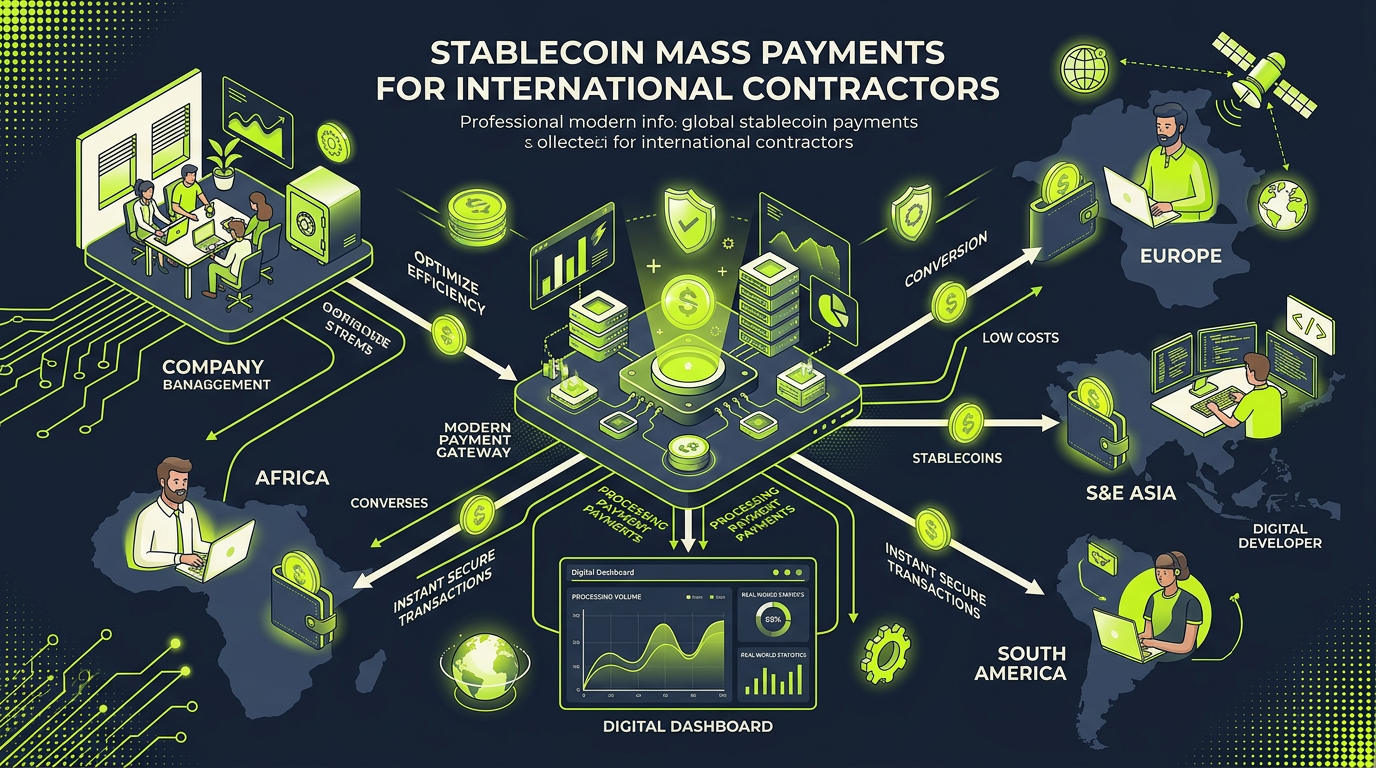
Consider the savings on cross-border fees alone. Unlike traditional banking channels that often impose percentage-based fees that escalate with transaction volume, advanced payout platforms leveraging stablecoins typically operate on a flat-fee-per-transaction model. This predictable cost structure enables businesses to scale their global operations without incurring disproportionately higher payment processing expenses.
Such a model is particularly beneficial for companies executing mass payouts, where cumulative percentage fees can become substantial.
Navigating Global Tax and Compliance with Automation
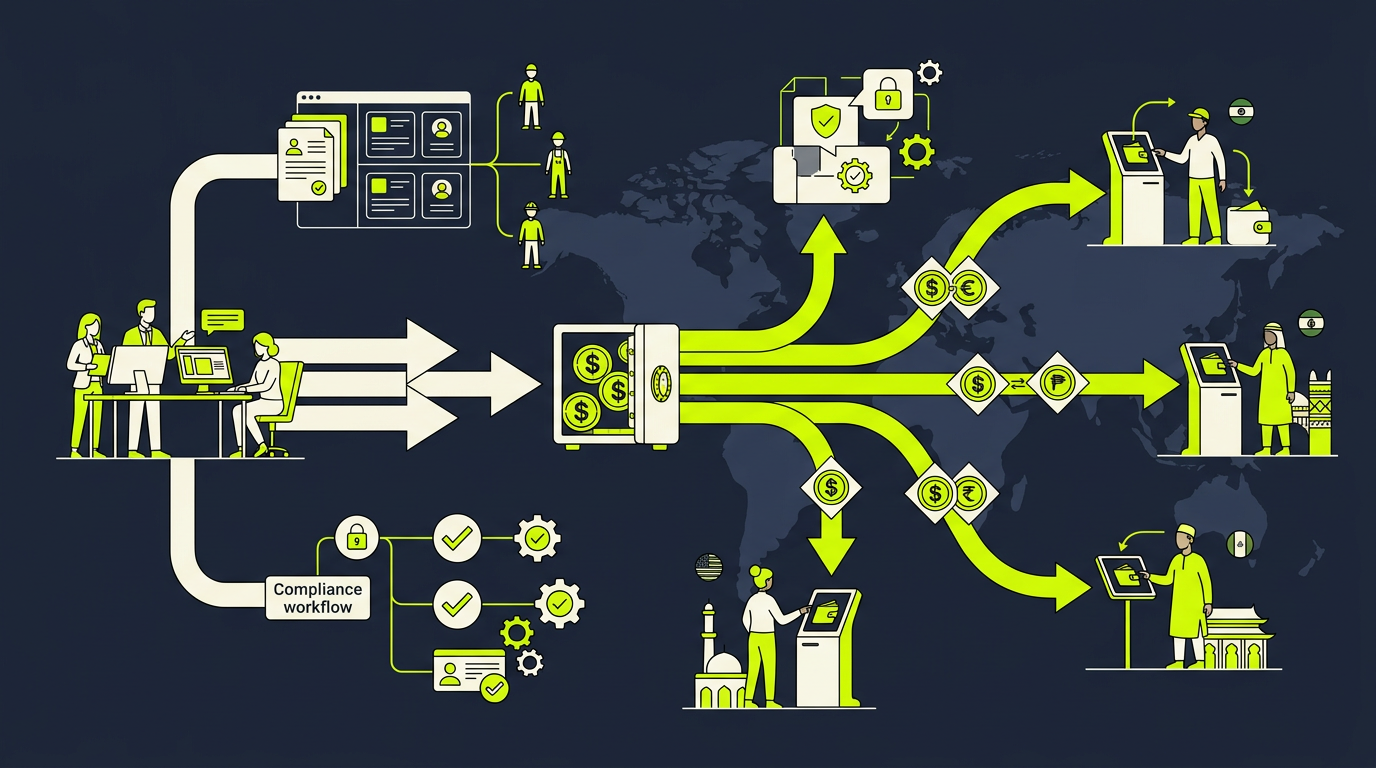
Global tax compliance, particularly for contractors, is a labyrinth of regulations. Collecting and validating W-8 and W-9 forms, performing KYC (Know Your Customer) checks, and ensuring adherence to diverse international financial regulations (such as GDPR, PSD2, FinCEN, and FATF) add layers of complexity. While stablecoins offer a swift settlement layer, the compliance burden remains.
This is where comprehensive vendor management suites become indispensable, providing automation for documentation, verification, and reporting.
Platforms that offer an integrated vendor portal effectively offload much of this administrative burden. Contractors can self-serve their tax information, track payment statuses, and manage their profiles, all within a secure and compliant environment. This not only streamlines the operational process for the finance team but also significantly enhances the vendor experience, reducing payment-related inquiries and ensuring regulatory adherence across 150+ countries. The days of hours spent on W-8s could be seconds with automated systems.
Integrating Stablecoins into Existing Financial Ecosystems
One of the critical considerations for businesses exploring stablecoin payouts is integration with their existing accounting and enterprise resource planning (ERP) systems. The friction of adopting new technologies is often a barrier, but modern payout automation platforms are designed to seamlessly connect with a wide array of financial tools. This interoperability ensures that stablecoin transactions are not siloed but rather flow directly into established financial reporting and reconciliation workflows.
With hundreds of ERP integrations-including NetSuite, QuickBooks, Xero, and SAP-these platforms ensure that businesses can leverage the benefits of stablecoin payouts without disrupting their core financial processes. This holistic approach to financial operations is central to achieving
Touchless Finance
objectives. By automating data ingestion, payment execution, and reconciliation, organizations can move closer to a fully automated financial operating system, optimized for global scale.
Liquidity and Advanced Payment Solutions for the Creator Economy
The creator economy thrives on speed and access to funds. Influencers, affiliate marketers, and gig workers often face cash flow challenges, particularly when awaiting international payouts that can take days or weeks to clear. Stablecoin payouts, combined with
Advanced Payment
features, directly address this need by providing instant liquidity. This capability allows creators to receive their earnings in stablecoins almost immediately, empowering them with better financial control and reducing reliance on costly short-term financing.
For platforms paying out thousands of creators or affiliates, offering instant stablecoin payouts can be a significant differentiator in a competitive market. It streamlines the payment experience while providing a tangible benefit to recipients, fostering loyalty and driving engagement. This instant access to funds, even in countries with unstable local currencies or limited banking infrastructure, provides a , as discussed in the context of crypto-friendly countries and emerging markets.
The Future: Stablecoins as a Cornerstone of Global Treasury
Looking ahead, industry forecasts suggest stablecoins could handle 5-10% of all cross-border payments by 2030, representing $2.1-4.2 trillion in annual value. This trajectory indicates a fundamental shift in how global businesses manage their treasury functions and execute payments. The continued growth and regulatory clarity around stablecoins are paving the way for them to become a standard tool in the finance toolkit of high-growth companies.
The maturation of stablecoin adoption is not merely about payment rails; it’s about a comprehensive approach to global financial operations. Solutions that combine stablecoin payouts with global accounts, virtual cards, and robust vendor management capabilities offer CFOs and Finance Directors a unified platform to manage complex international financial flows. This integrated strategy positions businesses to capitalize on the efficiency of digital assets while maintaining stringent control and compliance.
Strategic Implementation: Best Practices for Businesses
Implementing stablecoin mass payments requires a strategic approach. It begins with verifying contractor setup and ensuring all necessary documents are collected and verified. Next, calculate the payment amount in USD, as per contractor agreements. A crucial step is to send a small test payment to confirm receipt and functionality before executing the full payment, as outlined in guides for paying international contractors with stablecoins. Finally, document every transaction meticulously for tax and compliance purposes.
Choosing the right payout partner is paramount. Businesses should look for platforms that offer end-to-end automation, robust global payment capabilities across multiple currencies and entities, proactive fraud prevention, and advanced currency management. A streamlined payment experience, often facilitated by a self-service vendor portal or embedded solutions, further enhances efficiency and satisfaction, as highlighted in discussions around best methods to pay international contractors.
Conclusion: Navigating the New Era of Global Payouts
The evolution of stablecoin mass payments represents a significant leap forward in global financial operations. For operations-first businesses, these advancements are not just about technology; they're about empowering businesses to scale efficiently, reduce costs, and enhance relationships with their global network of stakeholders. By automating payments from data ingestion and tax compliance to multi-currency disbursement, companies can truly embrace Touchless Finance.
As the global economy becomes increasingly interconnected, the strategic adoption of stablecoin-powered payout automation is no longer an option but a strategic imperative for businesses aiming for sustained international growth and operational excellence. The journey towards optimized global payouts demands a platform that not only supports a flat-fee per transaction model but also integrates seamlessly with existing systems and offers advanced features like instant liquidity for vendors. For further insights into leveraging digital assets for global payments, explore our comprehensive Crypto Payouts in 2026: A Post-MiCA Operational Guide.