

Multi-sided marketplaces and digital platforms are engines of the modern global economy, connecting buyers with sellers, brands with creators, and companies with a diverse ecosystem of freelance talent. But as these platforms scale, they inevitably collide with a complex operational reality: paying a large number of stakeholders across different countries, currencies, and payment preferences. This is where the architecture of growth meets its first major test.
For many high-growth platforms, the process of paying vendors, affiliates, or creators begins with manual spreadsheets, individual bank transfers, and a patchwork of non-integrated tools. This approach, while manageable at first, quickly becomes a significant bottleneck. It introduces a high risk of human error, creates payment delays that damage vendor relationships, and consumes an ever-increasing amount of finance and operations team resources, pulling focus away from strategic growth initiatives.
The Scaling Challenge: Why Manual Marketplace Payouts Fail
The very success of a marketplace-style business-attracting more participants-creates a compounding payment complexity. What begins as a simple accounts payable function transforms into a global treasury and compliance operation. This transition is where many scaling companies falter, finding their growth constrained by the limitations of their own financial infrastructure.
The Friction of Growth in Multi-Sided Platforms
As noted by Newsweek, the modern workforce is a complex mix of freelancers, contractors, and creators, a stark departure from the traditional full-time employee model payroll was designed for. This complexity is amplified for marketplaces; as of March 2026, nearly 32% of Payoneer-powered marketplace sellers operate across multiple entities or platforms - an approach that drives meaningful growth, with these sellers generating 50-55% higher revenue on average than those selling on a single marketplace. Each new country is a new set of regulatory requirements, and each new vendor a new data point to manage securely.
When your team spends more time managing payouts than focusing on core business growth, it signals a critical need for a centralized solution. Manual processes, involving disparate systems for onboarding, verification, and payment, are simply not built for the scale and pace of modern digital business. This friction slows down everything, from vendor onboarding to the final settlement of funds, creating a poor experience for everyone involved.
Administrative Tax and Operational Drag
The "administrative tax" is the hidden cost of inefficient, manual financial operations. It comprises hours lost to data entry, the high cost of wire fees for cross-border payments, the effort spent navigating global tax compliance like W-8 and W-9 form collection, and the time required to reconcile payments across different systems. This isn't just a line item-it's a fundamental drag on operational efficiency that stifles a company's ability to scale.
As an Operations-First FinTech, Payouts.com is designed to eliminate this administrative tax. The goal is to create a 'Touchless Finance' environment where payments flow from data ingestion to final disbursement without manual intervention. This removes the operational drag, freeing up capital and human resources to be reinvested into growth, product development, and market expansion.
Introducing Payout Orchestration
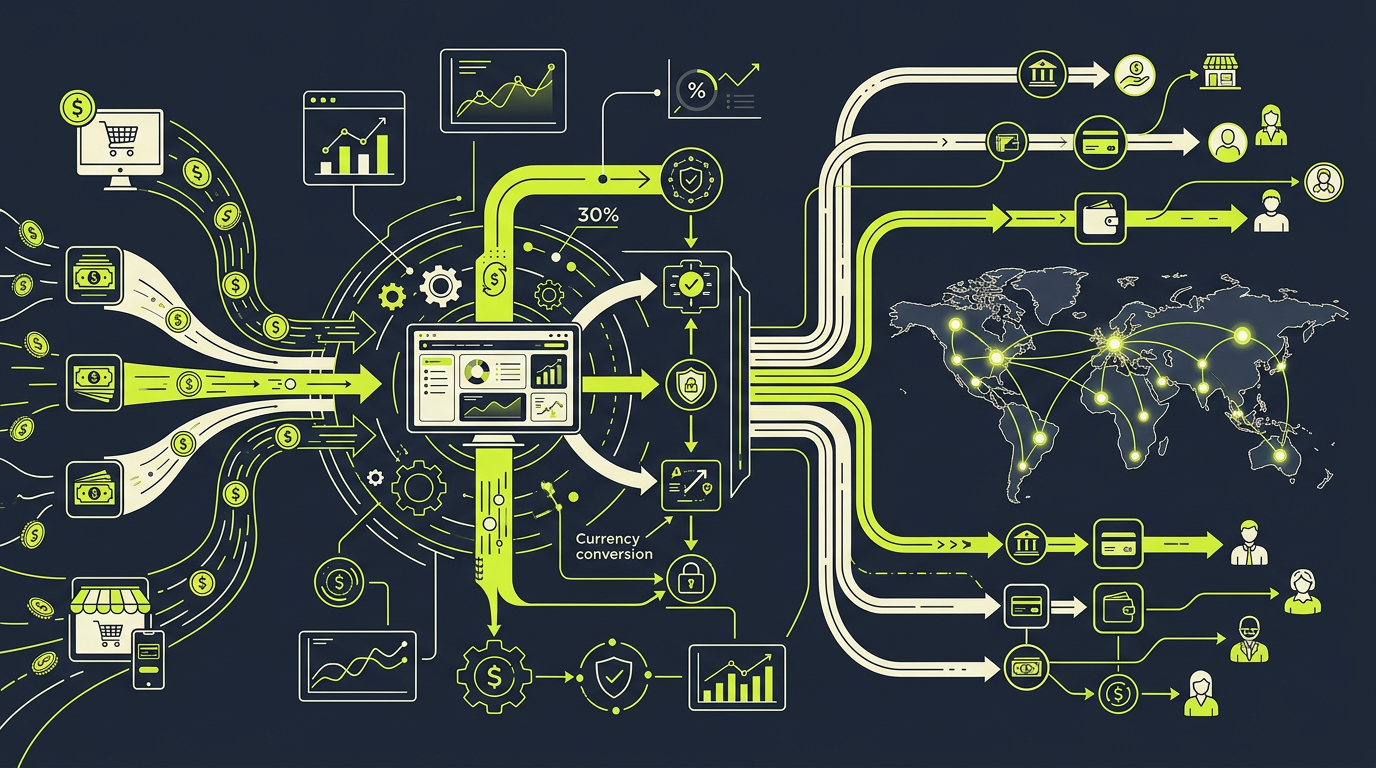
To solve the challenges of global mass payouts, forward-thinking marketplaces are adopting a new model: payout orchestration. This represents a strategic shift from merely processing payments to intelligently managing the entire end-to-end payout lifecycle. It's an approach built for complexity and designed for scale, transforming the finance function from a cost center into a strategic enabler of global growth.
The market itself reflects this shift, with the payment orchestration platform sector projected to expand from approximately $3.06 billion in 2025 to over $3.66 billion by 2026, according to the Payment Orchestration Platform Market Report 2026. This growth is driven by the clear need for a more sophisticated, centralized approach to manage increasingly fragmented global payment ecosystems.
What is Payout Orchestration?
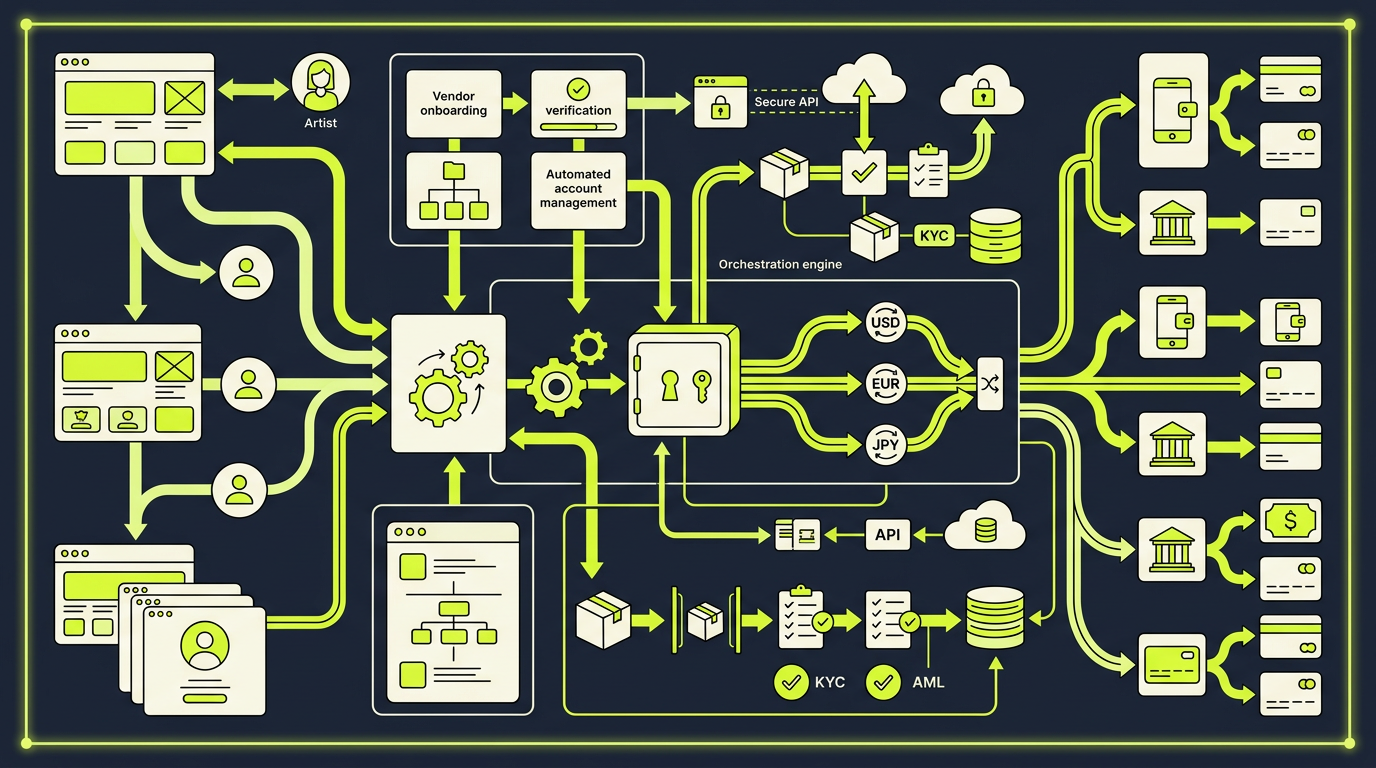
Payout orchestration is a centralized layer that coordinates every aspect of a payment flow. It sitting between a company's ERP or business management system and the vast global network of payment providers and banks. It automates data validation, risk management, compliance checks, currency conversion, and intelligently routes each payment through the most efficient rail-whether that's a local bank network, a traditional wire, or a digital wallet.
The power of this model lies in its completeness. As one industry analysis points out, the central challenge for many complex systems is orchestration rather than the performance of any single component. A payout orchestration layer unifies disparate systems, providing a single point of control and visibility over the entire global payout operation, replacing manual processes with a more resilient and automated infrastructure.
From Fragmented Point Solutions to a Unified Financial OS
The traditional approach to global payments involves stitching together multiple payment service providers (PSPs), bank portals, and compliance tools. This creates data silos and operational seams where errors and delays are common. Reconciling transaction data from a dozen different sources is a nightmare for finance teams and makes achieving a clear view of cash flow and payment status nearly impossible.
A payout orchestration platform replaces this chaotic, multi-vendor mess with a single, unified financial operating system. Through a single API integration, a marketplace gains access to a global payment network and a suite of tools for vendor management, tax compliance, and multi-currency treasury. These platforms are designed to support everything from bank transfers and PayPal to digital wallets and even cryptocurrency payouts for international vendors.
Core Pillars of a Modern Payout Orchestration Platform
Not all payout solutions are created equal. A true orchestration platform is built on a foundation of several key pillars that work together to deliver a seamless, scalable, and compliant global payment infrastructure. These elements are essential for any digital business with ambitions to operate and pay stakeholders globally.
Global Reach and Localized Payouts
To be a truly global platform, you need to be able to pay anyone, anywhere. This requires a robust network that extends to 150+ countries and supports over 135 currencies, like that of Payouts.com. It's about providing optionality not just for the sending business but for the recipient.
This means offering payouts via the methods vendors prefer in their home country, including local bank transfers that settle faster and at a lower cost than traditional international wire transfers. Providing this level of localized experience is a powerful way to build strong, lasting relationships with your global network of sellers, creators, and freelancers.
Compliance as a Core Function
In the world of global payments, compliance is not optional, and it cannot be an afterthought. The next phase of marketplace evolution will demand continuous compliance automation. A modern orchestration platform embeds compliance directly into the payout workflow, automating everything from initial Know-Your-Customer (KYC) checks and AML screening to the collection and validation of W-8/W-9 tax forms.
This automated, proactive approach to compliance de-risks the entire payout process. It protects the marketplace from regulatory penalties and reputational damage while creating a frictionless onboarding experience for legitimate vendors. Platforms that automate KYC-to-payout processes can scale much faster because their growth is not gated by manual compliance reviews.
Unifying Fiat and Crypto Payouts
The conversation around digital assets in a business context is maturing. For payout orchestration, this isn't about speculation-it's about utility. For certain payment corridors, stablecoins (like USDT) can serve as a highly efficient, low-cost settlement layer, bypassing the friction and fees of correspondent banking systems.
An advanced payout orchestration platform incorporates crypto as another payment rail alongside traditional fiat options. This is ideally managed through a flat-fee-per-transaction model, which is far more scalable and cost-effective than percentage-based fees that penalize growth. This gives marketplaces the flexibility to offer faster, more affordable payment options to vendors in specific regions without being exposed to the volatility of other digital assets.
The Strategic Impact of an Orchestrated Approach
Adopting a payout orchestration strategy does more than just solve an operational problem; it creates a durable competitive advantage. It transforms a complex cost center into a powerful tool for vendor retention, global expansion, and data-driven decision-making. This shift in perspective is what separates market leaders from the rest of the pack.
Enhancing Vendor & Creator Relationships
For your vendors, creators, and affiliates, the payout experience is a direct reflection of your brand. Late payments, high fees, and lack of transparency erode trust and can cause valuable partners to leave your platform. A streamlined payout process is one of the most effective retention tools a marketplace has. Explore a deep-dive on this topic in our guide, "How to Scale Creator Payouts Past $1M/Month."
Payout orchestration enables a superior vendor experience through self-service portals where they can manage their own payment details, track payment status in real-time, and view their payment history. Advanced features like instant pay options-which provide immediate liquidity to vendors-can be a , transforming the payment function into a strategic asset that attracts top-tier talent and sellers to your ecosystem.
Future-Proofing Your Marketplace
The global payment landscape is in a constant state of flux, with new regulations, payment methods, and technologies emerging continuously. A marketplace payout API built on an orchestration layer provides the architectural flexibility to adapt and thrive. It allows you to expand into new regions without the operational drag of building new payment integrations from scratch.
This agility is critical. Whether it's adding a new local payment method in Southeast Asia, adapting to new tax reporting mandates in Europe, or integrating a new digital wallet popular with Gen Z creators, an orchestration platform insulates your core business from the underlying complexity. It ensures you can sync inventory and pricing rules and configure shipping and fulfillment settings without having to re-architect your payment stack for each new initiative.
Data-Driven Financial Operations
A fragmented payment process leads to fragmented data. When your payout information is scattered across spreadsheets, bank portals, and various PSP dashboards, you have no single source of truth. This makes financial planning, forecasting, and reconciliation incredibly difficult and time-consuming.
A unified platform remedies this by consolidating all global payout data into one place. With over 600 ERP integrations to systems like NetSuite, QuickBooks, Xero, and SAP, Payouts.com ensures that this data flows seamlessly into your core accounting systems. This provides CFOs and finance directors with unprecedented visibility and control, enabling more strategic, data-informed decision-making.
Conclusion: Moving from Management to Orchestration
For marketplaces with global ambitions, managing payouts is no longer enough. The complexity, risk, and cost of manual, fragmented systems represent a direct threat to scalable growth. The future belongs to platforms that embrace orchestration, building a unified, automated, and intelligent financial operating system.
By shifting from manual management to strategic orchestration, you can eliminate the administrative tax, de-risk global expansion, and turn your payout function into a competitive advantage. This allows your team to stop chasing down invoices and bank details and start focusing on what they do best: building your business. The journey to a truly touchless finance operation begins with a single, powerful, and orchestrated payout platform. For more on streamlining your affiliate payments, see our guide, "Global Affiliate Payouts, Simplified."