
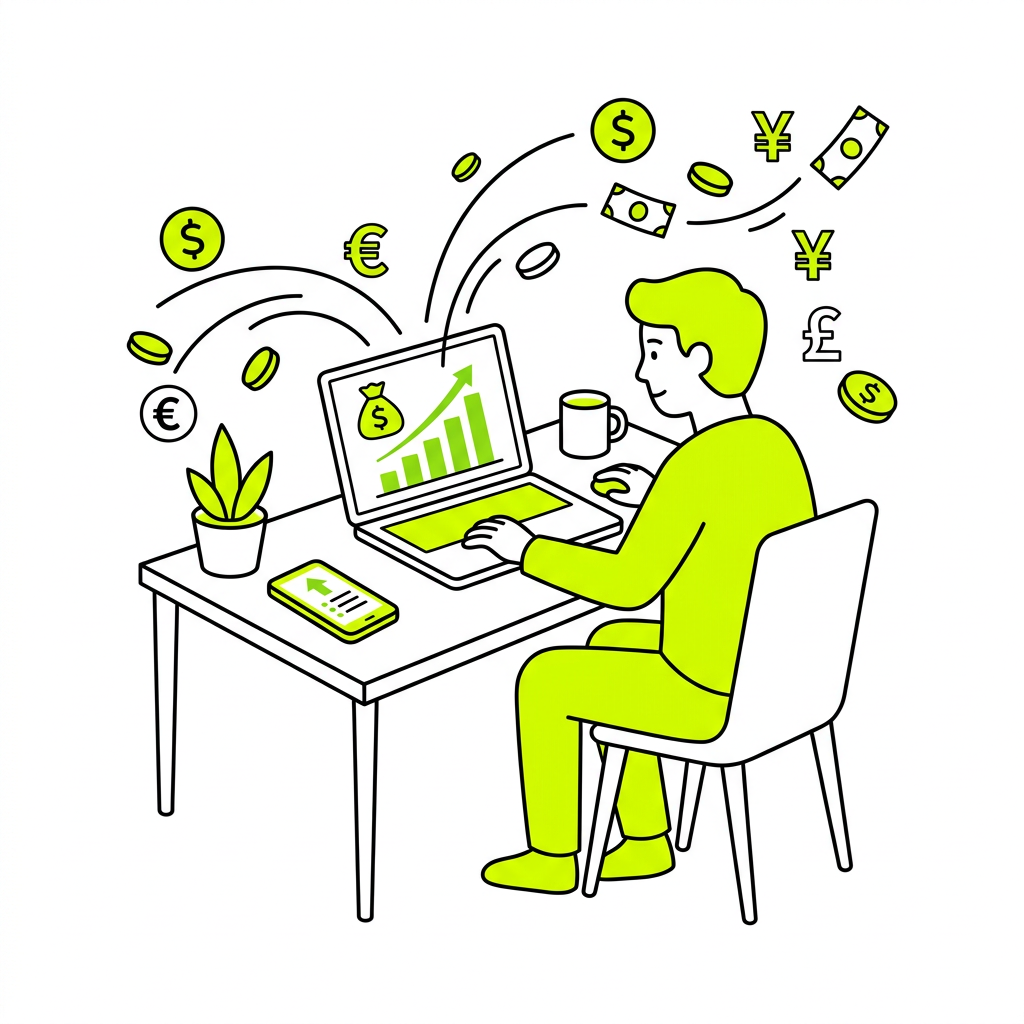
The creator economy is expanding at an unprecedented rate, with projections showing the market size could exceed $250 billion globally in 2026. For platforms and brands at the center of this ecosystem-ad networks, creator economy platforms, and marketplaces-this rapid growth presents a dual challenge. On one hand, it offers immense opportunity.
On the other, it exposes the severe limitations of manual, fragmented payment systems. As transaction volumes escalate, managing cash flow and ensuring timely, accurate, and compliant payouts to a global network of creators becomes a significant operational hurdle.
This isn't merely a payments problem; it's an operational scaling problem. The administrative tax of manual workflows-chasing invoices, verifying tax forms, handling payment rejections, and reconciling data across multiple systems-consumes resources that should be dedicated to growth. To thrive, businesses need to adopt an 'Operations-First FinTech' mindset, implementing a financial operating system designed for the complexities of the creator economy.
This means moving beyond simple payment processing to a unified platform that automates the entire cash flow cycle, from vendor onboarding to multi-currency disbursement and tax compliance.
The Great Unbundling: Why Traditional AP Fails in the Creator Economy
Traditional Accounts Payable (AP) systems were built for a different era-one defined by predictable, low-volume, domestic B2B transactions. They are ill-equipped to handle the high-velocity, cross-border, and micro-transaction nature of creator payouts. The modern creator economy platform may need to pay thousands of individuals across 150+ countries in dozens of different currencies, a scenario that quickly overwhelms legacy AP software and manual processes.
The core issue is fragmentation. Companies often stitch together multiple solutions: one for ACH payments, another for international wires, a third for tax form collection, and spreadsheets to track it all. This fragmented stack creates data silos, increases the risk of errors, and offers no single source of truth for financial reporting.
As reported by Circle, 48% of creators run their businesses entirely by themselves, meaning they have little tolerance for payment friction or delays caused by inefficient back-end systems.
Global Compliance: The Tax and KYC Hurdle
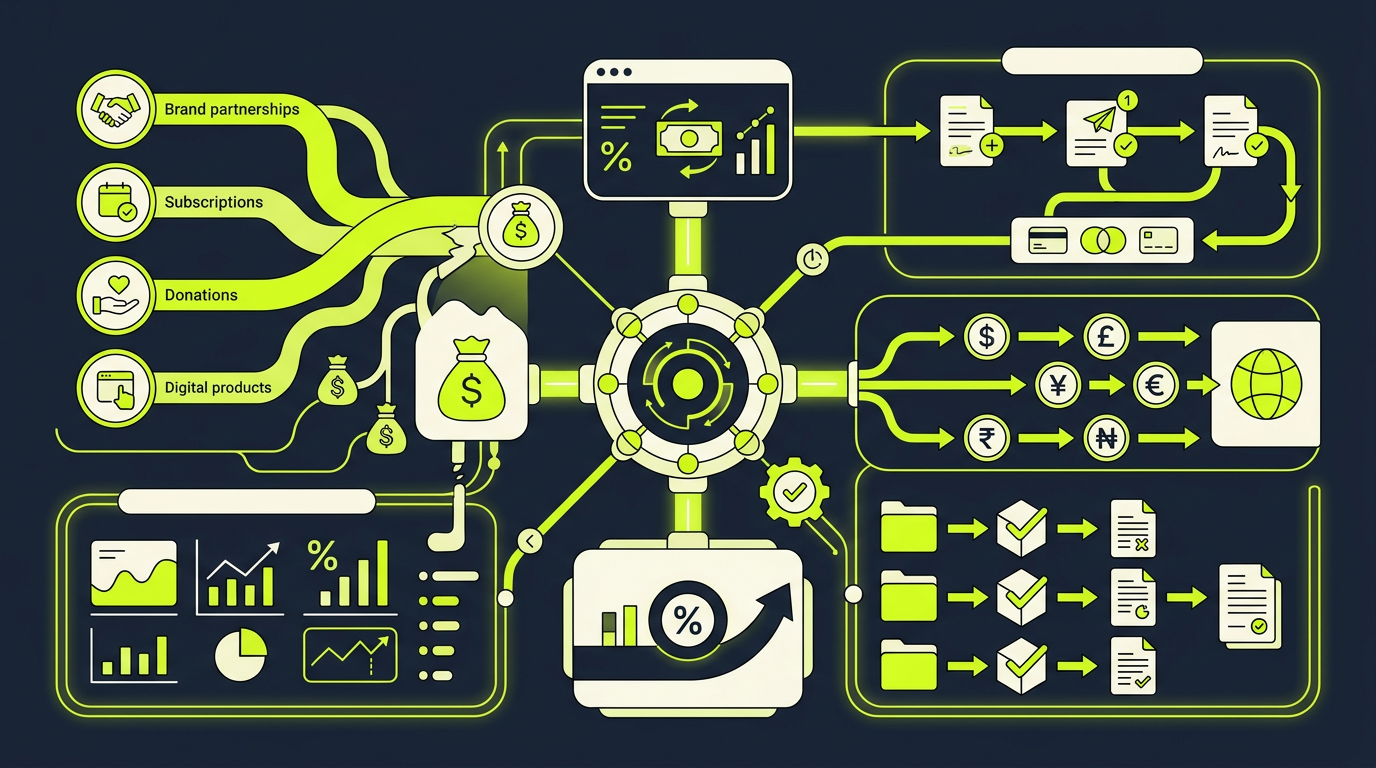
Beyond payment processing, global compliance is a major source of operational drag. Collecting and validating tax documents like W-9s for US-based creators and W-8 series forms for international ones is a complex, time-consuming task. Failure to do so correctly can result in significant financial penalties and payment freezes. An automated system is essential to Streamline Global Creator Tax Compliance, ensuring forms are collected, validated, and managed at scale.
Similarly, performing Know Your Customer (KYC) and Anti-Money Laundering (AML) checks is non-negotiable for platforms operating globally. Manually verifying identities for thousands of creators is not a scalable model. A robust payout infrastructure must embed these checks directly into the onboarding process, using automation to approve legitimate creators quickly while flagging higher-risk accounts for review. This is fundamental to building a secure and trustworthy platform.
The Burden of Cross-Border Fees and FX Volatility
For global platforms, high cross-border transaction fees and currency conversion costs can erode profit margins significantly. Traditional banking systems often apply percentage-based fees, which become prohibitively expensive as payment volumes grow. Furthermore, managing FX volatility adds another layer of financial risk. A seemingly small fluctuation in exchange rates can have a substantial impact on the total payout amount when dealing with hundreds or thousands of transactions.
Modern payout platforms address this with transparent, flat-fee per-transaction pricing models. This predictable cost structure allows businesses to forecast expenses accurately and protects margins, no matter the transaction size. By offering multi-currency support and competitive FX rates, these platforms ensure creators receive their earnings in their local currency without the platform absorbing unpredictable costs.
The Shift to a Unified Financial Operating System
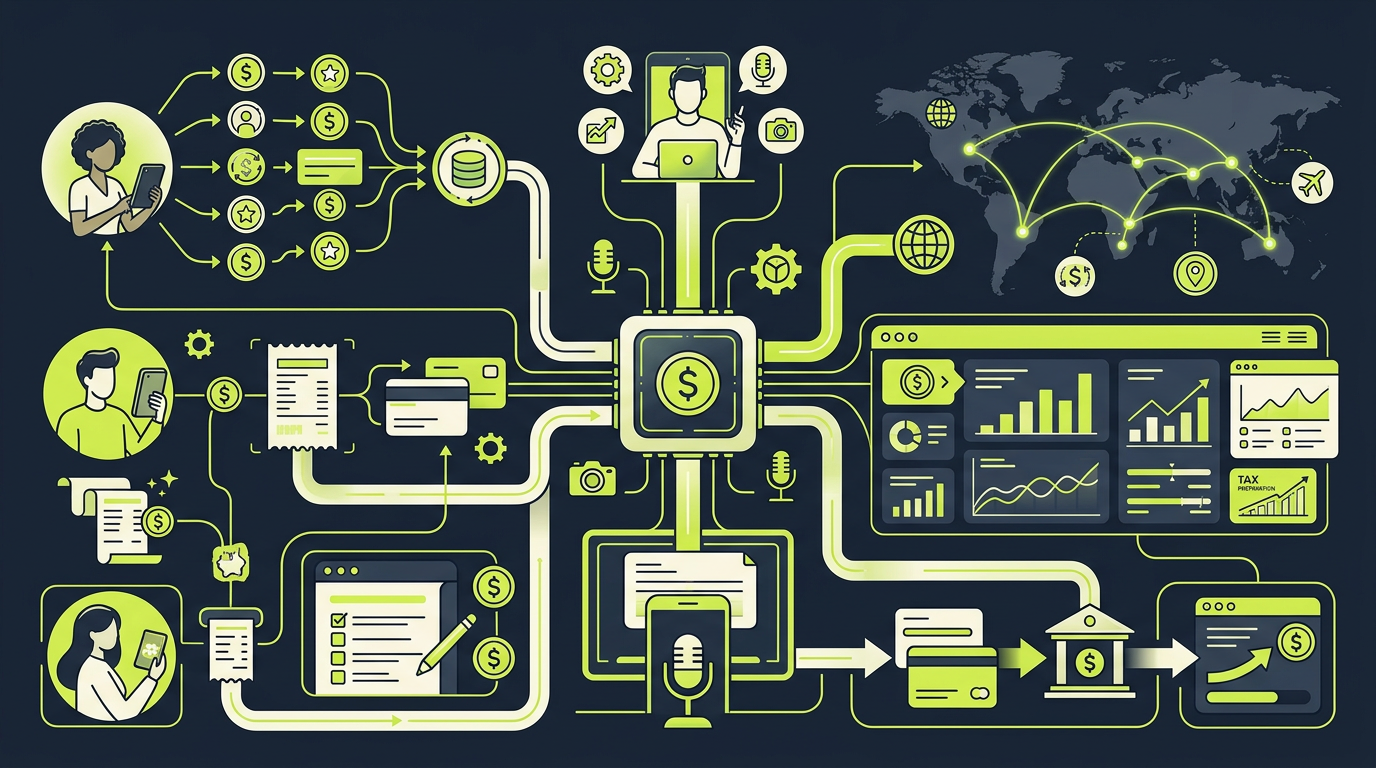
To overcome these challenges, leading creator economy companies are moving towards unified payout automation platforms. These systems act as a financial operating system, integrating every step of the payout process into a single, cohesive workflow. The goal is to achieve 'Touchless Finance'-a state where payments are processed, reconciled, and reported without manual intervention, freeing up finance and operations teams to focus on strategic initiatives.
A critical component of this unified approach is integration. A powerful payout platform must connect seamlessly with a company's existing financial stack. With over 600+ ERP integrations, including heavyweights like NetSuite, QuickBooks, Xero, and SAP, Payouts.com ensures that all payment data syncs automatically with the general ledger. This eliminates the soul-crushing task of manual reconciliation and provides real-time visibility into cash flow.
Automating the Onboarding-to-Payout Lifecycle
The creator experience begins with onboarding. A clunky, paper-based onboarding process is the first sign of an unsophisticated operation. Leading platforms leverage white-label Vendor Portals that guide creators through a streamlined digital process. Here, they can submit payment details, complete KYC verification, and digitally sign tax forms in minutes. This self-service approach reduces the administrative load on the platform and accelerates the time-to-first-payout.
Once onboarded, the system should allow for flexible payout schedules that cater to creator preferences. Whether it's net-30, net-60, or instant payments upon hitting a threshold, automation enables platforms to offer a variety of options without increasing operational complexity. This flexibility is a key competitive differentiator in attracting and retaining top creative talent.
The Role of Crypto and Stablecoins in Frictionless Settlement
While traditional payment rails remain essential, stablecoins like USDT and USDC are emerging as a powerful settlement layer for global payouts. They offer a near-instant, low-cost way to transfer value across borders, bypassing the delays and fees associated with correspondent banking networks. For creators in emerging markets or countries with less-developed financial infrastructure, crypto payouts provide a reliable and accessible way to receive their earnings.
It is crucial to distinguish this utility from the speculative nature of cryptocurrency trading. For an Operations-First FinTech company, stablecoins are not an investment asset but a settlement tool-a pragmatic way to achieve faster, cheaper global payments. Payouts.com facilitates both Fiat and Crypto payouts, allowing platforms to offer creators the choice that best suits their needs, whether it is a bank transfer, PayPal, or a stablecoin wallet.
Building a Scalable Infrastructure for the Future
The creator economy's growth trajectory shows no signs of slowing down, with a projected compound annual growth rate (CAGR) of 30.6% from 2025 to 2035. The platforms that will win are those building a scalable operational infrastructure today. This means investing in systems that can handle a tenfold increase in transaction volume without a corresponding increase in manual effort. The manual processes that plague influencer marketing today are simply unsustainable, as detailed in The $152B Time Bomb: Why Your Manual Influencer Payouts Are Killing Your Margins.
Financial leaders in the space are recognizing the vital role of payment systems in achieving this scale. They are shifting from viewing payouts as a cost center to seeing them as a strategic function that can enhance creator retention, improve operational efficiency, and provide a competitive edge. This is a fundamental change in mindset, moving from tactical problem-solving to strategic infrastructure development. Similar principles apply to other high-volume payout environments, which is why platforms must learn how to scale payouts beyond manual wires.
From Cost Center to Strategic Advantage
A world-class payout experience is a powerful retention tool. When creators are paid on time, in their preferred currency, and with full transparency, they are more likely to remain loyal to a platform. This is especially true in a market where over 200 million people identify as content creators, competing for brand partnerships and audience attention. A reliable payment system demonstrates a platform's professionalism and commitment to its partners.
Furthermore, advanced features like instant liquidity can become a major differentiator. Payouts.com's "Advanced Payment" solution allows platforms to offer creators early access to their earnings, providing them with the working capital they need to grow their own businesses. This transforms the payout function from a simple transaction into a value-added service, deepening the relationship between the platform and its creator network.
Conclusion: The Touchless Finance Imperative
As the creator economy matures, the chasm between platforms burdened by manual processes and those powered by automation will continue to widen. The former will struggle with rising operational costs, compliance risks, and an inability to scale, while the latter will capture market share through efficiency and a superior creator experience. The move towards Touchless Finance is not just a trend; it's an operational imperative for any company serious about long-term success in this dynamic industry.
Ultimately, managing cash flow in the creator economy is about more than just moving money. It's about building a resilient, scalable, and compliant financial infrastructure that empowers growth rather than constraining it. By embracing a unified payout automation platform that offers multi-currency support and platform integration, businesses can eliminate the administrative tax, optimize their financial operations, and position themselves to thrive in the US$ 275.30 Billion creator economy of 2026.