

For any high-growth digital business, from ad networks and creator economy platforms to marketplaces, scale is the primary objective. Yet, the very engine of this growth-a global network of vendors, affiliates, influencers, and freelancers-often creates a significant operational drag. Manual vendor onboarding is a prime culprit, a tangled web of emails, spreadsheets, and repetitive data entry that consumes your finance team's most valuable resource: time.
This isn't just an inconvenience; it's an administrative tax on your ability to scale. Each new vendor relationship introduces a cycle of chasing down banking details, verifying identities, and manually collecting critical tax forms like W-9s for domestic vendors and the W-8 series for international ones. The process is error-prone, insecure, and creates friction for the very partners you rely on.
As your business expands into new markets, this manual burden compounds, turning your accounts payable function into a bottleneck rather than a strategic asset.
The consequences extend beyond wasted hours. Inaccurate data leads to payment failures, resulting in damaged relationships and more manual reconciliation work. Poor compliance management introduces significant financial and legal risks, especially when operating across multiple regulatory environments.
It’s clear that the methods used for onboarding the first 100 vendors are unsustainable for onboarding the next 10,000. Scaling a global business requires an operational shift from manual processes to a unified, automated system.
5 Ways a Self-Service Portal Delivers ROI
Implementing a vendor self-service portal is not merely about digitizing an old process. It's about fundamentally re-architecting your payables operation for global scale. By empowering vendors to manage their own information within a secure, centralized platform, you eliminate administrative friction and unlock significant, measurable returns. Here's how.
- Drastically Reduce Administrative Overhead
The most immediate ROI from a vendor portal comes from reclaiming the hours your finance team loses to manual onboarding. Instead of Accounts Payable staff managing a flood of emails and attachments, the portal becomes the single source of truth. Vendors enter their own information-contact details, banking information, and payment preferences-directly into the system. This shifts the responsibility for data accuracy to the vendor and eliminates the risk of costly data entry errors by your team.
This automation extends across the entire vendor lifecycle. When a vendor needs to update their address or banking details, they do it themselves in the portal, eliminating another round of emails and manual system updates. With integrations into over 600+ ERPs like NetSuite, QuickBooks, and Xero, automated platforms ensure this data syncs automatically, preventing discrepancies. This is how you stop wasting your most valuable asset; it's a core reason why Your Top Talent is Wasted on Manual Finance Tasks.
- Strengthen Global Compliance and Risk Management
Managing tax compliance for a global vendor network is one of the most complex challenges for a scaling business. A self-service portal with built-in compliance automation transforms this risk into a solved problem. The platform can intelligently guide vendors through the process of submitting the correct tax forms, whether it's a W-9 for a US-based freelancer or the appropriate W-8 (W-8BEN, W-8BEN-E, etc.) for an international agency.
This automated collection and validation process is critical for de-risking your global operations. The system can automatically withhold taxes where required and generate the necessary year-end reporting (1099s/1042-S), ensuring you remain compliant with IRS regulations and other international mandates. As organizations become increasingly aware of the risks associated with third-party vendors, particularly in data security and regulatory compliance, robust management practices are essential. By automating this, the days of manually chasing documents are over; Hours Spent on W-8s Could Be Seconds.
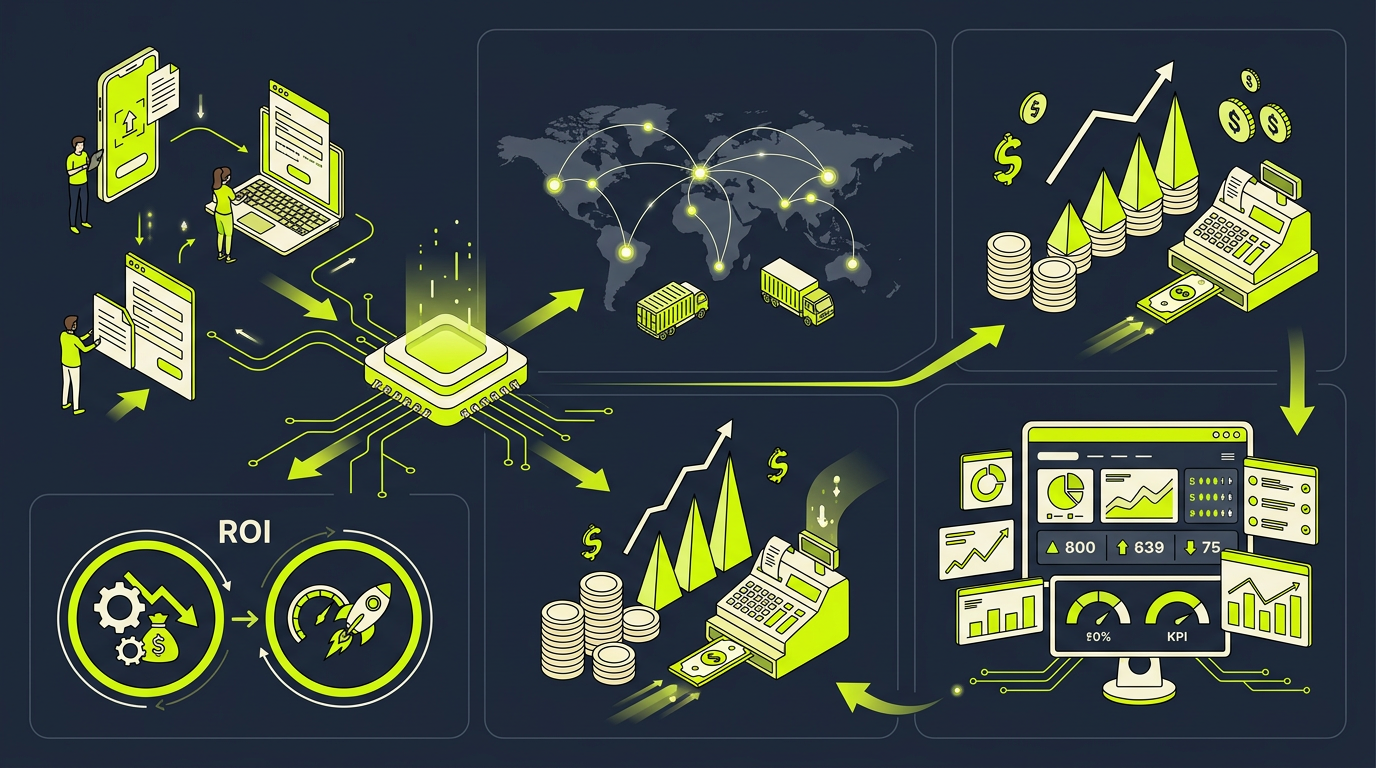
- Accelerate Vendor Time-to-Value
In the fast-paced digital economy, speed is a competitive advantage. The longer it takes to onboard a new influencer, affiliate, or strategic supplier, the longer it takes for them to start delivering value. Manual onboarding processes can stretch for weeks, creating a poor first impression and delaying critical projects. A self-service portal collapses this timeline from weeks to minutes.
With a streamlined, self-service process, vendors can be onboarded, verified, and ready for payment in a single session. They choose their preferred payment method and currency-from over 135+ options-and are ready to be included in the next payment run. This efficiency not only improves partner relationships but also enhances your company's reputation as a reliable and professional partner, helping you attract reputable suppliers and top-tier talent in competitive markets.
- Enhance Data Accuracy Through a Single Source of Truth
Fragmented vendor data scattered across spreadsheets, email inboxes, and disconnected software is a recipe for payment failures and reconciliation nightmares. A centralized vendor portal establishes a single, secure, and auditable record for every vendor you work with. This eliminates version control issues and ensures that your ERP, your payment system, and your vendor records are all perfectly synchronized.
The ROI here is found in the elimination of costly errors. Failed payments due to outdated banking information trigger a cascade of administrative work, from investigating the failure to contacting the vendor and re-running the payment. These costs add up quickly. A vendor portal where partners manage their own data drastically reduces the rate of payment failures. It also provides a clear audit trail for any changes, strengthening financial controls and simplifying audits.
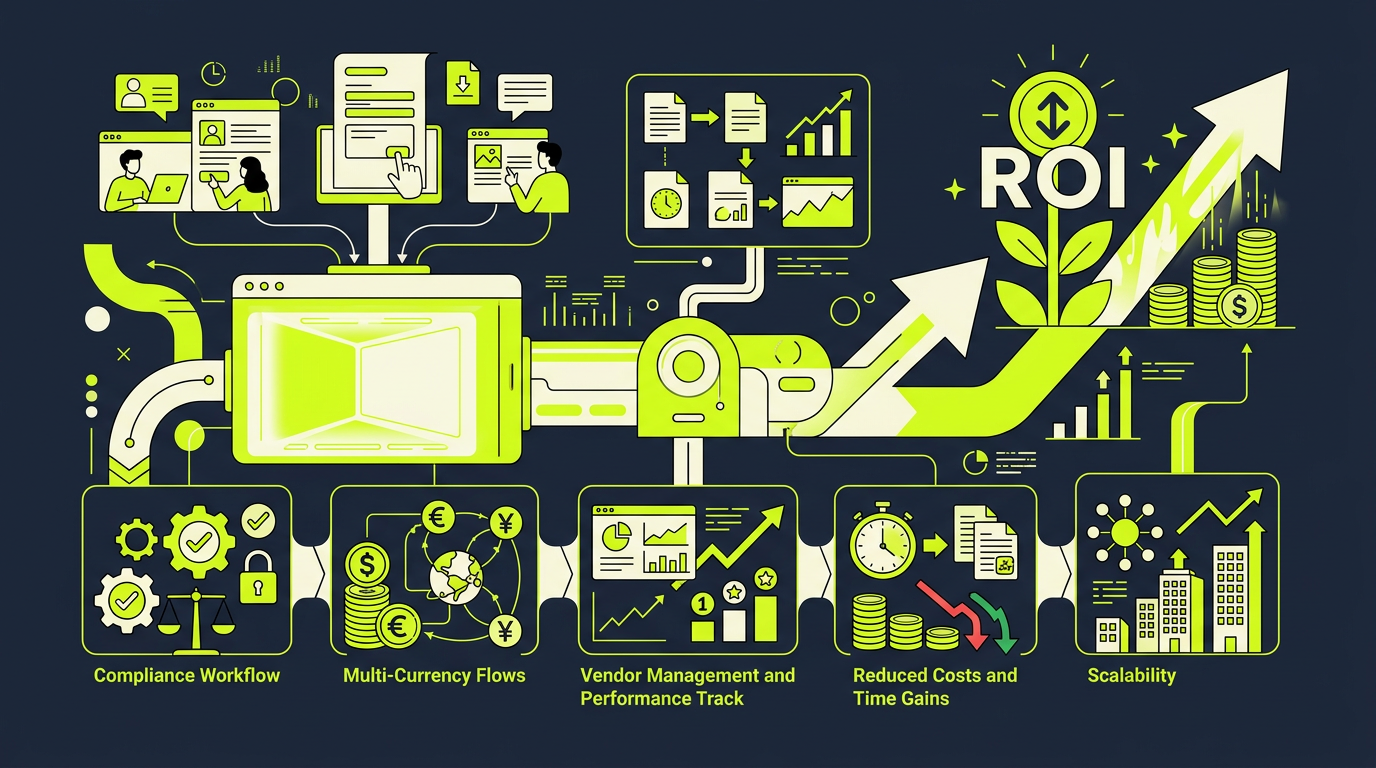
- Improve Vendor Relationships and Global Scalability
Top-tier partners-whether they are influencers, creative agencies, or specialized consultants-expect a professional and frictionless experience. A clunky, manual onboarding process sends the wrong message. A modern, branded self-service portal signals that your company is organized, secure, and easy to do business with. It provides vendors with transparency and control, allowing them to track invoice status and payment history without having to ask your AP team.
This superior experience is a key factor in becoming a preferred client for high-demand vendors. Furthermore, this automated framework is inherently scalable. Whether you are onboarding 10 vendors a month or 1,000, the process remains the same, requiring minimal additional effort from your team. This allows your company to expand into new geographic markets and verticals without being constrained by legacy AP processes. This is especially true for companies that have outgrown their initial financial stack, a sign that You Raised a Series B to Grow, Not to Manually Reconcile Payouts.
Quantifying the ROI of a Unified Payouts Platform
Investing in onboarding automation is not just about soft benefits like vendor satisfaction; it delivers a hard, quantifiable return. Calculating this ROI requires looking beyond the cost of the software itself. The true value is realized by analyzing the total cost of your manual operations, including employee time, payment error rates, compliance risks, and the opportunity cost of misallocated strategic focus.
Organizations often find that enabling strategic focus is a primary outcome when onboarding runs smoothly.
Consider the hours your finance team spends on low-value tasks like data entry, responding to payment status inquiries, and correcting errors. A unified platform that includes a vendor self-service portal automates these functions, freeing up your team for more strategic work like cash flow analysis and financial planning. Furthermore, a platform with a flat-fee per transaction model provides predictable costs that scale linearly with your business, unlike percentage-based fees that penalize growth.
Finally, the risk reduction component carries immense financial value. A single compliance failure can result in significant penalties. Automating the collection and validation of tax documents, and performing KYC/AML checks through the portal, provides a layer of protection that is difficult to achieve manually. This peace of mind allows leadership to focus on growth, confident that the underlying financial operations are secure and compliant across more than 150 countries.
From Onboarding to a Full Financial Operating System
While a self-service portal is the critical first step, leading companies are moving towards a fully integrated financial operating system. Onboarding is simply the entry point into a broader ecosystem that includes global payout automation, multi-currency treasury management, virtual and physical card issuance, and even crypto payouts using stablecoins for near-instant settlement. This is the concept of "Touchless Finance"-a state where payment operations run seamlessly in the background.
This unified approach, powered by supplier onboarding automation, connects all the dots. A vendor onboards through the portal, their data syncs with your ERP, they submit an invoice through AP automation tools, and the payment is disbursed in their local currency, all without manual intervention. This holistic view of the procure-to-pay lifecycle is what truly transforms finance from a cost center into a strategic enabler of global growth.