
The influencer marketing industry is expanding at a significant rate. 98 billion by 2033. This exponential growth, fueled by the creator economy, presents an unprecedented opportunity for brands and agencies.
However, it also creates a formidable operational bottleneck: how to efficiently, compliantly, and cost-effectively pay hundreds or even thousands of influencers across 150+ countries.
As businesses scale their influencer programs, the manual processes that worked for a dozen local creators crumble under the weight of global complexity. The administrative tax of managing different currencies, payment methods, and tax regulations becomes a drag on growth. This playbook is for the finance and operations leaders tasked with building a scalable financial infrastructure.
We will compare the dominant approaches for managing global influencer payouts-from manual workflows to dedicated payout platforms-to provide a clear framework for building a 'touchless' finance operation that supports, rather than hinders, scale.
The Breaking Point: When Manual Payouts and In-House Systems Fail
For many startups and burgeoning agencies, the initial approach to influencer payouts is deceptively simple. A spreadsheet tracks who to pay, how much, and when. The finance team then manually executes individual bank transfers or uses consumer platforms like PayPal. While this seems manageable at first, it creates a ticking operational time bomb as the number of creators grows from ten to one hundred, and then to one thousand.
This manual approach is not free; it carries a steep, hidden cost in the form of administrative overhead. Every payment requires data entry, currency calculation, and manual reconciliation. Each cross-border transaction incurs opaque wire fees or percentage-based service charges that erode margins. The entire process is error-prone, lacks a clear audit trail, and offers no visibility into payment status, leading to a deluge of 'where's my payment?' inquiries from creators.
The Hidden Costs of 'Free' Solutions
The operational drag of manual workflows extends far beyond simple transaction processing. A significant portion of the finance team's time is consumed by non-strategic tasks: chasing creators for banking details, correcting data entry errors, and manually collecting tax forms like W-8s and W-9s. This is time that could be spent on financial analysis and strategic planning.
Furthermore, these manual systems introduce significant compliance risks. Without an automated system to collect and validate tax information, the burden falls on an already stretched team. This not only frustates creators but exposes the business to regulatory penalties. It's a clear signal when you realize that Are Manual Payouts Limiting Your Influencer Scale? is no longer a hypothetical question but an active business constraint.
Why In-House Builds Rarely Scale at Venture Speed
Facing the limitations of manual processing, some companies consider building their own in-house payout solution. On the surface, it seems to offer ultimate control. However, this path is fraught with complexity and requires a massive, ongoing investment of precious engineering resources that could otherwise be focused on the core product.
A truly global payout system requires integrating with multiple payment rails (e.g., local ACH, SEPA, SWIFT), managing evolving KYC/AML regulations across dozens of countries, ensuring data security, and building a user-friendly interface for creators. This is not a one-time project; it's a full-time product commitment. For a high-growth company, diverting focus to building financial infrastructure is a strategic misstep.
The Contenders: Comparing Scalable Payout Models
When manual processes and in-house builds are off the table, businesses are left with two primary paths to automate and scale payouts. The first is leveraging a traditional Accounts Payable (AP) automation platform. The second is adopting a unified global payout platform designed specifically for the operational dynamics of the creator economy. Choosing the right one depends entirely on the nature of the payees and the velocity of transactions.
Approach 1: Traditional AP Automation Platforms
AP automation tools are designed to streamline internal, invoice-driven workflows. They excel at managing payments to traditional vendors-think software subscriptions, office supplies, and corporate contractors. Their strengths lie in hierarchical invoice approval chains, three-way matching (purchase order, invoice, receipt), and deep integrations with ERP systems for general ledger reconciliation.
However, these platforms often fall short when repurposed for the high-volume, low-average-value, and globally dispersed nature of influencer payouts. Their pricing models are frequently geared towards higher-value B2B transactions, making them less cost-effective for micro-payouts. More importantly, their workflows are built for a corporate vendor context, not the fast-moving, relationship-driven world of creator partnerships.
Approach 2: A Unified Global Payout Platform
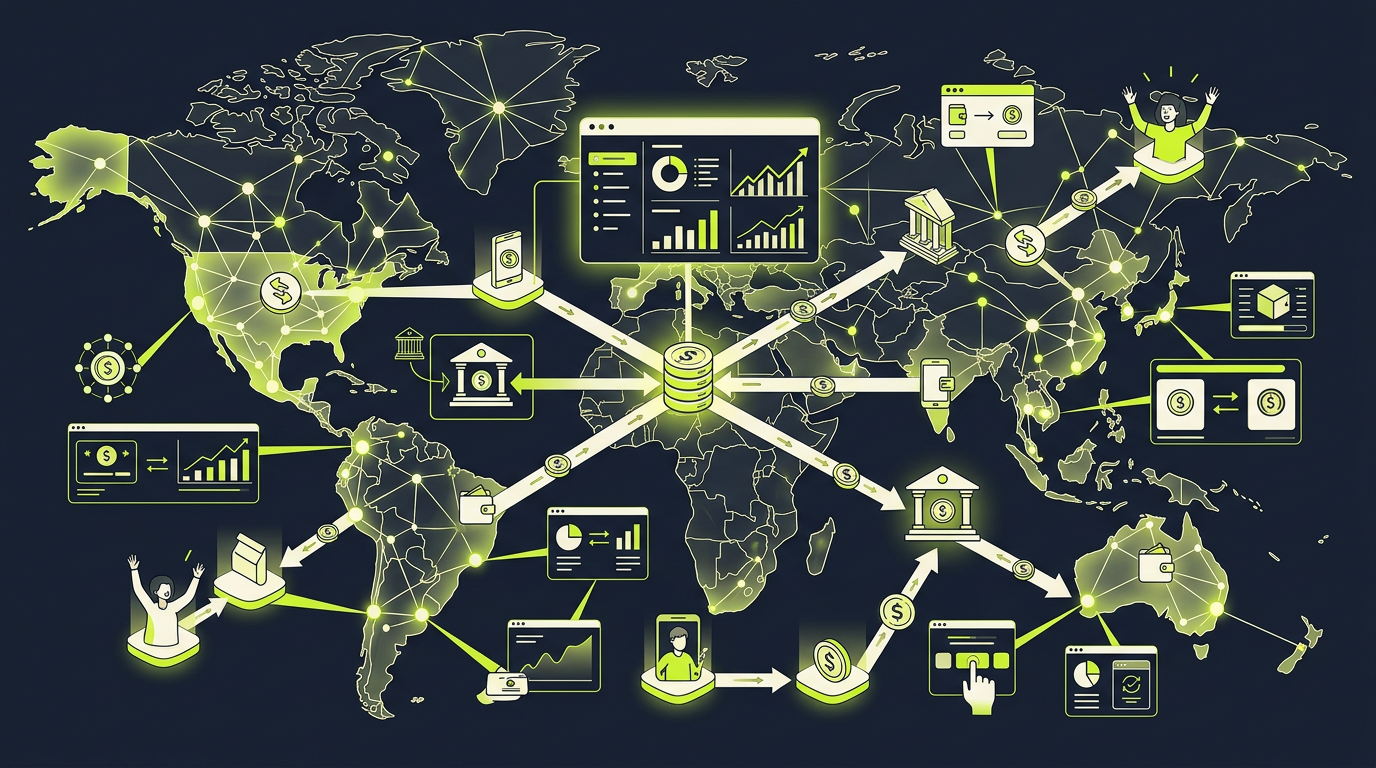
A unified global payout platform represents an operations-first approach to financial technology. It's a purpose-built financial operating system for businesses that need to pay large numbers of external stakeholders. This model combines global payment execution, automated tax and regulatory compliance, and a self-service vendor portal into a single, cohesive system.
Unlike traditional AP tools, these platforms are architected for mass payouts. They operate on a flat-fee-per-transaction model, making costs predictable and scalable. They offer multiple payment methods, including local bank transfers in 135+ currencies and crypto payouts using stablecoins as a low-friction settlement layer. This flexibility is key to attracting and retaining top global influencer talent. The path to scaling requires a specialized toolkit, which is essential to understand How to Scale Creator Payouts Past $1M/Month.
Key Decision Criteria for Your Payout Infrastructure
Selecting the right infrastructure is a critical decision that will impact your ability to scale. The choice isn't merely about processing payments; it's about enabling a key part of your business model. As you evaluate different approaches, focus on three core pillars: global reach, built-in compliance automation, and integration depth.
Global Reach and Payment Method Flexibility
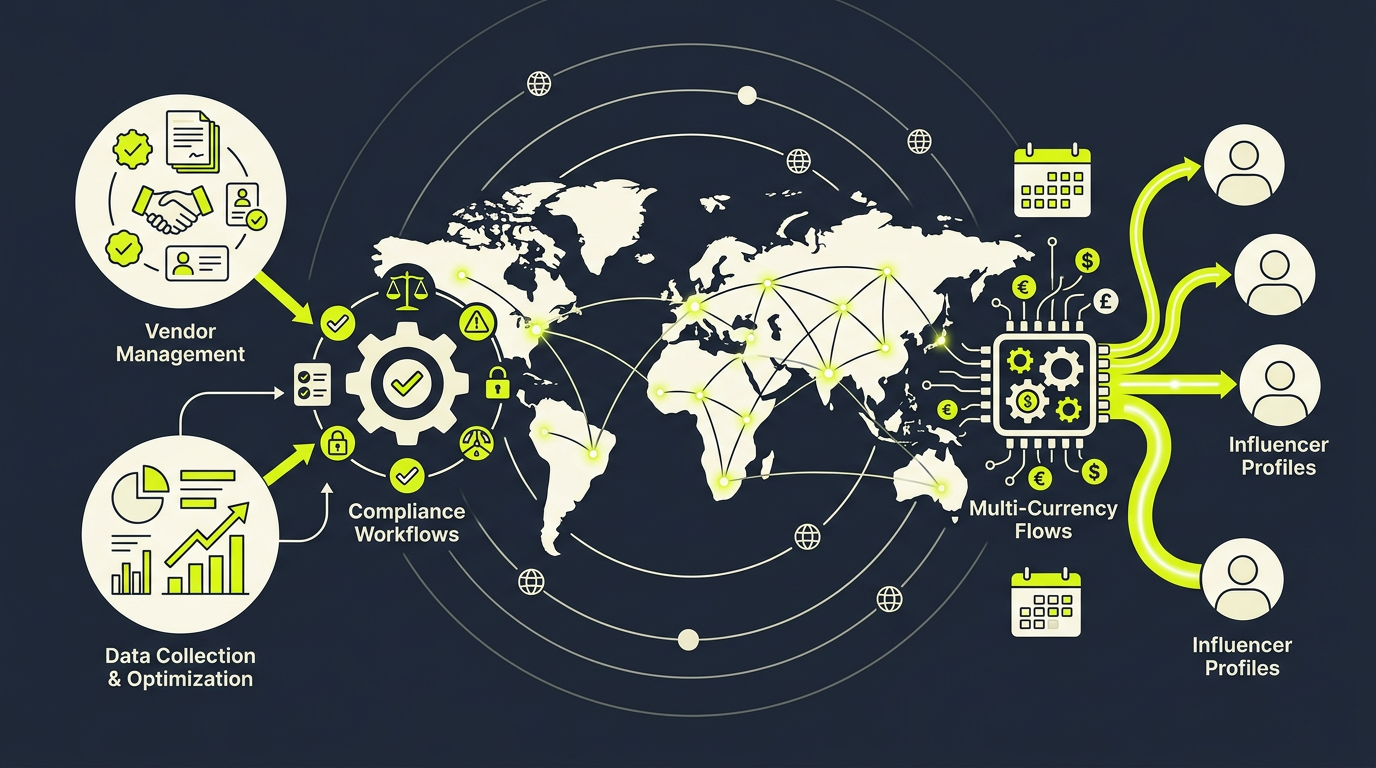
Your ability to grow is directly tied to your ability to operate globally. Can your payout solution seamlessly pay a creator in Indonesia via a local bank transfer, an agency in Germany via SEPA, and a developer in Argentina using USDT? As recent news highlights, the use of stablecoin payroll options for global workforces is gaining traction as a way to provide currency stability and faster settlement. True global payout solutions transform this complexity into a competitive advantage.
The platform you choose should offer extensive geographic coverage and a wide array of payout methods to cater to the diverse preferences of a global creator base. Utilizing a cross-border payouts API allows finance teams to automate disbursements to over 150 countries in their local currencies, dramatically reducing the friction and cost associated with international payments.
Built-In Compliance and Tax Automation
A world-class payout operation runs on automated compliance. Manually collecting and validating W-8 and W-9 forms is a bottleneck that actively damages creator relationships and introduces significant risk. Your infrastructure should handle this automatically through a self-service portal where creators can submit their information and documentation.
The system should perform KYC/AML screening against global watchlists (e.g., OFAC, FinCEN, FATF) and validate tax IDs in real-time. This moves compliance from a reactive, manual task to a proactive, automated function that happens seamlessly during onboarding. As we've detailed before, the idea that Hours Spent on W-8s Could Be Seconds is not an exaggeration; it is the benchmark for modern payout platforms.
Building a 'Touchless Finance' Operation for Creator-Centric Businesses
The ultimate goal is to build a 'touchless' finance stack where payouts are a fully automated, scalable, and compliant utility. This frees up your finance and operations teams to focus on strategic growth initiatives rather than manual data entry and reconciliation. An optimized influencer payment infrastructure should make scaling easier, not harder.
This operational excellence starts with deep integration. A leading payout platform should offer 600+ ERP integrations with systems like NetSuite, QuickBooks, and Xero, ensuring a seamless flow of data and automated reconciliation. When a payment is initiated and completed in the payout platform, it should automatically sync back to the general ledger in the ERP, closing the loop without manual intervention.
Beyond efficiency, this approach transforms the creator experience. A white-labeled, self-service portal for onboarding, payment tracking, and accessing tax documents makes your company easier to work with, a key advantage in a competitive market for talent. Features like 'Advanced Payment', which offers instant liquidity to creators, further solidify this relationship. As a recent analysis notes, it is critical to automate early, integrating payment automation into the campaign setup rather than treating it as a post-launch patch.
For ad networks, affiliate agencies, creator platforms, and marketplaces, the payment experience is part of the product. The transition from manual processes to a unified global payout platform is not merely an operational upgrade; it is a foundational requirement for sustainable, global scale. It's the difference between being overwhelmed by success and being equipped to handle it.