

The influencer marketing landscape is not just growing; it's exploding. 56 billion by 2031, a testament to its evolution from an experimental spend to a core strategic acquisition channel for global brands. As companies allocate more significant, multi-year budgets to creator partnerships, finance and operations teams are confronting a painful reality: the manual, fragmented processes used to pay these global partners are no longer just inefficient-they are a direct threat to scalability and profitability.
This operational friction is the silent killer of growth. While marketing teams focus on brand alignment and ROI, finance leaders are wrestling with a chaotic web of cross-border payments, currency conversions, and tax compliance. The administrative tax imposed by these outdated workflows consumes valuable resources, introduces significant compliance risk, and directly undermines the very ROI the marketing efforts are designed to produce.
The challenge is clear: as the creator economy professionalizes, the financial infrastructure supporting it must evolve from makeshift spreadsheets to a robust, automated operating system.
The Scale vs. Spreadsheet Standoff
For high-growth companies and digital agencies, the initial stages of an influencer program often run on spreadsheets and manual bank transfers. This approach is manageable with a handful of domestic creators, but it cracks and then shatters as the program scales globally. Suddenly, the finance team is tasked not just with paying five influencers, but 500-or even 5,000-spread across dozens of countries, each with unique payment details, currency preferences, and tax documentation requirements.
The numbers tell a stark story. 36% CAGR, the volume and complexity of payments are increasing exponentially. This is where manual processes become an anchor. A significant portion of a finance team's time is diverted to chasing invoices, verifying bank details, and manually reconciling payments-time that could be spent on strategic financial planning.
5% of their major hurdles, a problem that only intensifies with scale.
The Hidden Costs of Manual Payouts
The direct costs of manual processing are just the tip of the iceberg. Hidden costs manifest as high wire transfer fees, unfavorable currency exchange rates, and the ever-present risk of payment errors that can damage creator relationships. When paying hundreds of influencers, percentage-based transaction fees charged by traditional payment providers can accumulate rapidly, eroding profit margins with every payout cycle. These seemingly small cuts add up to a significant financial bleed.
Moreover, the operational drag creates a ripple effect. Delays and inaccuracies in payments frustrate creators, making them less likely to prioritize future collaborations. In a competitive market where finding suitable influencers is a primary challenge for over 30% of marketers, maintaining strong, reliable relationships is paramount. As one analysis notes, managing influencer payments across borders doesn't need to be complicated, yet many businesses are held back by legacy systems that create friction and alienate top talent.
Navigating the Global Compliance Gauntlet
Paying creators in over 150 countries introduces a labyrinth of regulatory and tax compliance obligations. It's not as simple as sending money; it's about doing so in a way that satisfies KYC (Know Your Customer) requirements, adheres to anti-money laundering (AML) directives, and correctly handles tax information for each jurisdiction. For U.S.-based companies, this means diligently collecting and validating W-9 forms for domestic influencers and W-8 series forms for international ones.
Failure to manage this process correctly can lead to severe penalties, including hefty fines and the withholding of funds. The complexity escalates when dealing with different legal frameworks like the EU's Payment Services Directive 2 (PSD2) or navigating the specific requirements of financial regulators in the Asia-Pacific region. Without a centralized system, ensuring compliance becomes a near-impossible task, exposing the business to significant and unnecessary risk.
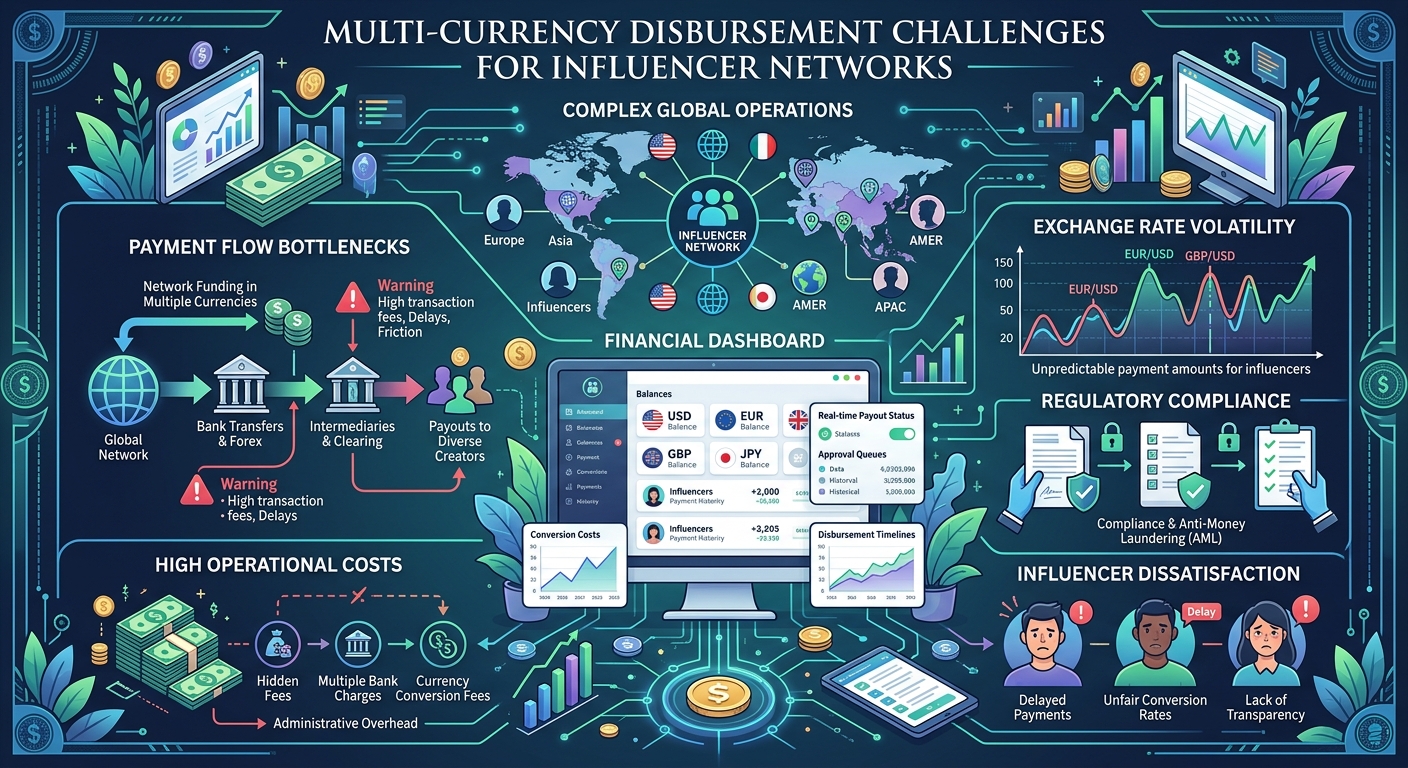
Tax Compliance: The Automated Imperative
The manual collection of tax forms is a notorious bottleneck. Finance teams often find themselves chasing creators for documents, manually validating the information, and tracking expiration dates. This not only delays payments but also creates a high risk of error. An incorrect or missing form can result in mandatory tax withholding at the highest rate, creating a negative financial impact and a frustrating experience for the creator.
This is precisely where automation platforms demonstrate their value. Payouts.com, for example, automates the entire tax compliance lifecycle. The platform's vendor portal digitizes the W-8/W-9 collection process, guiding creators to the correct form and validating the information in real-time. This ensures that every payment is compliant from the outset, removing the burden from the finance team and providing a seamless onboarding experience for the influencer. This is a crucial step detailed in 'How Influencer Payment Automation Saves Agencies Hours and Headaches: Featuring Billion Dollar Boy’s Payment Workflow'.
The Currency Conundrum: Fees, FX, and Friction
Multi-currency disbursement is arguably the most complex piece of the global payout puzzle. Managing payments across 135+ currencies involves navigating volatile exchange rates, correspondent banking fees, and varying local payment rails. Traditional wire transfers are not only slow-taking days to settle-but are also opaque. Hidden fees are often baked into the exchange rate, and intermediary banks can skim charges, meaning the creator receives less than expected.
This lack of transparency erodes trust. Creators become frustrated when the amount that hits their bank account doesn't match their invoice. Resolving these discrepancies consumes more time for finance teams and strains the partnership. To truly scale, businesses need a financial infrastructure that provides transparent, real-time currency conversion and leverages local payment methods like ACH in the U.S., SEPA in Europe, and other regional networks to reduce costs and settlement times. Effective automation requires sophisticated payment infrastructure to handle these global complexities seamlessly.
Stablecoins as a Modern Settlement Layer
An emerging solution to combat the friction of traditional cross-border payments is the use of stablecoins, such as USDT and USDC, as a settlement utility. For savvy influencer networks, crypto payouts are not about speculative investment but about function. They offer a near-instantaneous, low-cost, and border-agnostic way to transfer value directly to a creator's digital wallet, bypassing the slow and expensive correspondent banking system entirely.
Platforms like Payouts.com facilitate this by integrating both fiat and crypto disbursement rails. This allows a company to fund its operations in a primary currency like USD and give creators the option to receive their payment in their local currency via traditional banking or as a stablecoin. This flexibility is a powerful retention tool, particularly for creators in regions with less stable local currencies or underdeveloped banking infrastructure. Offering multi-currency payout workflows with crypto options demonstrates a forward-thinking approach that top talent appreciates.
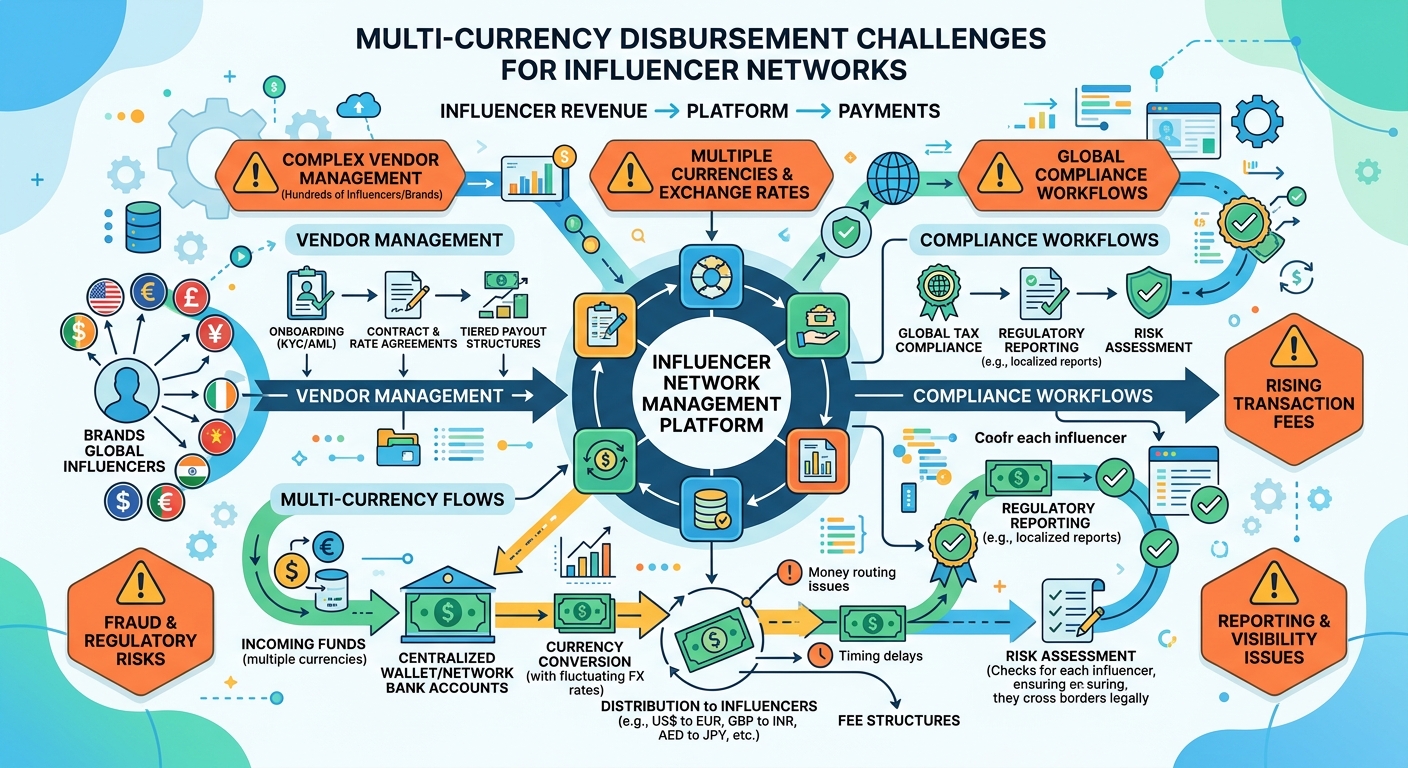
From Back Office Cost Center to Strategic Operating System
The evolution of the influencer marketing industry demands a parallel evolution in financial operations. The conversation is shifting from simply making payments to building a 'Touchless Finance' ecosystem. This involves integrating the entire payout workflow, from data ingestion from affiliate or ad networks to automated tax compliance, multi-currency disbursement, and final reconciliation with ERP systems like NetSuite, QuickBooks, or SAP.
An 'Operations-First FinTech' approach treats the payment process not as a series of isolated tasks but as a unified, automated workflow. By leveraging a centralized platform, CFOs and Finance Directors gain complete visibility and control over their payout operations. Payouts.com offers over 600 ERP integrations, ensuring that payment data flows seamlessly, eliminating manual data entry and reducing the risk of human error-a core theme in 'The Smart Way to Handle Multi-Currency Payouts - Payouts.com'.
Unlocking Creator Liquidity and Loyalty
Beyond operational efficiency, modern payout platforms can offer strategic advantages in creator retention. The traditional 30, 60, or 90-day payment cycle is a significant pain point for influencers who, like any small business, have their own cash flow needs. This is where innovative solutions like 'Advanced Payment' services come into play, offering instant liquidity to vendors and creators.
By providing creators with the option to get paid instantly on approved invoices, companies can transform the payment experience from a source of friction into a powerful loyalty driver. This capability helps agencies and platforms stand out in a crowded market where payment speed and reliability are major differentiators. This focus on improving the creator's experience is why it's critical to put payment delays in the past. Such modern solutions ensure fast, compliant, and transparent payments, helping you retain top talent.
As young consumers increasingly look to social influencers for financial guidance, the professionalism and reliability of the platforms paying them become even more critical. The future belongs to organizations that recognize their payment system is a core part of their creator relations strategy. Moving beyond manual processes is no longer just about saving costs; it's about future-proofing the business and building the operational backbone required to win in the next era of the creator economy.