

For high-growth digital marketplaces, scale is a double-edged sword. Onboarding thousands of sellers, creators, or freelancers across the globe is a sign of success, but it introduces immense operational friction. Each new vendor represents a potential compliance risk, a new data entry task, and another complex payment to process.
This manual 'administrative tax' on every transaction is the silent killer of momentum, bogging down finance and operations teams in low-value work instead of strategic growth.
The traditional approach-throwing more human resources at manual identity verification, tax form collection, and payment processing-simply doesn't scale. It's expensive, error-prone, and creates a poor experience for the very vendors your platform relies on. To break this cycle, modern marketplaces are adopting an 'Operations-First' model, implementing a unified system that automates Know Your Customer (KYC) and Anti-Money Laundering (AML) checks as a seamless, integrated part of the vendor onboarding and payout workflow.
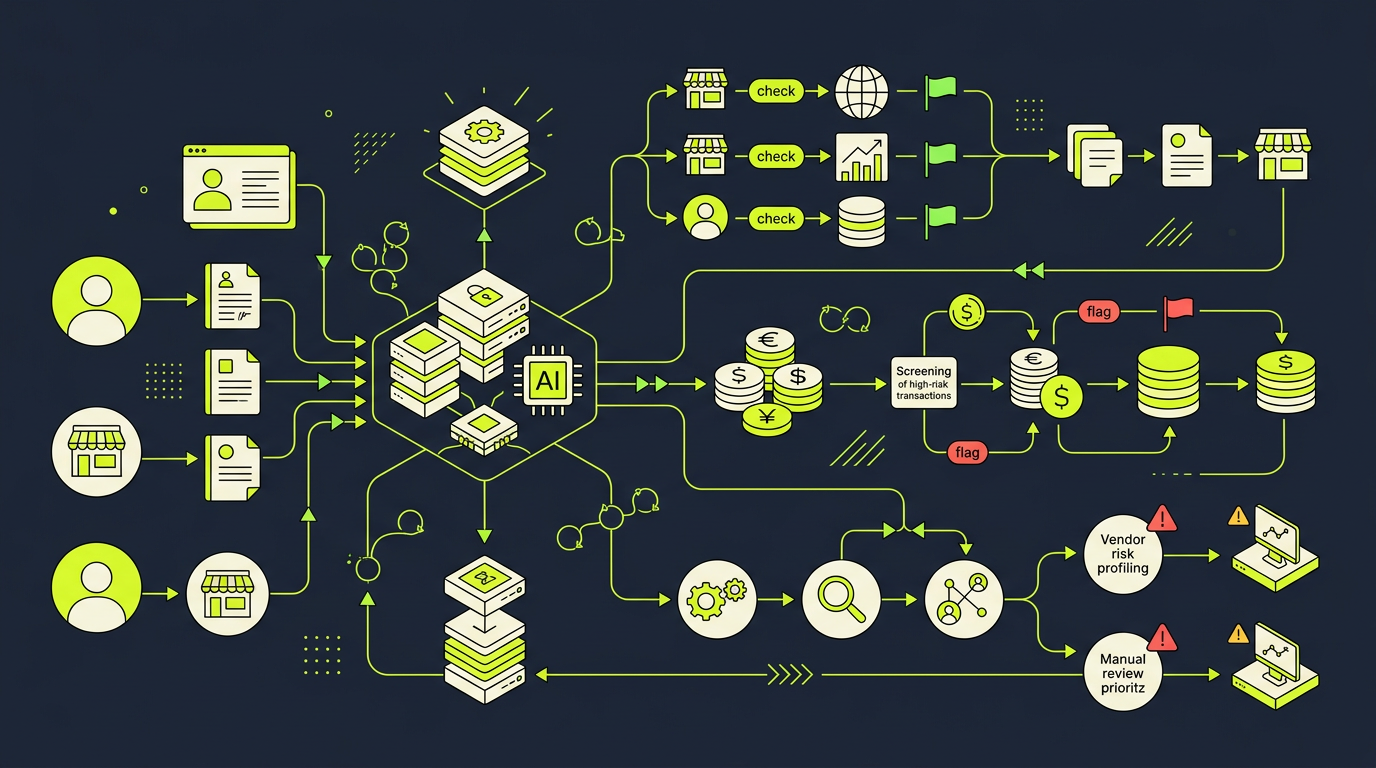
This guide provides a blueprint for how marketplaces can integrate an automated compliance and payment engine. We'll explore how to connect your core platform to a financial operating system like Payouts.com, creating a touchless workflow that handles everything from initial data ingestion and identity verification to multi-currency global disbursements, all while mitigating risk and reducing operational overhead.
The Growing Complexity of Marketplace Compliance and Fraud
The challenge of managing marketplace compliance is escalating rapidly. The sheer volume of digital transactions creates a massive surface area for risk. 03 billion in 2026, driven by rising instances of identity fraud.
For marketplaces processing payments to hundreds or thousands of payees, a robust verification process is no longer optional; it's a fundamental requirement for survival and growth.
This growth in digital transactions is met with increasingly sophisticated fraud tactics. As one recent report on cybercrime highlighted, illicit online marketplaces continue to thrive, demonstrating the persistent threat of bad actors seeking to exploit digital platforms. Your marketplace's integrity depends on its ability to effectively filter out these participants from the outset.
Navigating the Global Regulatory Maze
Operating a global marketplace means navigating a patchwork of international and local regulations. Frameworks from bodies like the Financial Action Task Force (FATF) set global standards, encouraging cooperation between jurisdictions on compliance and transparency. This is pushing companies towards greater scrutiny of Ultimate Beneficial Ownership (UBO) and stricter data sharing protocols to combat cross-border financial crime.
For a CFO or Operations Manager, this translates into a complex web of obligations. A vendor in Europe may be subject to GDPR and the EU's Payment Services Directive (PSD2), while a vendor in the United States requires W-9 tax form collection and IRS reporting. An automated system must be intelligent enough to apply the correct verification and data collection rules based on the vendor's location, ensuring compliance across all 150+ countries you operate in.
Beyond Basic ID Checks: The Rise of Sophisticated Fraud
While regulatory compliance is a primary driver, effective KYC is also your first line of defense against financial loss and reputational damage. For many businesses, identity verification is a strategic imperative to avoid dealing with fraudulent users, even when not legally mandated. It helps protect legitimate buyers and sellers on your platform by building a trusted ecosystem.
Automated systems go far beyond simple document checks. They leverage global data sources to perform real-time screening against sanctions lists, Politically Exposed Persons (PEP) watchlists, and adverse media. This continuous monitoring is critical, as a vendor's risk profile can change over time. The rise of RegTech and AI-enabled monitoring platforms is empowering companies with predictive analytics and real-time fraud scoring to stay ahead of these emerging threats.

The Integration Blueprint: Connecting Your Platform to an Automated Compliance Engine
An 'Operations-First FinTech' platform like Payouts.com acts as a central financial operating system that sits between your core marketplace application and your global vendors. Instead of building and maintaining a complex, brittle stack of disparate tools for onboarding, verification, tax compliance, and payments, you connect to a single, unified infrastructure via a robust API and universal connectors.
Step 1: Centralizing Vendor Data with Universal Connectors
The process begins with data ingestion. Whether your vendor data lives in a proprietary backend system, an affiliate tracking platform, or is managed within an ERP like NetSuite or QuickBooks, Payouts.com's Universal Connectors can pull this information into a single, unified environment. This eliminates the need for manual data entry or fragile, custom-coded integrations that break with every software update.
This creates a golden record for each vendor, centralizing everything from their legal name and address to their preferred payment method and tax identification number. From this single source of truth, automated workflows can be reliably executed. It's the foundational step in building a scalable financial operation and is detailed further in 'The CFO's Playbook for Global KYB Compliance and Payouts in 2026'.
Step 2: Automating KYC/AML Verification Workflows
Once vendor data is centralized, the Payouts.com platform triggers automated KYC and AML workflows. This process is fully digitized, aligning with the industry trend that will see more than 70% of KYC onboarding processes become paperless by 2025. The vendor is guided through a self-service portal to submit the necessary documentation, which is then automatically verified against global data sources.
By leveraging advanced technology and best practices, marketplaces can significantly enhance their compliance procedures. Automation ensures that every vendor goes through a consistent, auditable verification process, which includes checks for sanctions and adverse media. This not only ensures accuracy but also creates an adaptable framework to handle an ever-changing regulatory landscape, a journey detailed in our guide on 'The Operations Manager's Blueprint for Scaling Marketplace Payouts with a Mass Payout API'.
From Verification to Payout: Creating a Touchless Finance Workflow
The true power of an integrated system is the seamless transition from successful verification to payment execution. In a manual system, these are two distinct, disconnected processes. With an automated financial operating system, they become part of a single, fluid workflow, eliminating the gaps where errors and delays typically occur.
Triggering Payouts Post-Verification
As soon as a vendor successfully completes their KYC and tax compliance onboarding, their status is automatically updated within the Payouts.com system. They are now 'payable.' Your marketplace's core platform can then trigger payments via an API call, confident that every payee has been fully vetted and is compliant. There is no need for a finance team member to manually cross-reference a spreadsheet or approve the payment.
This same workflow applies to tax compliance. The system automatically collects and validates the correct tax forms (like W-9s for US vendors or W-8 series for international vendors) during onboarding. This data is then used to prepare and file year-end reporting forms such as 1099s and 1042-S, transforming another massive annual burden into an automated, background process.
Unifying Global Payments: Fiat and Crypto
Once a vendor is payable, the platform handles the complexity of global disbursement. Payouts.com enables payments to over 150 countries in more than 135 local currencies. This removes the friction of cross-border transactions and high wire fees for your vendors. For the marketplace, this is all managed through a single funding source. It provides a more predictable and cost-effective model than percentage-based fees that penalize you for growth.
Furthermore, the system embraces modern settlement layers by offering crypto payouts. This isn't about speculation; it's about utility. Using stablecoins like USDT as a settlement rail provides a near-instant, low-cost way to pay vendors globally, bypassing traditional banking delays and fees, especially in regions with less-developed financial infrastructure. It provides another layer of flexibility for your global vendor base.
The Strategic Benefits of an Operations-First Approach
Automating KYC, compliance, and payouts is more than an operational improvement-it's a fundamental strategic shift. It transforms the finance function from a reactive cost center into a proactive enabler of global scale. This approach yields benefits across the organization, from finance and operations to vendor relations and strategic planning.
Reducing Operational Overhead and Enhancing Vendor Trust
The most immediate benefit is the elimination of manual work. The hours your team spends chasing documents, correcting failed payments, and answering vendor queries are reclaimed. Automating KYC verification is a strategic necessity that reduces fraud risks and meets rising customer expectations. A streamlined onboarding process and fast, reliable payouts build trust and loyalty with your most valuable partners.
This efficiency is a competitive advantage. While your competitors are stuck in manual workflows, your team is focused on analyzing data, optimizing cash flow, and supporting new market expansion. The self-service vendor portal further reduces the support burden by empowering payees to manage their own information and track payments, creating a professional and transparent experience.
Future-Proofing for Scale and Regulatory Change
A scalable financial operating system is built for the future. As your marketplace grows from a thousand vendors to a hundred thousand, the automated workflows scale seamlessly without a linear increase in headcount or cost. Your transaction fees remain predictable and low, protecting your margins as you grow.
Moreover, the regulatory environment is in constant flux. A dedicated platform like Payouts.com absorbs this complexity. These systems are designed to reflect new rules from regulators around the world, helping you remain compliant without having to become a global compliance expert yourself. This proactive approach to compliance and scalability is crucial, a topic explored in detail in 'Are Your Finfluencer Payouts Ready for 2026\'s Regulatory Shift'.