

For global ad networks, creator marketplaces, and AI influencer agencies, the Philippines has become an indispensable hub of talent. However, the operational reality of managing payouts to thousands of Filipino contractors is often a logistical nightmare. Between fluctuating PHP exchange rates, stringent BIR (Bureau of Internal Revenue) requirements, and the outdated infrastructure of traditional wire transfers, finance teams are facing an 'administrative tax' that erodes margins.
As we move into 2025 and 2026, the solution isn't adding more headcount to your AP department-it is the deployment of AI-driven accounting and compliance agents. These autonomous systems don't just process payments; they manage the entire lifecycle of a cross-border transaction, ensuring that your platform remains compliant with both US IRS standards and Philippine local laws without manual intervention.
The High Stakes of Philippine Contractor Compliance
When paying contractors in the Philippines, US-based companies often fall into the trap of treating international vendors like domestic ones. This is a recipe for a 'compliance cliff.' In the Philippines, the regulatory environment is overseen by the Bangko Sentral ng Pilipinas (BSP) and the Bureau of Internal Revenue (BIR).
For a digital platform, the primary challenge is documentation. To stay compliant with the IRS, you must collect accurate tax forms before the first dollar leaves your account. Failure to do so can lead to massive withholding liabilities. The transition from manual collection to automated agents ensures that W-8 BEN forms are not just collected, but verified against global watchlists.
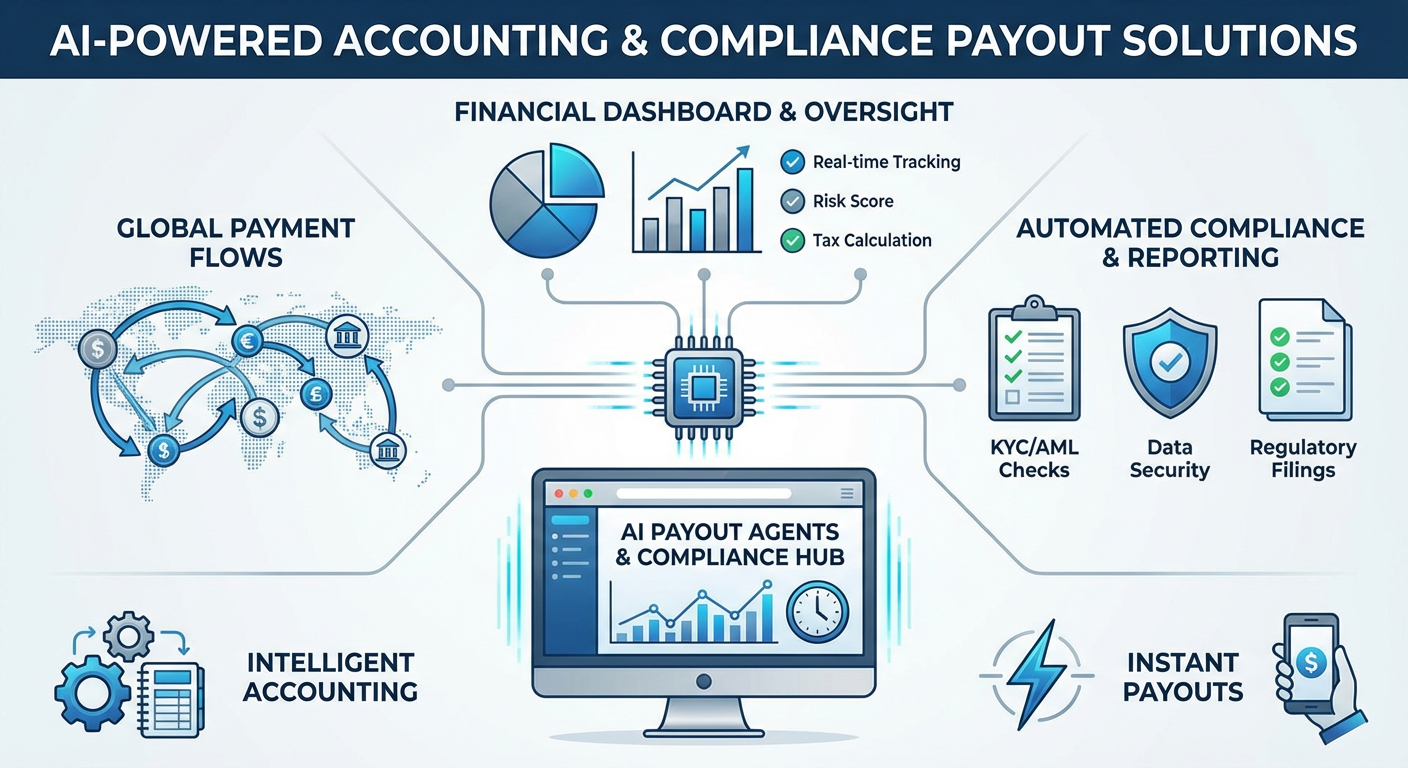
Our recent guide on W-8 vs. W-9 for International Contractors: 7 Secrets to Avoiding the IRS Scale-Killer highlights how automated validation prevents the common errors that trigger audits. In the Philippines specifically, correctly classifying a vendor as an individual versus a corporation is vital for both your corporate tax reporting and their local obligations.
Why Manual Payouts Are Killing Your Margins in Southeast Asia激
Traditional banking corridors to the Philippines are notoriously expensive and slow. If you are sending mid-market volumes-thousands of payments monthly-relying on SWIFT transfers is financial malpractice. Between intermediary bank fees and the 'hidden' spread on PHP conversion, your contractors might see 5-7% of their earnings vanish before the funds hit their bank account.
This friction leads to the 'Where is My Money?' syndrome, which floods your support desk with tickets. As discussed in The Death of 'Where is My Money?': Why Real-Time Tracking is the New Standard for Global Vendor Payouts, transparency is no longer a luxury; it is a retention tool for high-quality talent.
Payouts.com addresses this by utilizing a flat-fee per transaction model. Unlike many competitors who take a percentage of the total volume, a flat-fee structure allows platforms to forecast costs accurately. When combined with AI agents that optimize routing-choosing between local bank transfers (InstaPay/PESONet), e-wallets like GCash, or even stablecoin settlements-the savings are transformative.
The Rise of E-Wallets: GCash and Maya
In the Philippines, the 'unbanked' or 'underbanked' population is significant. Many of the most talented creators and developers prefer receiving funds via mobile wallets like GCash or Maya. Traditional ERPs and legacy payment providers often struggle to integrate with these local rails.
AI-driven agents bridge this gap by automatically mapping vendor preferences to the most cost-effective rail. If a contractor prefers a mobile wallet, the system executes the payout through a local provider, bypassing the high fees of international wire transfers. This is a critical component of building The Administrative Tax is Killing Your Margins: How to Build a Zero-Touch Vendor Onboarding Workflow That Actually Scales.
AI Agents: The New Frontier of KYC and AML Compliance
Compliance is not a one-time event; it is a continuous process. As global regulations tighten, marketplaces are facing a KYC Compliance Cliff. AI agents serve as 24/7 sentinels, performing real-time Sanctions and Politically Exposed Persons (PEP) screening.
In the Philippines, where the digital economy is rapidly evolving, the risk of payout fraud is real. Synthetic identities and account takeovers can drain a platform's treasury in hours. By leveraging The 5-Step Blueprint to Stopping Real-Time Payout Fraud, companies can use AI to detect anomalous payout patterns-such as a single IP address requesting payouts for twenty different accounts-and flag them for review before the money is released.
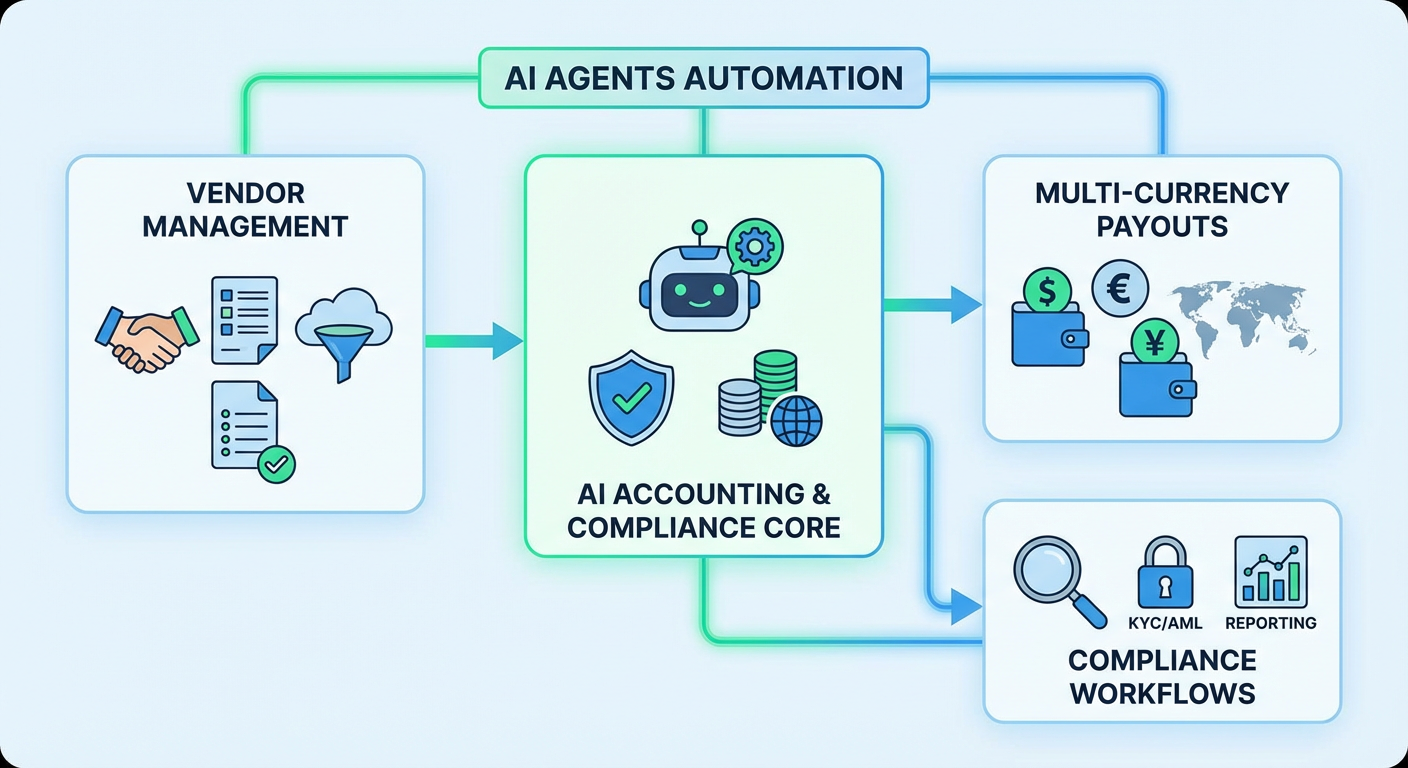
Furthermore, the introduction of crypto as a settlement layer has solved many of the liquidity issues inherent in Southeast Asian markets. For contractors who demand instant access to funds, settling in USDT or USDC via the Payouts.com platform provides a frictionless alternative to traditional banking. You can read more about this in our integration guide: Settling Creator Payouts in Crypto for Global Reach.
Integration: Connecting Your Finance Stack (NetSuite, QuickBooks, SAP)
The most significant hurdle for CFOs is the data silo. If your payout data lives in a spreadsheet while your accounting lives in NetSuite, you have a visibility gap. According to the Association for Financial Professionals (AFP), manual data entry remains one of the top sources of error in corporate finance.
Payouts.com offers 600+ ERP integrations, ensuring that every transaction in the Philippines is automatically reconciled in your general ledger. When an AI agent triggers a payment, it simultaneously updates the vendor record, records the FX gain or loss, and prepares the data for year-end reporting. This 'touchless' approach is what allows agencies to avoid The $100 Million Margin Leak that occurs when multi-currency chaos goes unchecked.
Future-Proofing: Preparing for 2026 Regulations
Governments worldwide are becoming more aggressive regarding digital economy taxation. The Philippine BIR has recently introduced new withholding tax guidelines for e-marketplace operators (Revenue Memorandum Circular No. 8-2024). This requires platforms to withhold a percentage of gross remittances to local sellers and merchants.
Navigating these local nuances while satisfying US IRS requirements requires a sophisticated compliance engine. Relying on manual processes will lead to either over-withholding (angering your talent) or under-withholding (generating massive tax liabilities). By automating these logic-based decisions, companies can avoid playing IRS Roulette.
The path to 1,000+ creator payouts in the Philippines without the 'admin tax' is through orchestration. By merging fiat and crypto rails, automating tax form collection, and using AI agents to monitor for fraud and compliance, global platforms can finally scale with the same efficiency as a local startup. For a deep dive into this operational strategy, see The CFO’s Guide to 1,000+ Creator Payouts.