

Autonomous AI agents are rapidly evolving from conversational assistants into active economic participants. 39 billion in funding in 2025 alone-these intelligent systems are poised to start managing budgets, negotiating with vendors, and initiating payments. This leap forward presents a monumental challenge for finance and operations leaders: How do you ensure global payment compliance when transactions are executed not by humans, but by algorithms?
The traditional, manual approaches to accounts payable are fundamentally incompatible with this new, high-velocity world.
For CFOs and founders at high-growth digital companies, particularly in the ad network, creator economy, and online marketplace sectors, this isn't a distant future scenario. It is an immediate operational hurdle. As your business scales to paying thousands of vendors, influencers, and affiliates across the globe, the existing administrative tax of manual payment processing becomes unsustainable.
Adding autonomous agents to this mix without a new operating model is a recipe for compliance failure, escalating costs, and operational chaos. The core question is no longer if you need an AI-ready payment infrastructure, but whether you should build it or buy it.
The Compliance Nightmare of Autonomous Transactions
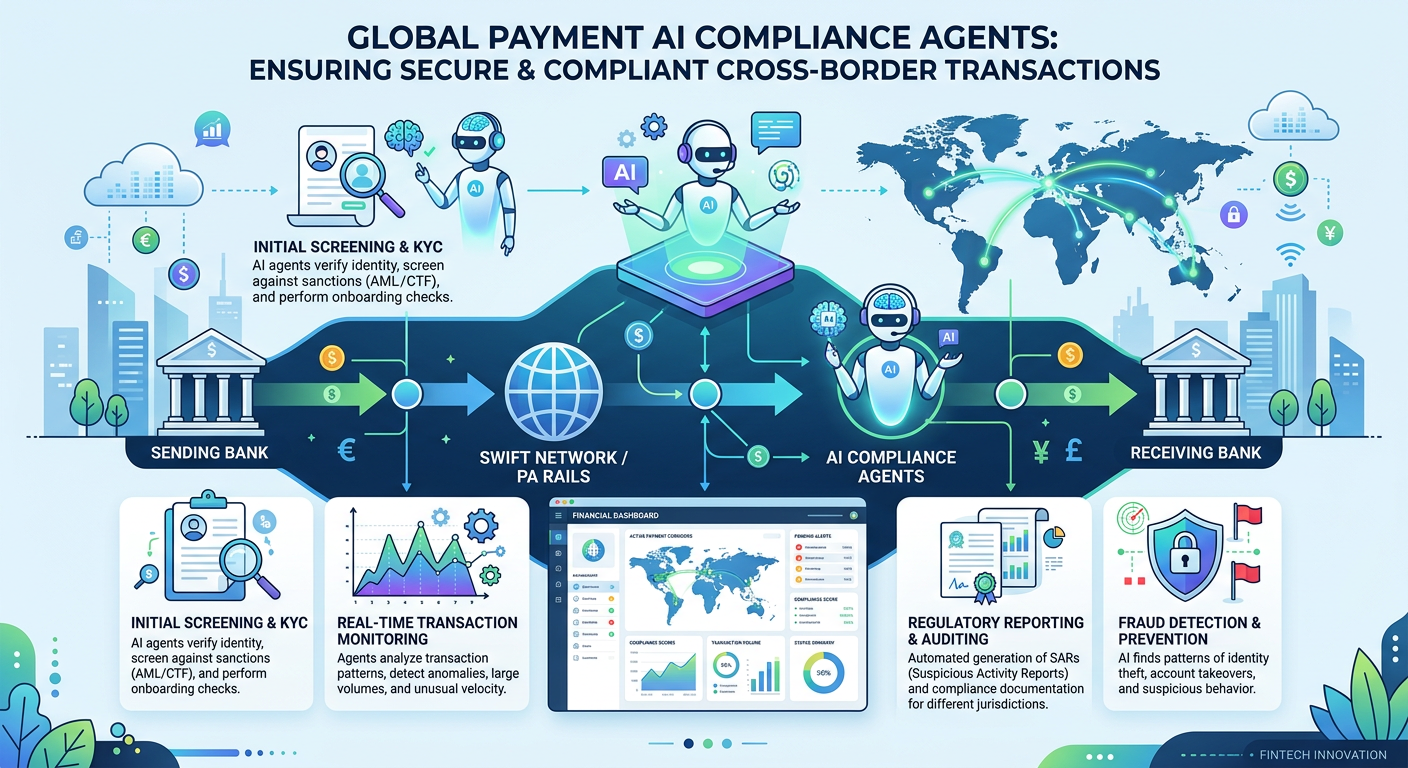
The primary barrier to deploying AI in finance isn't technology-it's risk. Recent data shows that a staggering 60% of enterprises cite non-compliance risks and data governance as key barriers to AI adoption. When an AI agent can autonomously execute a payment to a vendor in any of 150+ countries, it creates a massive surface area for potential compliance breaches.
These include violations of Anti-Money Laundering (AML) laws, Know Your Customer (KYC) mandates, and international sanctions lists, not to mention complex cross-border tax withholding rules.
An AI agent executing a payment must have real-time access to validated data to make a compliant decision. This includes verifying the recipient's identity, checking them against global watchlists, and confirming their tax status with the correct documentation. For companies operating at scale, achieving this manually is an operational impossibility and exposes the business to catastrophic risk. One wrong payment can trigger audits, fines, and reputational damage, a scenario that highlights why your global scaling strategy is one audit away from disaster.
Challenge 1: Data Governance and Quality
An AI is only as intelligent as the data it's trained on. According to industry analysis, 52% of businesses cite data quality and availability as the biggest barriers to AI adoption. In the context of global payouts, data is often fragmented across multiple systems-affiliate networks, ad platforms, internal spreadsheets, and vendor management tools. This creates a messy, unreliable foundation for an AI agent tasked with executing financial transactions.
Without a single source of truth, an autonomous agent cannot function safely. It lacks the clean, structured data required to verify vendor identities, apply the correct tax withholding, or confirm banking details. Relying on fragmented data forces finance teams back into a manual review cycle, completely defeating the purpose of automation and kneecapping the organization's ability to scale.
Challenge 2: Regulatory Scrutiny and Explainability
In a regulated environment like payments, full autonomy is a significant risk. Experts advise that for high-value or high-risk payments, human oversight remains essential. Regulators and auditors will not accept "the algorithm did it" as an explanation for a compliance failure. Organizations must be able to demonstrate why a payment was made, what checks were performed, and who authorized the underlying rules the agent followed. This requires building systems designed for explainability from the ground up.
This intersects heavily with legal and compliance departments, who must review and sign off on any automated payment processes. As noted in recent analysis, AI agents should be reviewed like any other material change to payment infrastructure. This means ensuring that any platform or tool can produce clear audit trails and that the logic behind automated decisions is interpretable and defensible.
The Central Dilemma: Build a Custom Compliance Engine or Buy an Integrated Platform?
Faced with the complexities of agentic payments, finance leaders arrive at a critical crossroads. Do you allocate significant internal resources to build a proprietary AI compliance engine from scratch? Or do you partner with a specialized, operations-first fintech platform that has already solved these problems? This decision has profound implications for cost, speed, risk, and your company's ability to focus on its core mission.
The 'Build' Approach: A Deep Custom AI Solutions
Building a custom AI compliance solution in-house offers the allure of complete control. A dedicated team of AI engineers, data scientists, and compliance experts can theoretically craft a system perfectly tailored to your unique workflows. This path involves architecting data pipelines, selecting and training machine learning models, and developing a user interface for the finance team. The primary benefit is a bespoke system designed for your specific operational nuances.
The 'Buy' Approach: Leveraging an Operations-First FinTech Platform
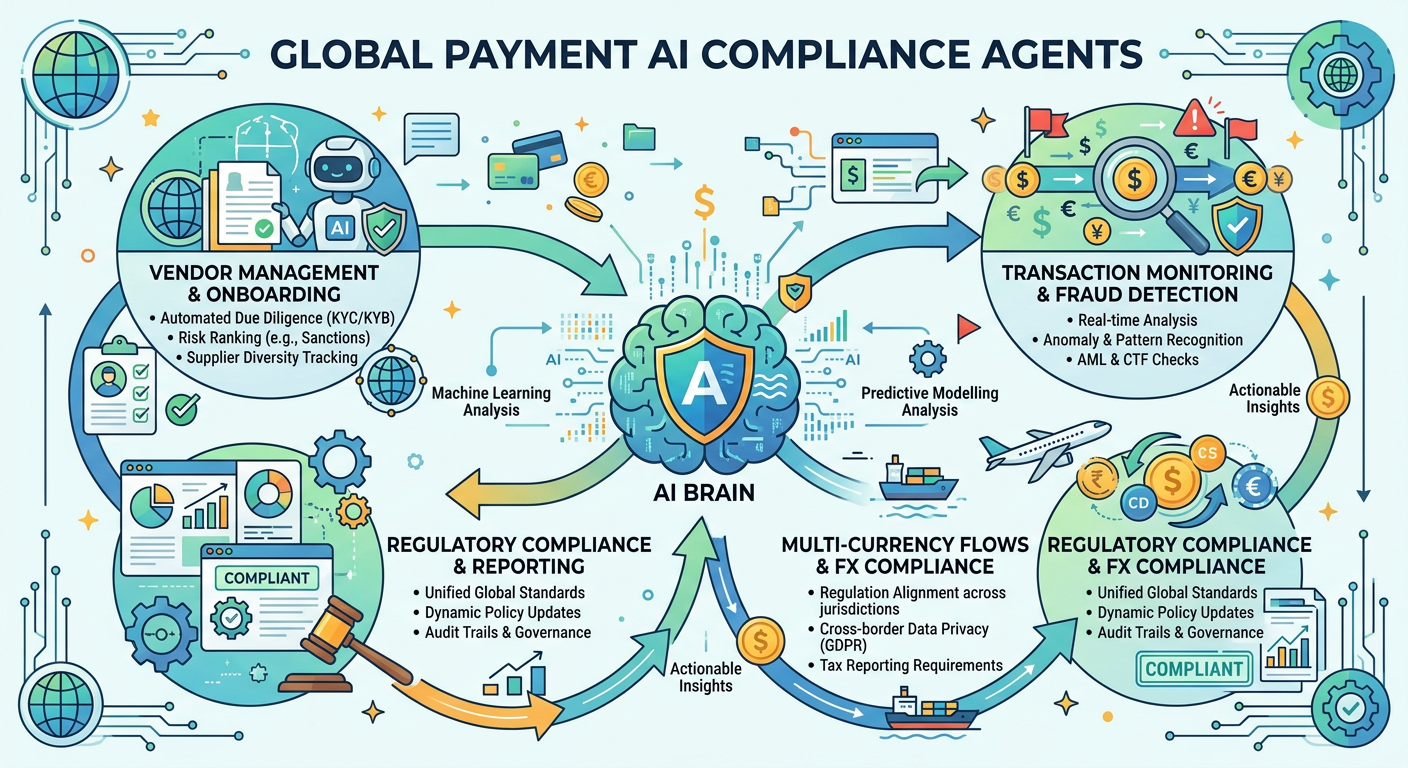
The alternative is to leverage a unified global payment automation platform. This 'buy' approach involves integrating with a system designed as a financial operating system for businesses with complex payout needs. These platforms come with pre-built compliance engines that automate KYC/AML checks, sanctions screening, and global tax form collection and validation. They are architected to handle payments across numerous countries and currencies from day one.
A Side-by-Side Comparison: Key Decision Factors
Choosing between building and buying comes down to a strategic evaluation of cost, speed, and risk. For most high-growth companies, the calculus points overwhelmingly in one direction. Let's break down the critical factors that should guide your decision-making process.
Factor 1: Total Cost of Ownership (TCO)
The 'build' approach carries a high and often unpredictable TCO. It includes the salaries of expensive engineering and compliance talent, infrastructure costs, and the continuous R&D required to keep the system up-to-date with changing regulations and payment technologies. These accumulating costs act as a hidden 'administrative tax' that drains resources from core product innovation and growth initiatives.
Factor 2: Speed to Market & Scalability
Building a robust, compliant payment system is not a quick project. A realistic timeline can range from 12 to 24 months before a viable product is ready for deployment. This long lead time represents a significant opportunity cost, leaving your finance team to struggle with manual processes while you build. As your business grows, you are also solely responsible for ensuring the architecture can scale to handle increased transaction volume.
Factor 3: Risk Management and Future-Proofing
Partnering with a specialized platform vendor transfers a significant portion of this risk. These providers have dedicated teams of compliance professionals who monitor the global regulatory landscape. As a result, AI agents in banking and finance can be deployed more safely by leveraging platforms that programmatically interpret regulatory rules. This includes managing the complexities of both fiat and crypto payouts, using stablecoins like USDT as a frictionless settlement layer where appropriate and ensuring agreements are structured for a world where AI agents initiate transactions.
The Verdict: An Integrated Platform is the Strategic Choice
While building a proprietary system may seem appealing, the reality is that for over 99% of businesses, it is a strategic misstep. The immense cost, lengthy timeline, and assumption of regulatory risk create a powerful drag on a scaling company. It forces you to become an expert in global payments infrastructure, diverting focus and capital away from what you do best.
Adopting an integrated payout automation platform is the superior strategic choice. It allows you to deploy a scalable, AI-ready compliance and payment infrastructure quickly and cost-effectively. By leveraging an Operations-First FinTech platform, you empower your finance and operations teams with 'Touchless Finance' capabilities, removing the administrative tax that kills a company's ability to scale globally. This frees you to focus on growth, confident that your payment operations are secure, compliant, and built for the future of an agentic economy.