

- The Evolving Marketplace Economy: A Need for Speed and Scale
- Beyond Basic Payments: The Pillars of API-Led Payout Infrastructure
- Operationalizing Compliance: A Global Mandate
- Optimizing Cost Structures with Flat-Fee Models and Instant Liquidity
- The Future of Marketplace Payouts: An "Operations-First" Approach
- Conclusion
In the rapidly evolving landscape of digital commerce, marketplaces have become central to how consumers discover and acquire goods and services. More than four in 10 consumers (44%) first buy from a new brand on marketplaces like Amazon or Walmart. This increasing consumer acceptance of online marketplaces underscores their critical role in the global economy and the imperative for robust operational frameworks.
However, beneath the surface of seamless customer experiences often lies a complex and fragmented payout infrastructure that hinders growth and escalates operational overhead for the marketplace operators themselves.
Legacy payout systems, characterized by manual entry, disparate data sources, and a lack of real-time visibility, create an
administrative tax
that siphons resources and attention away from strategic initiatives. For high-growth digital companies, particularly those operating across numerous geographies, this inefficiency impacts everything from vendor retention and compliance to overall financial health. The challenge isn't merely about sending money; it's about orchestrating a touchless finance operation that scales with demand, navigates regulatory complexities, and optimizes for both speed and cost.
The Evolving Marketplace Economy: A Need for Speed and Scale
The marketplace model thrives on connecting diverse stakeholders-sellers, creators, affiliates, and service providers-with a global customer base. This inherently creates a constant flow of transactions requiring efficient and reliable payout mechanisms. As these platforms expand, the volume and complexity of payouts grow exponentially, stretching traditional finance and operations teams to their limits.
Consider the rise of the creator economy, ad networks, and AI influencer agencies; these sectors rely heavily on timely and accurate payments to retain valuable contributors. Fragmented payout processes, high cross-border fees, and delayed settlements directly impact the satisfaction and loyalty of these stakeholders, thereby impacting the marketplace's brand reputation and ability to attract top talent. The financial operating system must evolve beyond mere transaction processing to become a strategic asset.
Beyond Basic Payments: The Pillars of API-Led Payout Infrastructure
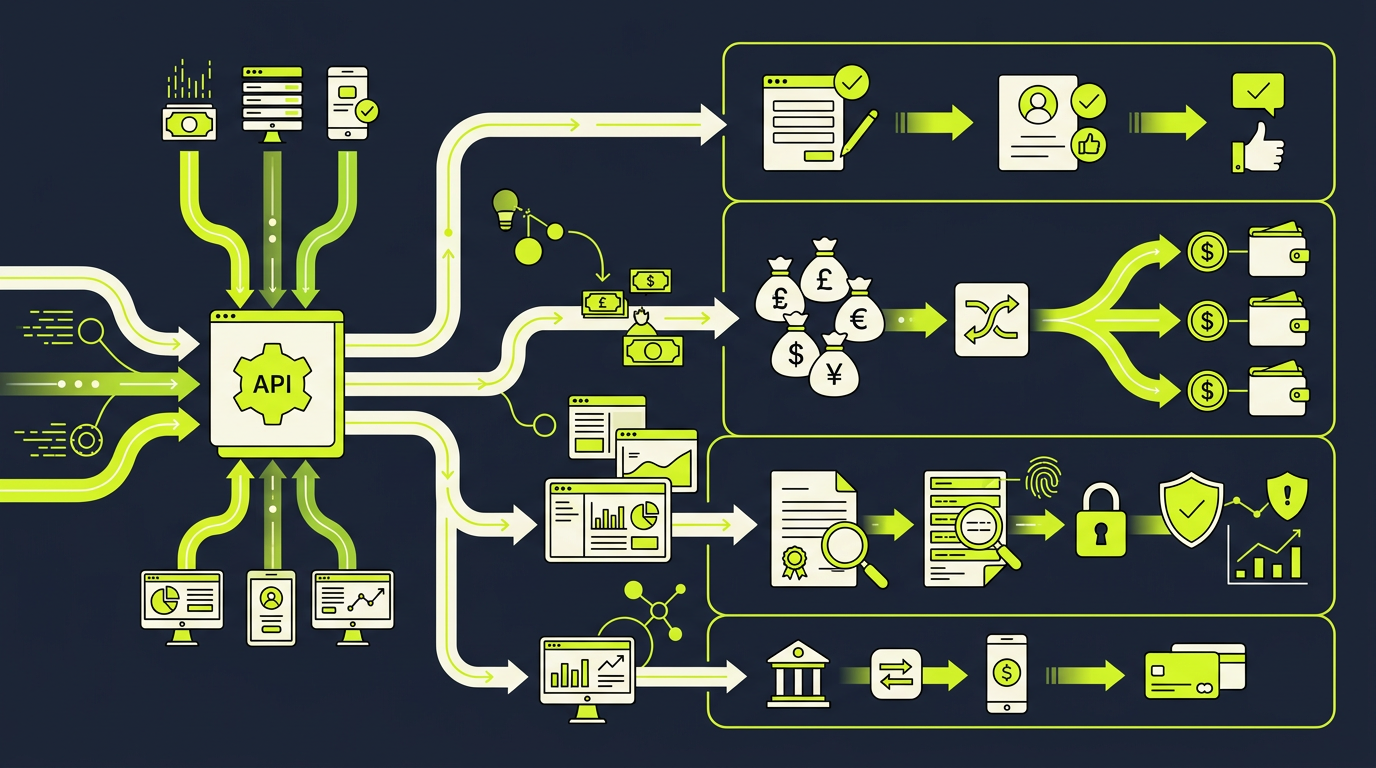
The answer to these scaling challenges lies in adopting an API-led payout infrastructure. This approach moves beyond integrating disparate payment gateways to building a unified, programmable financial backbone capable of automating the entire payout lifecycle. An API-first strategy empowers marketplaces to embed payout capabilities directly into their core platforms, creating a seamless and compliant experience for both internal teams and external vendors.
Such an infrastructure is not just about payments; it encompasses a suite of integrated functionalities designed for global operations. This includes comprehensive vendor management, multi-currency disbursement, global tax compliance, and robust reporting. The goal is to eliminate manual workflows from data ingestion and tax form collection to multi-currency disbursement, thereby achieving
Touchless Finance
operations.
Streamlining Vendor Onboarding and Management
A critical component of any marketplace's operational efficiency is its ability to onboard and manage vendors effectively. Traditional methods often involve cumbersome manual data entry, physical document collection, and prolonged verification processes. An API-led approach automates this from the outset, providing secure, self-service vendor portals that streamline data collection and integrate directly into the payout workflow.
This automation extends to crucial compliance checks. Payouts.com offers vendor management suites that handle complex international tax compliance, including W-8 and W-9 forms, along with Know Your Customer (KYC) and Anti-Money Laundering (AML) verifications. By embedding these capabilities, marketplaces can ensure regulatory adherence from the moment a vendor joins, reducing legal risks and operational bottlenecks. Organizations must understand Marketplace Payout API 101: A Guide for Scaling Global Payments to truly scale.
Global Disbursement Across 150+ Countries and 135+ Currencies
Marketplaces, by nature, are global, demanding the capacity to pay stakeholders across borders with fluidity and cost-efficiency. Legacy systems often struggle with the intricacies of international payments, leading to high cross-border fees, unfavorable exchange rates, and delayed settlements. An API-led infrastructure, like Payouts.com, supports disbursements to over 150 countries in more than 135 currencies, providing a significant competitive advantage.
Beyond traditional fiat payments, advanced platforms are leveraging innovations like crypto payouts, using stablecoins as a settlement layer. This offers a frictionless, near-instant alternative for cross-border transactions, reducing both time and cost. The ability to offer diversified payout methods caters to a broader range of vendor preferences and supports rapid global expansion.
The Power of Universal Connectors and ERP Integrations
A robust API-led payout infrastructure is defined by its ability to integrate seamlessly with a marketplace's existing financial ecosystem. This means offering universal connectors that bridge the gap between payout platforms and core enterprise resource planning (ERP) systems, accounting software, and other financial tools. Payouts.com integrates with over 600 ERPs, including NetSuite, QuickBooks, Xero, and SAP.
These integrations eliminate data silos and enable automated reconciliation, enhancing financial accuracy and providing real-time visibility into payout statuses. This level of connectivity transforms accounting payable (AP) processes from reactive, manual tasks into proactive, automated workflows, allowing finance teams to focus on strategic analysis rather than data entry. Organizations looking to scale their operations globally require Marketplace Payout Methods: Seller Retention & Business Growth.
Operationalizing Compliance: A Global Mandate
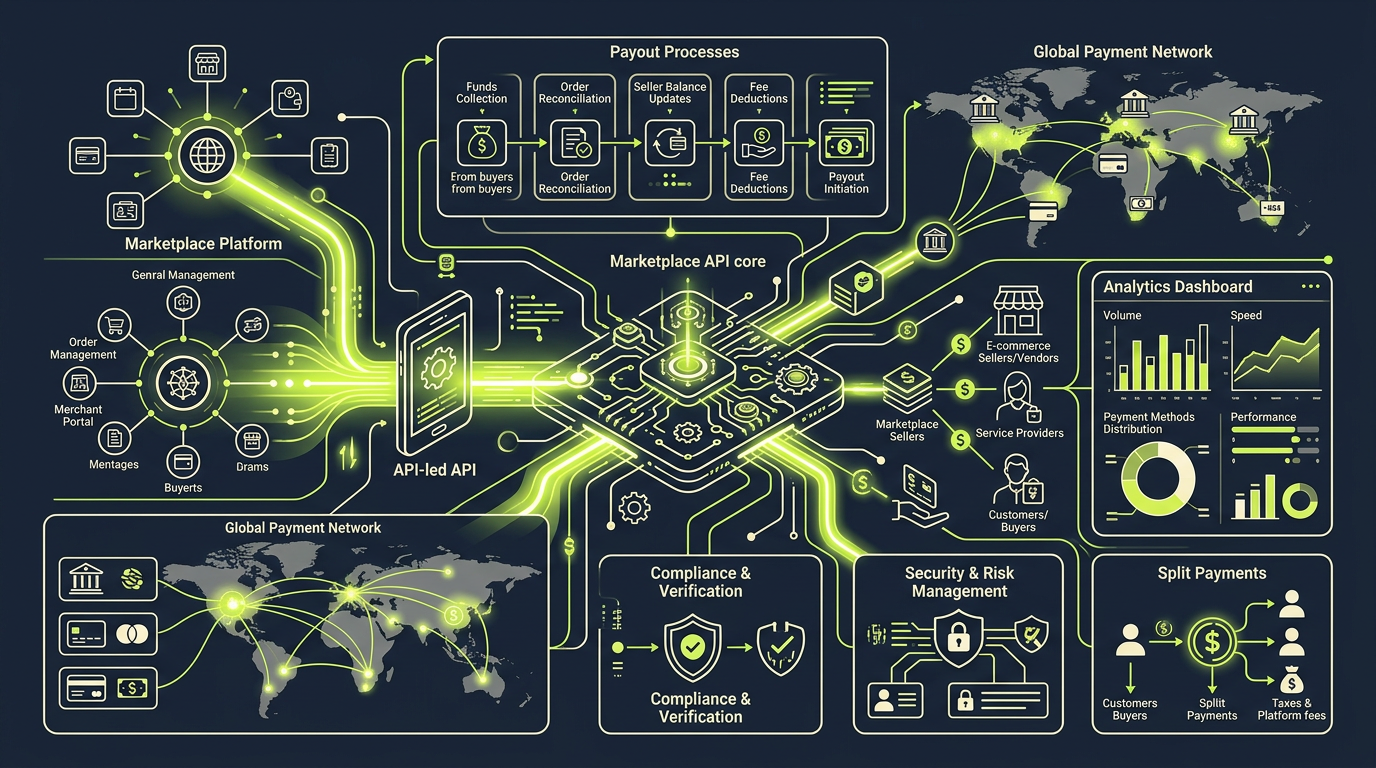
Operating a global marketplace means navigating a complex web of international regulations, including tax compliance, anti-money laundering (AML) laws, and Know Your Customer (KYC) directives. Failure to adhere to these mandates can result in significant fines, reputational damage, and operational disruptions. A modern payout infrastructure must embed compliance deeply into its design, rather than treating it as an afterthought.
This includes automated W-8 and W-9 collection and validation, ensuring that tax obligations are met for both domestic and international vendors. Furthermore, robust KYC and AML frameworks, often leveraging AI and machine learning, are essential for identifying and mitigating financial crime risks. 7% during the forecast period, underscoring the growing reliance on such programmable infrastructure for secure digital transformation (Source: Secondary Research, Interviews with Experts, MarketsandMarkets Analysis).
Beyond Forms: Dynamic Tax and Regulatory Intelligence
Compliance extends beyond merely collecting forms; it requires dynamic intelligence that adapts to evolving regulatory landscapes. For instance, the EU's push for digital sovereignty, exemplified by initiatives like GAIA-X with over 300 member organizations as of 2021, highlights the increasing focus on data governance and secure data sharing within specific jurisdictions (Source: Cloud API Market Size, Trends & YoY Growth Rate, 2026-2033). Payout platforms must be equipped to handle these nuances, ensuring that data residency and processing adhere to local laws like GDPR and PSD2.
This ongoing regulatory monitoring and automated adjustment are crucial for marketplaces operating in multiple territories. By leveraging specialized platforms, finance teams can offload the burden of staying abreast of every change, allowing them to focus on core business strategies. This also applies to FinCEN and FATF guidelines, which demand rigorous transaction monitoring and reporting to combat financial illicit activities.
Optimizing Cost Structures with Flat-Fee Models and Instant Liquidity
For high-growth marketplaces, managing payout costs is paramount. Traditional transaction pricing, often percentage-based, can escalate rapidly with increasing volume, eroding profit margins. A significant differentiator in modern payout infrastructure is the adoption of a flat-fee per transaction model. This transparent pricing structure allows marketplaces to predict costs accurately, offering substantial savings as transaction volumes grow.
This model incentivizes efficiency rather than penalizing growth. By separating transaction fees from the value of the payment, marketplaces can achieve greater financial predictability and control over their operational expenses. This is especially vital for platforms processing large numbers of smaller payments, such as creator economy platforms or affiliate networks.
Unlocking Vendor Liquidity with Advanced Payment Options
Beyond optimizing costs for the marketplace, an advanced payout infrastructure also addresses a critical pain point for vendors: liquidity. Many vendors, particularly freelancers, creators, and small businesses, often face cash flow challenges due to delayed payouts. Platforms offering
Advanced Payment
capabilities provide instant liquidity, allowing vendors to receive funds immediately, often for a small fee.
This instant pay option is a powerful tool for vendor retention and satisfaction, encouraging greater engagement and loyalty within the marketplace ecosystem. It transforms the payout process from a necessary administrative function into a value-added service that directly benefits sellers and contributors. This strategic approach to payouts can be a key competitive advantage in attracting and retaining top-tier talent.
The Future of Marketplace Payouts: An "Operations-First" Approach
The future of marketplace payouts is undeniably API-led, integrated, and operations-first. As the global payment market continues to grow, projected to reach $3.0 trillion at a 4% growth rate (Source: The payment landscape in 2026 and ways to thrive), the demand for sophisticated, automated solutions will only intensify. Marketplaces that invest in robust payout infrastructure today will be best positioned to capitalize on this growth, scaling efficiently and securely.
This shift requires finance and operations leaders to re-evaluate their current systems. Are they merely processing payments, or are they enabling growth, mitigating risk, and enhancing stakeholder satisfaction? The ability to automate the entire payout lifecycle-from vendor onboarding and compliance to multi-currency disbursement and real-time reconciliation-is no longer a luxury but a strategic imperative.
5% (Source: API Marketplace Software Market Size & Forecast [2026-2035]), indicating a clear trend towards integrated solutions.
Paving the Way for Touchless Finance and Global Expansion
An operations-first FinTech approach, embodied by platforms like Payouts.com, provides the tools necessary to remove the
administrative tax
that plagues many scaling companies. By automating routine tasks and centralizing complex processes, teams can focus on higher-value activities, driving innovation and improving strategic decision-making. This holistic view of financial operations is key to sustained growth and competitive differentiation. Choosing the right marketplace payment solution is critical; as industry guides emphasize,
the wrong infrastructure slows growth. The right one scales with you
(Source: ConnectPay.com).
The implementation of virtual cards for marketplace payouts further enhances control and security, offering granular spending limits and real-time expense tracking. This comprehensive approach ensures that marketplaces are not just equipped for today's demands but are future-proofed for the complexities of tomorrow's global digital economy. This also helps in scaling global tax compliance, as discussed in
The implementation of virtual cards for marketplace payouts further enhances control and security, offering granular spending limits and real-time expense tracking. This comprehensive approach ensures that marketplaces are not just equipped for today's demands but are future-proofed for the complexities of tomorrow's global digital economy. This also helps in scaling global tax compliance, as discussed in Marketplace Payout Infrastructure: The New Competitive Advantage.
Conclusion
The evolution of the marketplace economy necessitates a corresponding evolution in payout infrastructure. Outdated, manual systems are no longer viable for ambitious, high-growth digital companies operating on a global scale. The shift towards API-led payout automation, comprehensive vendor management, and integrated compliance solutions represents not just an operational upgrade but a fundamental rethinking of financial operations.
By embracing an
operations-first FinTech
approach, marketplaces can unlock significant efficiencies, reduce costs, enhance vendor satisfaction, and confidently of global commerce. This strategic investment positions them not only to meet current demands but also to seize future opportunities in an increasingly interconnected world.
FAQ (Frequently Asked Questions)