
- Step 1: Centralizing Global Vendor Data for Unified Risk Assessment
- Step 2: Implementing Real-Time Transaction Monitoring and Anomaly Detection
- Step 3: Leveraging ERP Integration for Financial Reconciliation
- Step 4: Utilizing Crypto and Stablecoins as a Secure Settlement Layer
- Step 5: Enforcing Global Tax and Compliance Standards automatically
- Conclusion: The Operations-First Approach to Security
Stop Losing Revenue to Payout Fraud: The Ultimate Guide to Real-Time Protection for Global Networks
In the high-stakes world of global commerce-ranging from massive ad networks to AI-driven creator platforms-the threat of payment fraud is no longer a peripheral concern. It is a scaling tax. As your business expands into 150+ countries, the complexity of managing thousands of stakeholders like freelancers, influencers, and vendors increases exponentially.
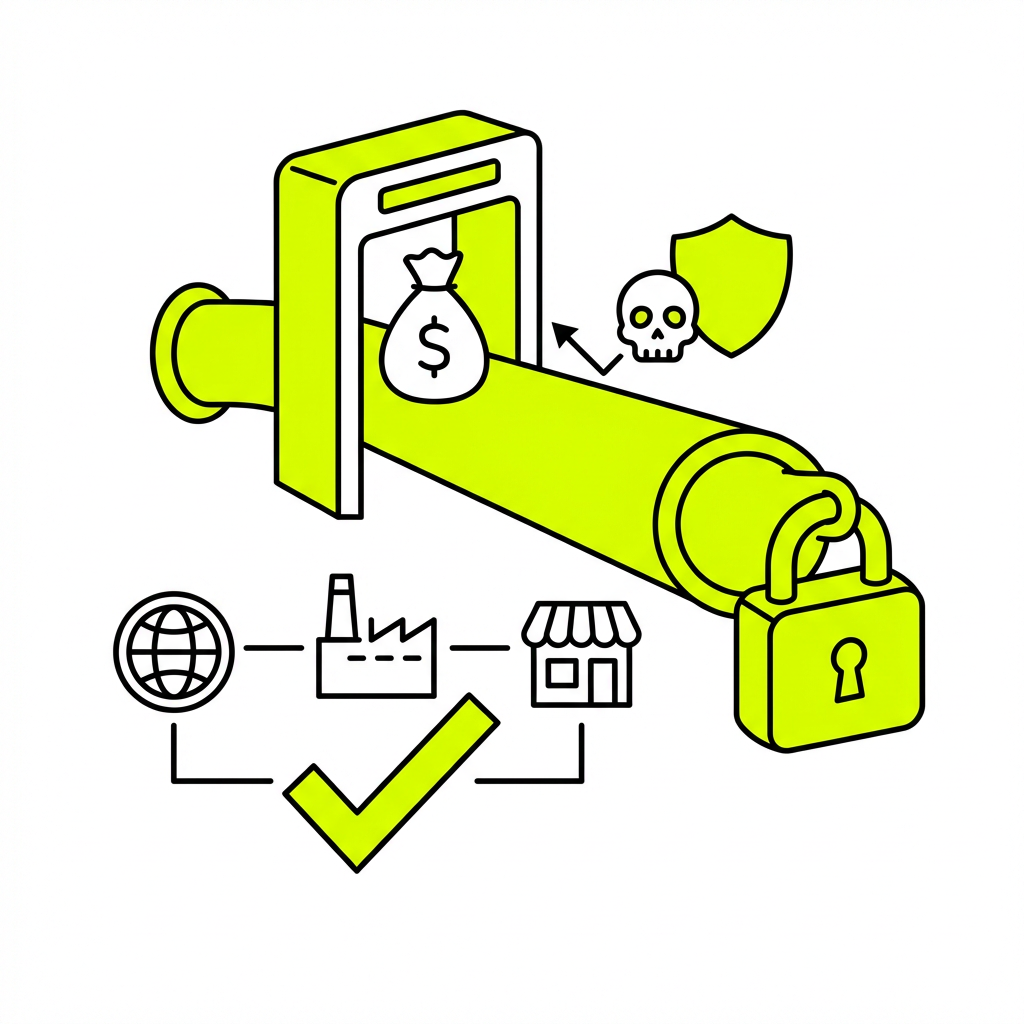
Without a robust, real-time fraud detection strategy, you aren't just losing money; you are compromising your operational integrity. Companies often fall into the trap of using manual verification or fragmented tools that fail to catch sophisticated bad actors until the funds have already left the building. In this guide, we will walk you through the precise steps to implement real-time fraud detection within your payout processing workflow, ensuring your business stays profitable and compliant while maintaining the speed your partners demand.
Step 1: Centralizing Global Vendor Data for Unified Risk Assessment
The foundation of any real-time fraud prevention strategy is data centralization. When information is siloed across different spreadsheets or local banking portals, it is impossible to see the 'big picture' of potential risk. To combat this, you must move toward a unified vendor management system. By consolidating all your payees-whether they are affiliates in Europe or developers in Southeast Asia-into a single source of truth, you create a baseline for normal behavior. This centralization allows for automated KYC (Know Your Customer) and KYB (Know Your Business) checks to run instantly upon onboarding. Using an operations-first platform ensures that identity verification isn't a one-time event, but an ongoing process that monitors for changes in bank details, ownership, or fiscal standing. This is particularly crucial for platforms using best B2b payment providers for secure fast transactions in 2024 to maintain trust across borders.
Evaluating the Digital Fingerprint of Your Payees
Real-time detection starts the moment a vendor signs up. You need to capture more than just an email address; you need their digital fingerprint. This includes IP address geolocation, device ID, and behavioral biometrics.
If three different 'influencers' are logging in from the same specialized IP in a high-risk jurisdiction, your system should automatically flag this for manual review before a single dollar is moved. Fraudsters are experts at creating 'sybil' accounts to drain funds through small, inconspicuous payouts. By implementing automated risk scoring at the point of entry, you stop fraud before the payout cycle even begins.
Step 2: Implementing Real-Time Transaction Monitoring and Anomaly Detection
Once your vendors are onboarded, the focus shifts to the transactions themselves. Real-time monitoring means your system analyzes every payout request against historical data and predefined risk rules instantly. Traditional batch processing is often too slow, as it reports fraud after the fact. Real-time protection requires a system that asks: 'Does this payout fit the established pattern for this specific vendor?' If an affiliate who usually earns $500 a month suddenly requests a $15,000 payout to a new crypto wallet address, the system must trigger an immediate hold. This logic is essential for any modern payout automation for ad networks trying to scale without hiring a massive manual review team.
Algorithmic Speed vs. Human Accuracy
Automation is your biggest ally here. High-volume business models, such as marketplace platforms, cannot afford to have a human review every transaction. Instead, utilize algorithms that weigh variables like payment frequency, geographic destination, and currency volatility. For instance, if a payout is requested in a stablecoin settlement layer, the system can verify the destination wallet's history on-chain to ensure it isn't associated with blacklisted entities. This level of technical scrutiny happens in milliseconds, allowing legitimate payments to flow through while high-risk transactions are diverted. According to Redis Labs' insights on AI in payment processing, real-time data structures are the only way to achieve the sub-millisecond latency required for modern fraud prevention.

Step 3: Leveraging ERP Integration for Financial Reconciliation
Fraud doesn't just happen at the payment gateway; it can also manifest as duplicate invoices or 'ghost' vendors within your accounting software. Integrating your payout platform with your ERP (such as NetSuite, QuickBooks, or Xero) is the third critical step. With over 600+ ERP integrations, a unified system can automatically cross-reference payout requests with approved purchase orders and validated invoices. This prevents the common fraud tactic of submitting the same invoice twice under slightly different vendor names. Automated invoice parsing can extract metadata from uploaded documents and compare it against your ledger to ensure the accounting equation remains balanced and untampered.
The Importance of Two-Way Syncing
When your payment engine and your ERP talk to each other in real-time, you create a closed-loop system. If a payment is flagged as fraudulent in your payout portal, that status is immediately updated in your ERP, preventing your finance team from accidentally reconciling a malicious transaction. This synchronization is the cornerstone of finance automation best practices, ensuring that your financial reporting is always accurate and your treasury is protected against internal and external leaks.
Step 4: Utilizing Crypto and Stablecoins as a Secure Settlement Layer
In many cases, traditional international wire transfers are the slowest and most opaque part of the payout process, making them targets for interception and 'man-in-the-middle' attacks. By using stablecoins as a settlement layer, businesses can achieve faster, more transparent transactions. Unlike legacy banking, every crypto transaction is recorded on a public or private ledger that is immutable. This doesn't mean you are 'investing' in assets; rather, you are using the technology as a utility for frictionless, traceable global settlements. Using a flat-fee per transaction model instead of a percentage-based fee further simplifies the cost structure, making it easier to spot discrepancies that might indicate foul play. This transparency is a key part of how global platforms are automating vendor payouts today.
Enhancing Security with Instant Liquidity Features
Interestingly, offering 'Advanced Payment' or instant liquidity to your trusted vendors can actually reduce certain types of fraud. When vendors have access to their earned funds immediately through secure virtual or prepaid cards, they are less likely to engage in desperate or risky behavior, and you have more control over the closed-loop spending environment. This controlled disbursement strategy allows businesses to monitor where and how funds are being utilized, adding another layer of behavioral data to your fraud detection engine. Citing the Fraud.net guide on real-time tools, having a variety of disbursement methods allows for better risk-based routing of payments.

Step 5: Enforcing Global Tax and Compliance Standards automatically
One of the most overlooked areas of fraud is tax non-compliance. Fraudsters often use multiple identities to avoid tax thresholds or to funnel money through tax havens illegally. A robust real-time system must include automated tax form collection (W-8/W-9) as part of the workout. If a payout reaches a specific legal threshold and the required documentation is missing or unverified, the system must automatically pause all disbursements. This protects the company from massive regulatory fines and ensures that all stakeholders are vetted against global sanctions lists and Specially Designated Nationals (SDN) lists. This automated compliance is a major factor in the innovations impacting online transactions today, shifting the burden from human compliance officers to intelligent machines.
Maintaining the 'Audit Trail' for Regulatory Peace of Mind
In the event of an audit, having a timestamped, unalterable log of every fraud check, identity verification, and payment approval is invaluable. Real-time payout processing should always be accompanied by real-time logging. This 'audit trail' proves to regulators that your business has taken 'reasonable steps' to prevent money laundering and fraud. By combining these five steps-centralization, real-time monitoring, ERP integration, secure settlement layers, and automated compliance-you transform your payout process from a vulnerable cost center into a secure, scalable engine for growth. As noted in the Tipalti guide to fraud detection, the cost of prevention is always lower than the cost of remediation.
Conclusion: The Operations-First Approach to Security
Fraud detection is not just a checkbox for your IT department; it is a fundamental pillar of operational excellence. For companies paying thousands of creators, affiliates, and vendors globally, the 'administrative tax' of manual fraud prevention is a growth killer. By implementing an automated, real-time strategy that leverages flat-fee pricing, ERP integrations, and global compliance tools, you remove the friction from your financial operations.
This allows your team to focus on what matters most: scaling your business and building stronger relationships with your global partners. The future of finance isn't just about moving money; it's about moving it smarter, faster, and with absolute certainty.